高性能PC

Search documents
中信建投:持续受益AI驱动 PC龙头地位稳定 维持联想“买入”评级
Ge Long Hui· 2025-12-10 03:44
Core Viewpoint - Lenovo Group benefits from AI-driven growth, maintaining its leading position in the PC market with rapid performance improvement [1] Group Summaries Business Performance - All three business groups achieved double-digit growth in the first half of the fiscal year 25/26, with AI-related revenue accounting for 29% of total revenue, a 15 percentage point increase year-on-year, indicating AI as the core growth driver [2] - The Intelligent Devices Group (IDG) saw a 15% year-on-year revenue increase, with global PC market share rising by 1.8 percentage points to a historical high of 25.6%, maintaining the top position globally [2] - The Infrastructure Solutions Group (ISG) experienced a significant 30% year-on-year revenue growth, driven by strong demand for AI servers, with proprietary liquid cooling technology achieving over 100% revenue growth in the second fiscal quarter [3] - The Solutions and Services Group (SSG) reported a 19% year-on-year revenue increase, achieving a record operating profit margin of 22%, with steady growth in support services and project solutions [4] Strategic Initiatives - The company is executing its "Hybrid AI for All" strategy, launching a complete range of AI-driven devices and experiences across consumer, commercial, and mobile sectors [2] - The AIPC segment, a focus of the AI strategy, saw its shipment volume rise to 33% of total PC shipments, maintaining a 31.1% share in the global Windows AI PC market [2] - The company is increasing strategic investments in product development and business expansion to capitalize on AI opportunities, despite a reported operating loss of $118 million in the ISG segment [3] Financial Projections - The company maintains its earnings forecast, projecting revenues of $76.911 billion, $84.379 billion, and $92.349 billion for fiscal years 2026-2028, with net profits of $1.694 billion, $1.913 billion, and $2.196 billion respectively, corresponding to current P/E ratios of 9, 8, and 7 times [4]


厚植中国 全球互惠:联想集团在德国打造全球化与本地化融合实践
Cai Fu Zai Xian· 2025-09-05 07:17
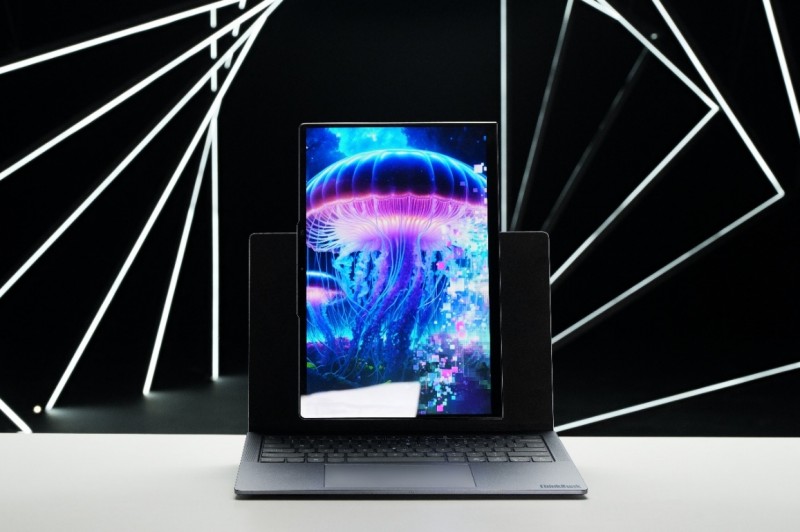
Group 1 - Lenovo held the Lenovo Innovation World 2025 event in Berlin, focusing on three main areas to unleash AI potential: form evolution, enhanced interaction, and seamless multi-device collaboration [1] - The company launched a new range of AI innovative products, including concept devices, high-performance PCs, smart tablets, immersive gaming devices, and Motorola smartphones, reinforcing its vision of "Smarter AI for All" [1] - In FY24/25, the EMEA region contributed approximately $3 billion in revenue to Lenovo, with Germany being the largest contributor in this region [1] Group 2 - Germany is a key market for Lenovo in Europe, combining global resources with deep local integration to create a resilient and efficient operational model [3] - Lenovo's dual-driven strategy in Germany focuses on AI-driven smart transformation and a sales model centered on channel partnerships, with over 90% of sales achieved through partners [3][4] - The company has established its German headquarters in Stuttgart to enhance regional operations and customer responsiveness, supported by local manufacturing capabilities in Hungary [3][6] Group 3 - Lenovo's success in Germany exemplifies the integration of high-standard German corporate culture with global agility, creating a replicable model for global-local synergy [4] - The company has strategically utilized its global advantages to configure resources across various aspects, including capital, talent, R&D, and manufacturing, ensuring localized marketing and service [6] - Lenovo's experience in Germany serves as a model for other regions, demonstrating the potential for Chinese companies to integrate headquarters' advantages with local resources [8] Group 4 - Lenovo continues to innovate with products like the world's first rollable screen AI PC and ultra-thin solar-powered laptops, redefining the concept of "technology serving humanity" [9] - The company aims to replicate its successful German model in other markets, promoting a new type of globalization amid structural adjustments globally [9]