
魔方AI智能体平台

Search documents
单日暴跌45%之后,宜人智科的“第二曲线”是AI,还是幻觉?
美股研究社· 2026-03-20 11:11
Core Viewpoint - The article discusses the challenges faced by Yiren Zhikang, highlighting the collapse of its profit model under regulatory pressures and the need for the company to redefine its value proposition in the market [1][4][15]. Group 1: Current Challenges - Yiren Zhikang's difficulties are not isolated but reflect the broader challenges faced by the entire lending assistance industry in a highly regulated environment [2]. - The company's recent financial report indicates a significant shift, with a quarterly loss of -1.44 USD per share, down from a profit of 0.52 USD year-on-year, and a revenue decline of 31% [4]. - The core issue is not merely about earning more or less, but whether the company can continue to earn at all [4]. Group 2: Regulatory Impact - The implementation of the "9th regulation" has effectively eliminated Yiren Zhikang's primary profit sources by capping interest rates at 24% and requiring all hidden fees to be made explicit [6]. - This regulatory change compresses the profit margin that was previously derived from hidden service fees, fundamentally altering the company's revenue model [6]. - The market's 45% drop in valuation reflects a long-term restructuring of the valuation system, indicating that the previous high-margin model is no longer sustainable [6]. Group 3: AI Transformation Narrative - Yiren Zhikang's push to rebrand itself as an AI company is seen as an attempt to shift the narrative, but the reality is that AI primarily serves as a cost-reduction tool rather than a revenue generator [7][9]. - The company's significant increase in R&D expenses (up 176% in 2024) has not translated into new revenue streams, indicating that AI has not created new income sources but merely optimized existing, shrinking business [8]. - The financial industry's low barriers to entry for AI capabilities mean that Yiren Zhikang's technological advantages may quickly diminish [9]. Group 4: Future Pathways - The article suggests that Yiren Zhikang should pivot from being a lending intermediary to a technology service provider, focusing on monetizing its technological capabilities rather than relying on high-risk lending [11][12]. - A proposed three-step strategy includes abandoning high-risk lending, modularizing its capabilities into standardized services, and forming partnerships with banks as a technology supplier rather than a competitor [12]. - This transition is challenging but could lead to a more sustainable business model, as the company leverages its accumulated experience in financial data and risk management [12][13]. Group 5: Conclusion - The market has signaled that Yiren Zhikang is no longer viewed as a growth company, emphasizing the need for a fundamental shift in its business model to survive in a regulated environment [15]. - The lesson extends beyond stock price fluctuations, highlighting the importance of adapting to compliance and technological advancements rather than attempting to repackage outdated business practices [15][16].


宜信唐宁分享AI实践三重路径:治理先行、智能体赋能、自主深耕
Xin Lang Cai Jing· 2026-01-27 10:39
Core Insights - The CEO of Yixin, Tang Ning, emphasizes that the next phase of artificial intelligence (AI) should transcend mere efficiency and evolve into a more empathetic and emotionally aware partner for businesses [1][2] - This shift indicates a significant transformation in human-machine relationships, where AI is expected to understand needs and integrate emotional intelligence into business operations [1] Group 1: Strategic Framework for AI - Companies should establish the position of "Chief AI Officer" to systematically plan, implement, and iterate AI technologies, ensuring alignment with business objectives [1][2] - The value of AI extends beyond efficiency and cost reduction; it includes human-centered design and emotional interaction, transforming AI into a collaborative partner with perception and empathy [1][2] Group 2: Practical Paths for AI Implementation - Tang Ning outlines three core pathways for enterprises to leverage AI: 1. Governance first, creating a trustworthy risk control system that integrates fairness and care into AI operations [2] 2. Empowering AI through the evolution of proprietary models like "Zhiyu" and the Magic Cube platform, transitioning AI from a functional tool to an emotionally interactive partner [2] 3. Focusing on autonomous development by investing in R&D and vertical scenarios to enhance differentiated capabilities while achieving cost, precision, and humanistic value improvements [2] - The concept of moving from "useful" to "loving" AI serves as a guiding principle for companies navigating the future of AI development, reflecting a shift from efficiency-driven to human-centered values [2]
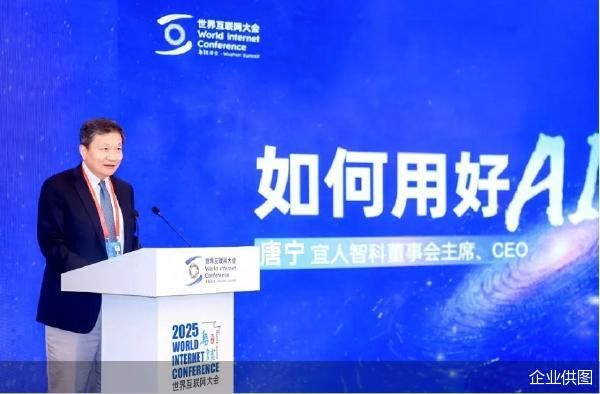
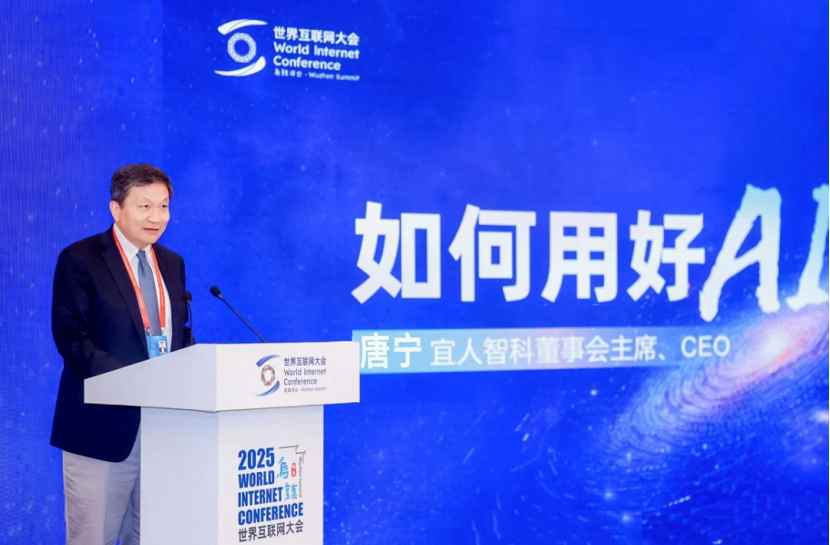
宜人智科CEO唐宁出席世界互联网大会乌镇峰会 倡导让AI“有爱”
Bei Jing Shang Bao· 2025-12-10 11:53
Core Viewpoint - The World Internet Conference in Wuzhen emphasizes the importance of building a community with a shared future in cyberspace, highlighting opportunities for international cooperation in the internet sector, particularly in light of China's modernization blueprint outlined in the recent Communist Party meeting [1][3]. Group 1: Conference Highlights - The conference theme is "Building an Open, Cooperative, and Inclusive Digital Future - Together Constructing a Community with a Shared Future in Cyberspace," featuring 24 sub-forums on topics such as global development initiatives, digital economy, data governance, and AI empowerment [3]. - Over 1,600 guests from more than 130 countries and regions attended the conference, showcasing the global interest in digital collaboration [3]. Group 2: Company Insights - Yirendai, as an AI-driven technology service provider, presented cutting-edge AI achievements at the conference, with CEO Tang Ning delivering a keynote speech on the future direction of AI in enterprise digital transformation [3][4]. - Tang Ning advocated for the establishment of a Chief AI Officer role in companies to promote technological advancements, emphasizing the importance of emotional value creation through humanized AI design [4]. Group 3: AI Development Strategies - The company outlined three core paths for AI technology development: enhancing AI governance capabilities, embracing the intelligent agent paradigm, and maintaining a focus on self-research and scene cultivation to build differentiated competitiveness [5]. - The emphasis is placed on creating a trustworthy AI system with robust risk control mechanisms and ensuring fair access to technology for all users [5]. Group 4: Commitment to Responsible AI - Yirendai's participation in the conference reflects its commitment to responsible AI development, focusing on application stability, safety, and contributions to industrial upgrades [6]. - The company aims to explore autonomous collaboration among agents and actively participate in industry standard-setting to foster an open and responsible AI ecosystem [6].
上市金融科技公司多元化布局,应对助贷新规挑战
Guo Ji Jin Rong Bao· 2025-11-28 10:40
Core Viewpoint - The implementation of the new regulations on internet lending by commercial banks has prompted listed fintech companies to proactively adjust their business structures, leading to a mixed performance in their third-quarter results as they seek new growth points to cope with regulatory challenges [1][2][4]. Business Adjustments and Performance - Listed fintech companies have begun to shrink high-risk matching business scales and deepen AI applications in response to the new lending regulations [1][4]. - Qifu Technology reported a 20.36% year-on-year decline in net profit to 1.433 billion yuan, despite a 19.12% increase in revenue to 5.206 billion yuan [4]. - Xinye Technology achieved a 6.43% year-on-year revenue growth to 3.487 billion yuan and a 2.66% increase in net profit to 641 million yuan [5]. - Yirendai's total revenue grew by 5% to 1.555 billion yuan, while net profit decreased by 10.64% [6]. - Jianyin Technology saw a 39.64% increase in net profit to 377 million yuan [5]. - Lexin's net profit surged by 68.39% to 521 million yuan, benefiting from flexible business adjustments [5]. Impact of New Regulations - The new lending regulations are expected to have a more pronounced impact on the performance of listed fintech companies in the fourth quarter, with anticipated declines in earnings [2][7]. - Industry experts suggest that the regulations will concentrate resources among compliant leading institutions, while smaller firms face rising compliance costs and narrowing cooperation channels [2][7]. AI Application and Efficiency - Companies are increasingly leveraging AI in customer service, risk control, and automated approvals to enhance efficiency and reduce costs [9][10]. - Qifu Technology reported a significant increase in its AI-driven financial technology output, with a 218% quarter-on-quarter growth in its subsidiary's business [9]. - Lexin's self-developed AI model improved user demand recognition accuracy by over 20% [10]. - Yirendai's AI strategy has led to a substantial increase in transaction amounts and borrower service numbers [10][11]. Overseas Market Expansion - In response to stricter domestic regulations, fintech companies are intensifying their overseas market strategies to seek diversified revenue growth [13][14]. - Xinye Technology's international business revenue reached 25% of total revenue, with significant growth in loan balances in Indonesia and the Philippines [13][14]. - Yirendai is also expanding its overseas presence, with expectations of international revenue contributing 4% by 2025 and over 10% by 2026 [14][15].
宜人智科(YRD.US)发布Q3财报:以AI技术为驱动力 推动业务稳健发展
智通财经网· 2025-11-25 12:49
Core Viewpoint - Yiren Zhike (YRD.US) continues to drive steady business development through AI technology, emphasizing compliance and risk management in its operations [1][2]. Financial Performance - In Q3 2025, Yiren Zhike facilitated transaction amounts of 20.2 billion yuan and had a loan balance of 34.2 billion yuan, serving 14.01 million borrowers and 126,500 small businesses [2]. - The insurance business achieved a premium of 1.15 billion yuan, with a focus on optimizing the business structure and leveraging AI for customer acquisition and underwriting [2]. AI Strategy and Technological Advancements - The company upgraded its AI strategy, evolving AI from a tool to a collaborator, with enhancements to its "Zhiyu" model and the 2.0 version of the Magic Cube AI platform [3]. - The upgraded "Zhiyu" model improves internal operations and enables multi-agent collaboration, while the Magic Cube AI platform enhances marketing, content creation, quality inspection, and code security [3]. Industry Engagement and Recognition - Yiren Zhike showcased its technological capabilities at major industry events, including the Hong Kong FinTech Week and the World Internet Conference, discussing AI applications in finance [4]. - The company received the "Annual Corporate Social Responsibility Award" for its performance in technology innovation and social responsibility, ranking in the top 10% globally in ESG ratings [8]. Corporate Social Responsibility - Yiren Zhike actively engages in social responsibility initiatives, including consumer rights protection and data security, and has launched several industry self-regulation initiatives [10].


宜人智科魔方AI智能体平台完成重大升级
Zhong Zheng Wang· 2025-10-10 08:23
Core Viewpoint - Yiren Zhike has announced a significant upgrade to its Magic Cube AI Agent platform, which is expected to enhance the company's commercial application deployment and operational scale expansion in the AI-driven fintech sector [1] Group 1: Platform Upgrade - The upgraded Magic Cube AI Agent platform integrates six specialized AI agents covering customer service, risk management, fund management, compliance, system monitoring, and sales [1] - Each AI agent aims to replicate and amplify human productivity in key financial service areas, empowering the company's business from multiple dimensions [1] Group 2: Productivity and Cost Control - Each AI agent has achieved an output equivalent to approximately 10 human employees, successfully closing business loops in marketing and customer service [1] - As the application of AI agents becomes more widespread, the marginal costs are expected to continue decreasing [1]