
鱼道

Search documents
帮鱼儿过坝 护大江生态(自然之子)
Ren Min Ri Bao· 2025-10-14 22:12
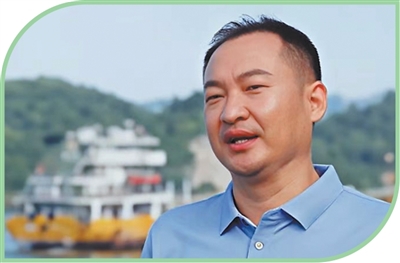
Core Viewpoint - The article highlights the interdisciplinary research of Shi Xiaotao, who focuses on the construction of fishways in water conservancy projects to ensure the ecological balance and the migration of fish species in the Yangtze River [3][4]. Group 1: Background and Research Focus - Shi Xiaotao, the director of the Water Ecology Research Institute at Three Gorges University, has dedicated 16 years to helping fish navigate dams in the Yangtze River [2]. - His research transitioned from aquatic biology to ecological water engineering, emphasizing the need for harmony between water conservancy projects and ecological environments [3]. Group 2: Practical Applications and Innovations - The construction of fishways has gained importance, especially after the revision of the Water Law in China, which mandates the inclusion of fish passage facilities in dam projects [4]. - Shi's team conducts field experiments across various regions, including Tibet and Xinjiang, to optimize fishway designs that accommodate different fish species and environmental conditions [5]. Group 3: Educational Initiatives and Public Awareness - Shi has developed a course titled "Yangtze River Conservation Innovation Practice," attracting over 100 students from various disciplines to engage in hands-on learning about aquatic ecosystems [6]. - The team also runs a volunteer service and a public science account to raise awareness about the protection of the Yangtze River, successfully reducing harmful practices like feeding wild dolphins [6][7].

河畅水清 鱼翔岸绿
Guang Xi Ri Bao· 2025-07-23 02:04
Group 1 - The construction of the Pinglu Canal includes a dedicated fish passage of 480 meters to facilitate the migration of local fish species, addressing the disruption caused by the old Qinjing water gate [1] - The fish passage is designed to accommodate various species, including the vertical slot fishway for species like the red-eye trout and the eel passage with climbing substrates for species like the Huapu hairy crab and eel [1] - The construction site is actively monitored to ensure minimal disturbance to the surrounding mangrove ecosystem, with measures in place to adjust construction activities as needed [2] Group 2 - The project adheres to environmental assessment reports and green engineering standards, focusing on resource conservation, soil erosion control, ecological protection, and low-carbon development [3] - The construction aims to achieve a harmonious integration of engineering and nature, with goals of clear rivers, thriving fish populations, and beautiful landscapes [3]