
鲜啤福鹿家精酿啤酒

Search documents
2025年零售圈十大收购事件发布
Tai Mei Ti A P P· 2026-01-06 13:14
Core Insights - The retail industry experienced a significant wave of mergers and acquisitions in 2025, indicating a major capital reshuffle within the sector [1][27] - Major companies are either divesting non-core assets to focus on their main businesses or acquiring new brands to expand their portfolios [1][27] - Private equity firms are playing a crucial role in driving brand transformation and expansion in the retail sector [1][27] Group 1: Major Mergers and Acquisitions - Alibaba divested its stake in Suning and Intime Retail, marking a strategic shift to optimize resource allocation [3][26] - Mars, Incorporated completed the acquisition of Kellanova for approximately $35.9 billion, creating a global snack empire [5][7] - KKR acquired an 85% stake in Vista International, which is linked to the domestic beverage brand Da Yao, enhancing its control over the Chinese soda market [9][10] Group 2: Strategic Adjustments and Performance - After KKR's acquisition, Gao Xin Retail reported a revenue of 71.55 billion yuan, with a net profit of 386 million yuan, marking a turnaround from previous losses [4] - The acquisition of Kellanova by Mars is one of the largest in the packaged food sector in the last decade, highlighting the trend of consolidation among food giants [7][8] - CPE Yuanfeng's acquisition of Burger King China aims to accelerate local expansion with a commitment to invest $350 million [16][17] Group 3: Industry Trends and Future Outlook - The retail sector is shifting from scale expansion to lean operations, focusing on supply chain and brand value [2][27] - The relationship between brands and capital is evolving from mere financial support to active operational involvement, indicating a search for sustainable growth [27] - The ongoing mergers and acquisitions signal a re-evaluation of the value of physical retail, with supply chain and product strength becoming central to competition [27]


闯入精酿赛道 鲜啤福鹿家如何延续蜜雪冰城“平价神话”
Bei Jing Shang Bao· 2025-04-29 10:36
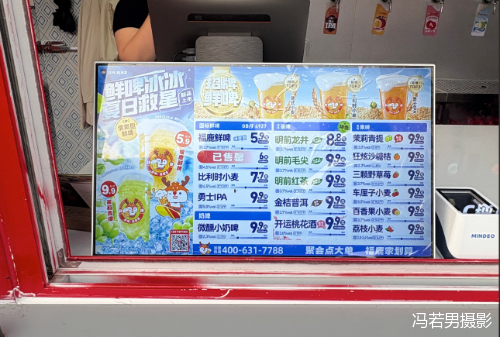
Core Insights - Fresh Beer Fulu Family is breaking the craft beer price barrier with a low-cost strategy, offering products priced between 9.9 to 16 yuan per cup, positioning itself as a "budget craft beer" brand under the Mxue Ice City umbrella [1][4] - The brand has expanded rapidly, with over 500 stores across 18 provinces and 56 cities since its establishment in 2021, leveraging supply chain advantages to reduce operational costs and enhance profit margins [4][7] - The craft beer market in China is projected to grow significantly, reaching 11 billion yuan by 2028, with a notable increase in demand for tea-flavored beers, indicating a robust market opportunity for Fresh Beer Fulu Family [7][10] Company Overview - Fresh Beer Fulu Family is a subsidiary of Mxue Ice City, established in 2021, and operates independently with no direct ownership ties to Mxue Ice City, despite public perception linking the two brands [4][5] - The brand's product range includes over 15 SKUs, featuring categories like fresh beer, tea beer, and fruit beer, with popular items such as "Crazy Sugar Orange" and "Fulu Golden Orange Pu'er" [3][4] Market Strategy - The low-price strategy is a key component of Fresh Beer Fulu Family's market entry, particularly effective in lower-tier cities, but faces challenges in higher-tier cities due to increased operational costs and market competition [1][9] - The brand's gross profit margin is reported to be around 50%, with peak sales reaching 10,000 yuan per day during busy seasons, indicating a strong revenue potential [7][9] Competitive Landscape - The craft beer sector is experiencing a competitive reshuffle, with brands increasingly focusing on supply chain efficiencies to maintain profitability amidst rising costs [8][9] - The overall trend in the craft beer market suggests a downward pressure on prices, with many brands, including Fresh Beer Fulu Family, needing to adapt to maintain market share [10]

茶咖日报|蜜雪冰城布局啤酒赛道,霸王茶姬首家北美门店试运营
Guan Cha Zhe Wang· 2025-04-27 11:17
Group 1: Industry Trends - The craft beer market is seeing competitive pricing, with brands like "Xue Wang" offering fresh beer at a minimum price of 6.6 yuan per cup, significantly lower than most market products [1] - The ready-to-drink tea market in China is projected to grow from 111 billion yuan in 2019 to 538.5 billion yuan by 2028, with its market share increasing from 24% to 49% [4] - The tea beverage industry is experiencing a transformation driven by health consciousness and sustainability trends, marking a critical turning point for sustainable development [5] Group 2: Company Developments - "Xianpi Fulu Jia," a craft beer brand, has rapidly expanded, with over 500 stores planned across 18 provinces and 56 cities by the end of 2024, benefiting from a shared supply chain with "Mi Xue Bing Cheng" [1] - "Ba Wang Cha Ji" has opened its first North American store in Los Angeles, with plans to launch 14 products in the market [3] - "Jia He Food" announced the establishment of new subsidiaries for its coffee expansion project, aiming to optimize resource allocation and enhance operational efficiency [6] Group 3: Cultural Impact - Chinese milk tea culture is recognized as a significant aspect of cultural export, with its influence seen in various countries, making it a key entry point for foreign audiences to engage with Chinese culture [7]
