鸡蛋三明治

Search documents
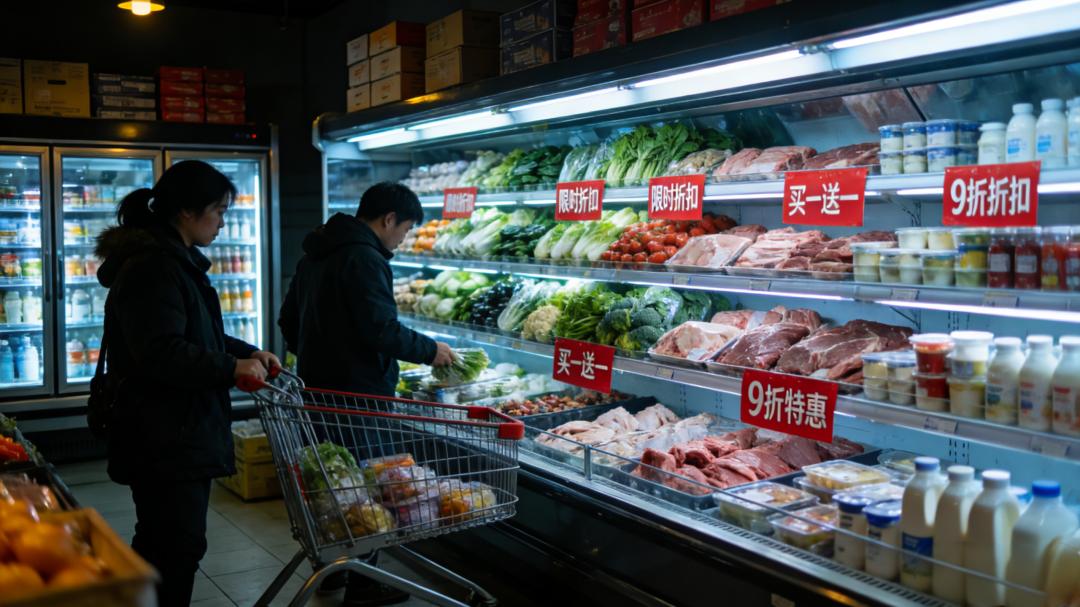
在晚上八点的超市,消费者终于成为“上帝”
3 6 Ke· 2026-02-03 03:45
Core Insights - The article highlights the growing trend of nighttime discount shopping in Chinese supermarkets, where consumers are increasingly attracted to significant price reductions on various food items after 8 PM [2][3][12] - This phenomenon reflects a shift in consumer behavior towards seeking value and efficiency in shopping, particularly among urban professionals who prioritize convenience and cost-effectiveness [4][11] Group 1: Consumer Behavior - Many consumers are now actively participating in nighttime discount shopping, often sharing their experiences on social media, indicating a cultural shift towards valuing discounted goods [1][6] - The primary demographic engaging in this trend consists of urban white-collar workers who are time-constrained and prefer ready-to-eat meals at reduced prices [4][11] - Consumers perceive that the quality of discounted items is comparable to full-priced products, leading to a mindset that values both savings and sustainability by reducing food waste [7][11] Group 2: Supermarket Strategies - Supermarkets like Wumart, Hema, and others have adopted structured discount strategies, offering significant markdowns on perishable goods to manage inventory and minimize waste [3][8] - The implementation of dynamic pricing strategies based on real-time sales data and consumer behavior is becoming common, allowing supermarkets to optimize their discount offerings [11][12] - Nighttime discounts are not only effective for clearing inventory but also serve to enhance overall sales by attracting customers who may purchase full-priced items alongside discounted goods [8][12] Group 3: Market Trends - The rise of nighttime discounts signifies a broader transformation in the retail industry from a focus on price wars to more sophisticated inventory and supply chain management [11][14] - The trend is indicative of a more rational and mature consumer culture in China, where shoppers are becoming more discerning and strategic in their purchasing decisions [13][14] - Supermarkets are increasingly leveraging data analytics to predict demand and tailor their offerings, reflecting a shift towards precision in retail operations [11][12]


吃了一块冰箱里的瑞士卷,老人一直发烧,不幸去世,夏天要更重视这个“冰箱杀手”
3 6 Ke· 2025-05-20 00:11
Core Viewpoint - The article discusses the dangers of Listeria monocytogenes, commonly known as Listeria, particularly in relation to food safety and its impact on vulnerable populations such as the elderly and pregnant women [6][10][11]. Group 1: Listeria Infection Cases - A case is highlighted where a 67-year-old man died after contracting Listeria from a Swiss roll, emphasizing the severe consequences of such infections [1]. - Previous reports indicate that elderly individuals have also faced similar risks after consuming refrigerated leftovers, with varying outcomes from recovery to fatalities [3]. Group 2: Characteristics of Listeria - Listeria is often referred to as the "fridge killer" due to its ability to thrive in refrigerated environments, surviving temperatures as low as -1.5°C [6][8]. - The bacterium can grow and reproduce within host cells, evading the immune system and potentially spreading to various organs [8][10]. Group 3: Symptoms and Vulnerable Populations - Symptoms of Listeria infection can range from mild gastrointestinal issues to severe conditions like meningitis and sepsis, particularly in individuals with weakened immune systems [11]. - Pregnant women are at heightened risk, as Listeria can lead to miscarriage or severe illness in newborns [11][13]. Group 4: Food Safety and Listeria Outbreaks - Historical outbreaks linked to Listeria have involved contaminated ready-to-eat foods such as deli meats and melons, resulting in significant fatalities [15][17]. - A recent outbreak in the U.S. was associated with ready-to-eat sandwiches, highlighting ongoing food safety concerns [17]. Group 5: Refrigerator Temperature Management - Research indicates that many households do not maintain the recommended refrigerator temperature of 4°C or below, which is crucial for preventing Listeria growth [20][22]. - Specific recommendations include storing ready-to-eat meats on lower shelves and regularly checking refrigerator temperatures to ensure food safety [22][23].