麒麟OS

Search documents
纳思达:奔图已与统信UOS、麒麟OS等10余款国产操作系统及20余款国产办公软件完成深度适配
Zheng Quan Ri Bao· 2025-12-02 11:09
Group 1 - The core viewpoint of the article highlights the strategic partnership between Bentu and Huawei's HarmonyOS, marking a significant milestone in the adaptation of domestic operating systems [2] - Bentu is the first third-party printer company to conduct adaptation development for the HarmonyOS and has received Huawei's adaptation certification [2] - The company has achieved deep adaptation with over 10 domestic operating systems, including Tongxin UOS and Kirin OS, as well as more than 20 domestic office software applications, positioning itself as a leader in the industry for technical adaptation to domestic operating systems [2]


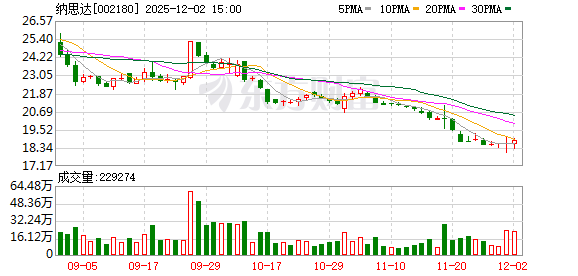
纳思达:目前,奔图已经与统信UOS、麒麟OS等10余款国产操作系统完成深度适配
Mei Ri Jing Ji Xin Wen· 2025-12-02 04:13
Core Viewpoint - The company Nasta (002180.SZ) has established a strategic partnership with Huawei's HarmonyOS, marking a significant step in the adaptation of domestic operating systems in the printing industry [1] Group 1: Partnership and Collaboration - Nasta's subsidiary, Bentu, successfully held a signing ceremony for the strategic cooperation with Huawei's HarmonyOS in June this year in Dongguan [1] - Bentu is the first third-party printer company to conduct adaptation development for the HarmonyOS and has received Huawei's adaptation certification [1] Group 2: Industry Position and Technological Adaptation - The comprehensive adaptation of Bentu to the HarmonyOS demonstrates the progress of domestic operating systems achieving full autonomy from the kernel to the application layer [1] - Currently, Bentu has completed deep adaptation with over 10 domestic operating systems, including Tongxin UOS and Kirin OS, as well as more than 20 domestic office software applications, positioning itself as a leader in the industry for technological adaptation [1]
“两芯一生态”扩容,信创替代迎来关键转折点!
是说芯语· 2025-11-22 01:05
Core Viewpoint - The expansion of the "Two Chips and One Ecosystem" initiative signifies a shift towards a more open and versatile domestic computing ecosystem, moving away from the previously closed ARM architecture model [1][3][4]. Group 1: Expansion of the Ecosystem - The "Two Chips and One Ecosystem" initiative, which includes Feiteng and Kunpeng CPUs along with the Kirin OS, is evolving to encompass a broader range of general-purpose and specialized chips, thus creating a more comprehensive domestic computing framework [1][3]. - This initiative aims to address key technical challenges in domestic secure computing by integrating various platforms and technologies, thereby enhancing compatibility and adaptability [3][4]. Group 2: Challenges and Opportunities - Despite advancements in the domestic computing industry, challenges such as fragmented technology routes, insufficient hardware-software compatibility, and low standardization remain significant barriers [3][4]. - The shift towards a more open ecosystem is expected to provide users with greater flexibility and better product matching, moving from a "usable" to a "user-friendly" computing environment [5][7]. Group 3: Risks and Concerns - The dependency on ARM's licensing model has led to a stagnation in the performance and iteration of domestic ARM chips, raising concerns about the long-term sustainability of the domestic ARM market [9][10]. - The recent vulnerabilities in ARM architecture highlight the risks associated with outdated technology, emphasizing the need for continuous innovation and adaptation to maintain competitiveness [10].