鲲鹏920

Search documents
“两芯一生态”扩容,信创替代迎来关键转折点!
是说芯语· 2025-11-22 01:05
Core Viewpoint - The expansion of the "Two Chips and One Ecosystem" initiative signifies a shift towards a more open and versatile domestic computing ecosystem, moving away from the previously closed ARM architecture model [1][3][4]. Group 1: Expansion of the Ecosystem - The "Two Chips and One Ecosystem" initiative, which includes Feiteng and Kunpeng CPUs along with the Kirin OS, is evolving to encompass a broader range of general-purpose and specialized chips, thus creating a more comprehensive domestic computing framework [1][3]. - This initiative aims to address key technical challenges in domestic secure computing by integrating various platforms and technologies, thereby enhancing compatibility and adaptability [3][4]. Group 2: Challenges and Opportunities - Despite advancements in the domestic computing industry, challenges such as fragmented technology routes, insufficient hardware-software compatibility, and low standardization remain significant barriers [3][4]. - The shift towards a more open ecosystem is expected to provide users with greater flexibility and better product matching, moving from a "usable" to a "user-friendly" computing environment [5][7]. Group 3: Risks and Concerns - The dependency on ARM's licensing model has led to a stagnation in the performance and iteration of domestic ARM chips, raising concerns about the long-term sustainability of the domestic ARM market [9][10]. - The recent vulnerabilities in ARM architecture highlight the risks associated with outdated technology, emphasizing the need for continuous innovation and adaptation to maintain competitiveness [10].


围观!预算2100万GPU服务器别样标书
是说芯语· 2025-11-18 07:57
Core Insights - The article highlights a significant shift in the procurement strategy of AI computing power by top universities, moving from traditional hardware specifications to practical performance and compatibility with mainstream AI models like DeepSeek and Qwen [1][10]. Procurement Strategy - The procurement document emphasizes the importance of practical performance and compatibility over mere hardware specifications, marking a departure from the previous focus on "parameter stacking" [3][10]. - The core requirements include a focus on domestic production, ensuring real-world performance, and compatibility with existing CUDA ecosystems [3][10]. Technical Specifications - The procurement specifies the need for 13 GPU servers, with detailed requirements for CPU, memory, storage, and network capabilities, emphasizing the use of domestic components [4][6][8]. - Key performance indicators include the ability to run specific AI models under defined conditions, such as maintaining low latency and high throughput during inference tasks [9][11]. Trends in AI Computing Power Procurement - The article identifies three major trends in GPU server procurement by universities: 1. Transitioning from "indicator comparison" to "model testing" [10]. 2. Moving from a "NVIDIA-dominated ecosystem" to a "domestic compatible ecosystem" [10]. 3. Shifting focus from "hardware procurement" to "computing power system construction" [11]. Market Implications - The procurement strategy indicates a growing demand for domestic AI computing solutions that can effectively replace imported technologies, thereby fostering the development of a robust domestic AI ecosystem [12]. - Companies like Haiguang, Biran, and Muxi are highlighted as potential suppliers capable of meeting these stringent requirements, showcasing advancements in their GPU and CPU technologies [11][12].

AI赋能医疗!华为以“黑土地”之力,携手伙伴致力于让医疗数智化惠及全层级医院
Sou Hu Cai Jing· 2025-11-06 00:41
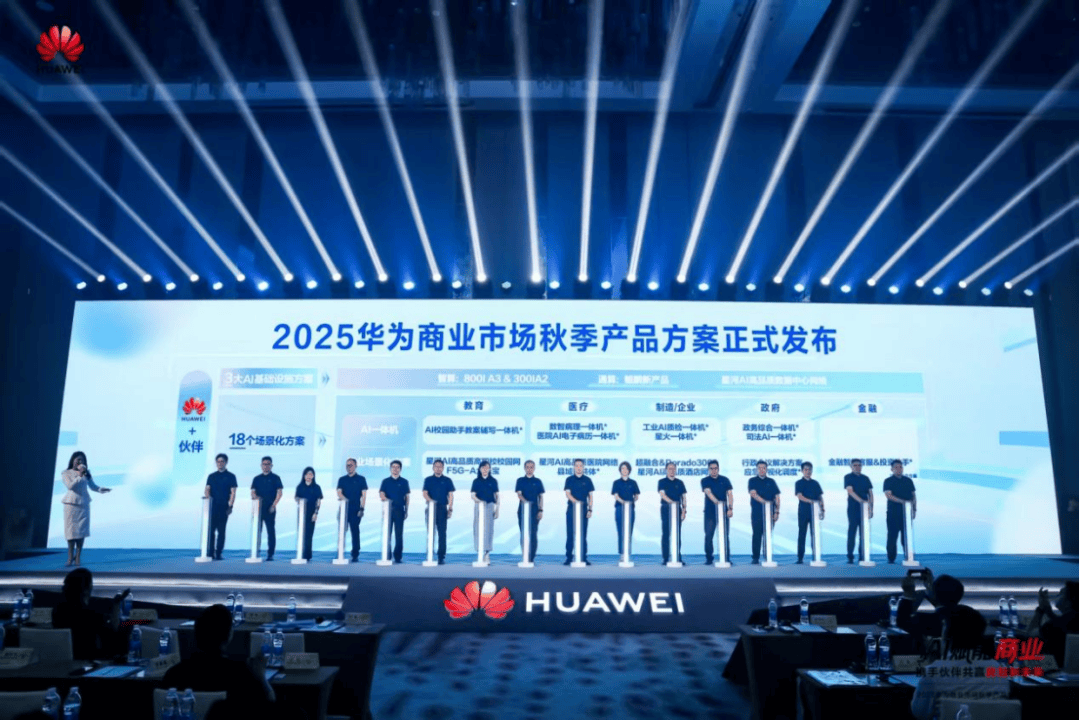
Core Insights - The article emphasizes the ongoing push for digitalization in healthcare and the establishment of county-level medical communities, guided by national policies aimed at enhancing healthcare services through advanced technologies like AI, big data, and 5G [1][4] Group 1: Policy and Industry Trends - The release of the "Guidelines for Informationization Functions of Tight-knit County Medical Communities" in March 2025 outlines the integration of new technologies to improve digital services and governance in healthcare [1] - There is a growing demand for computational power, network transmission, and scenario adaptation in the healthcare sector, driven by the need for refined operations in tertiary hospitals and resource integration in county medical communities [1] Group 2: Huawei's Solutions - Huawei has launched a "3+18" product solution, including AI electronic medical record systems and high-quality hospital networks, to address the needs of tiered diagnosis and intelligent upgrades in healthcare [1][3] - The AI electronic medical record solution has shown significant improvements in patient satisfaction (up 50%) and quality control compliance (up 70%) in a case study involving a large hospital with approximately 3,000 beds [3] Group 3: Addressing Challenges in Grassroots Healthcare - Huawei's "County Medical Community Solution" aims to tackle issues such as high costs, talent shortages, and implementation difficulties in grassroots healthcare, creating a resource-sharing system across county, township, and village levels [4] - The solution enhances diagnostic capabilities for over 3,000 common diseases, thereby improving the diagnostic skills of grassroots healthcare providers [4] Group 4: Real-World Applications - The Shenzhen Zhong Hospital's Guangming District has successfully implemented Huawei's AI smart hospital network, ensuring stable operations for mobile rounds, remote consultations, and robotic surgeries, which enhances both staff efficiency and patient experience [5] Group 5: Future Outlook - Huawei aims to empower the future of healthcare through technology, collaborating with industry partners to develop solutions that meet clinical needs and promote the widespread adoption of smart healthcare [7]