
256导高通量植入式柔性脑机接口

Search documents
马斯克放出“量产时间表”,脑机接口集体涨停,商业化拐点来了?
华尔街见闻· 2026-01-05 11:10
Core Viewpoint - The brain-computer interface (BCI) industry is transitioning from experimental medical devices to consumer products, driven by Elon Musk's announcement of mass production timelines for Neuralink devices by 2026 [1][2]. Market Performance - On the first trading day of 2026, the BCI sector showed strong performance, with multiple stocks, including Beiyikang and Sanbo Neuroscience, hitting the upper limit of their trading ranges, indicating high market expectations for BCI commercialization [1]. Technological Developments - Neuralink's announcement of automated surgical procedures and mass production plans marks a significant milestone, indicating a shift from medical trial tools to widely available products [7][9]. - The technology roadmap for Neuralink includes plans to increase electrode channels from 3,000 in 2026 to over 25,000 by 2028, aiming for comprehensive brain connectivity [9]. Market Potential - The potential market size for BCI devices in the U.S. is projected to reach $80 billion by 2035, primarily targeting treatments for neurological diseases such as ALS and stroke [9]. - The global BCI market is expected to grow to approximately $12.4 billion by 2034, with a compound annual growth rate (CAGR) of 17% from 2025 to 2034 [16]. Competitive Landscape - The BCI field is characterized by intense competition, with the U.S. advancing in semi-invasive technologies while China shows progress in non-invasive methods [11]. - Chinese companies have made significant strides, with Brain Tiger Technology achieving world-leading status in invasive BCI technology [12]. Policy Support - The Chinese government has included BCI in its "14th Five-Year Plan," setting ambitious goals for technological breakthroughs and industry strength by 2030 [21]. - Recent policy measures aim to facilitate the integration of BCI products into healthcare systems, addressing regulatory challenges [21]. Future Outlook - The BCI industry is expected to expand beyond medical applications into AI and robotics, with the potential to create a trillion-dollar market space if human capabilities can be enhanced through these technologies [19][14].

因地制宜向“新”而行 探索中心城区科创发展新模式
Zhong Guo Fa Zhan Wang· 2025-04-22 09:04
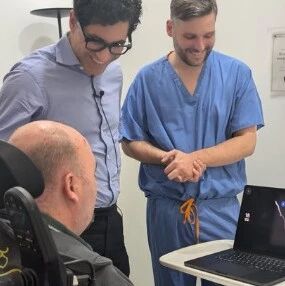
Group 1 - The article emphasizes the importance of technological innovation in China's development amidst global changes and competition, highlighting Huangpu District's role as a core area for Shanghai's innovation strategy [1] - Huangpu District is implementing a dual approach of urban renewal and old district renovation to enhance its capacity for technological innovation, creating a diverse and high-quality cluster of innovation carriers [1] - The district has established a "Central Innovation Zone" to balance residential and commercial needs, focusing on integrating production, life, and ecology in its innovation parks [1] Group 2 - Huangpu District is building a multi-dimensional industrial matrix by leveraging its strengths in finance, culture, tourism, and healthcare, aiming to foster new productive forces [2] - The district is enhancing its financial technology sector by attracting leading companies and strengthening the industrial chain, while also revitalizing traditional industries through digital transformation [2] - Future-oriented industries such as the metaverse and brain science are being prioritized, with significant breakthroughs in brain-machine interface technology reported [2] Group 3 - Huangpu District is creating a comprehensive urban innovation ecosystem by focusing on financial empowerment, professional services, and innovative activities [3] - The district has upgraded its financing platforms and established investment alliances to provide full-cycle financial support for innovation-driven enterprises [3] - A "Innovation Service Alliance" has been formed to offer a wide range of services, including project financing and intellectual property protection [3] Group 4 - Huangpu District is attracting global talent by promoting an international, youthful, and professional environment, supported by significant policy initiatives and funding [4][5] - The district has increased its talent development fund from a maximum of 50 million to at least 100 million yuan annually, aiming to match talent with industry needs [5] - Various initiatives, including a one-stop service platform for talent and housing support, are being implemented to create a welcoming atmosphere for top talent [5]