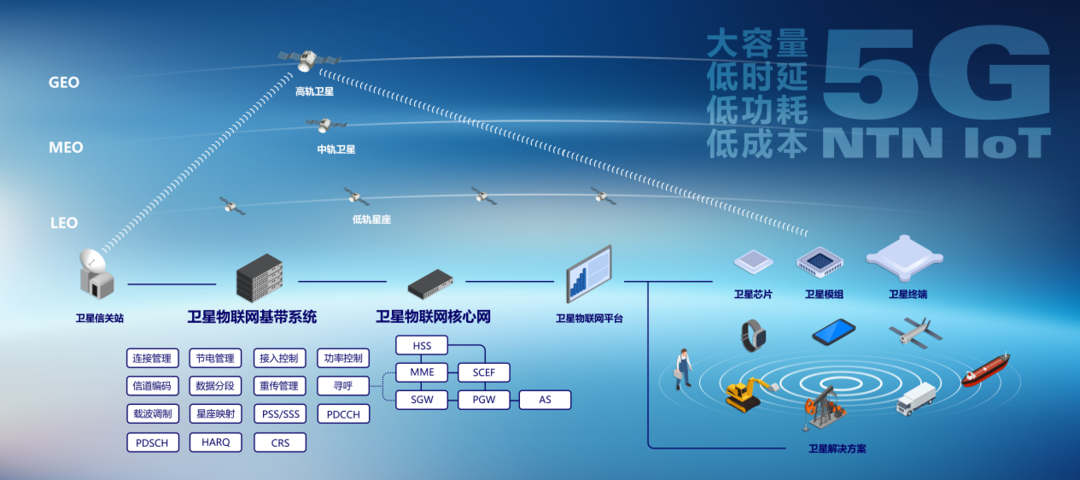
5G NTN卫星物联网芯片

Search documents
2025世界智能制造大会即将召开之际,探访我市相关企业和生态街区——
Nan Jing Ri Bao· 2025-11-26 02:29
Group 1: AI as a Core Driver of Intelligent Manufacturing - The 2025 World Intelligent Manufacturing Conference is set to open, highlighting AI as the core driving force behind intelligent manufacturing, which serves as a significant application scenario for AI technology [1] - Nanjing is experiencing a surge in its AI industry, with various applications enhancing efficiency and optimizing experiences across multiple sectors [1] Group 2: Digital Humans and AI in Daily Life - Digital humans are becoming increasingly realistic and are being integrated into various job roles, enhancing user experiences in daily life [2] - The National Development and Reform Commission has proposed measures to explore the use of AI models and digital humans in expanding e-commerce live streaming scenarios [2] - Silicon-based Intelligent Technology has been recognized as a key enterprise in Jiangsu's digital consumption innovation scene, showcasing its digital human live streaming platform [2] Group 3: AI in Content Creation - AI is reshaping the content creation ecosystem, serving as an efficient "content accelerator" for various media formats, including micro-dramas and live broadcasts [3] - The use of AI in micro-dramas allows for rapid production and high-quality outputs, indicating a new era of content creation where anyone can participate [3] Group 4: AI in Traditional Medicine - AI technology is being utilized in traditional Chinese medicine, exemplified by the AI smart Chinese medicine diagnostic device that provides health assessments in under a minute [5] - The collaboration between Haowei Health Technology and Nanjing University of Chinese Medicine aims to integrate traditional medicine knowledge with AI for enhanced clinical applications [5] Group 5: Intelligent Vehicles and Connectivity - Intelligent vehicles in Nanjing are being developed to better understand user needs, with advancements in AI enhancing the driving experience [6] - The company has empowered over 50 million vehicles and 60 million IoT devices, focusing on creating a seamless interaction between drivers and vehicles [6] Group 6: Satellite Connectivity for IoT - Satellite networks are being developed to ensure continuous connectivity for heavy machinery in remote areas, showcasing the potential of satellite technology in various fields [7] - The company aims to reduce communication costs significantly, making satellite communication comparable to ground network levels within 3 to 5 years [8] Group 7: Nanjing's Innovation Ecosystem - Nanjing's AI industry is supported by a robust innovation ecosystem, with a focus on collaboration between large enterprises, universities, and research institutions [9] - The AI industry cluster in Nanjing is designed to provide comprehensive support for AI technology development and application, facilitating a systematic approach to innovation [9]
南京AI:“能”量满满 赋“能”百业
Nan Jing Ri Bao· 2025-11-26 02:26
Core Insights - The article highlights the rapid development and integration of artificial intelligence (AI) across various sectors in Nanjing, emphasizing its role as a core driver of smart manufacturing and digital transformation [2][9]. Group 1: AI Applications in Various Industries - AI is being utilized in diverse fields such as smart terminals, smart vehicles, smart IoT, and smart healthcare, showcasing its broad applicability and transformative potential [2]. - Digital humans are being deployed in various roles, enhancing user experiences and operational efficiency in sectors like e-commerce and content creation [3][4]. - The integration of AI in traditional practices, such as Chinese medicine, is exemplified by the AI smart diagnosis system developed by Nanjing Haowei Health Technology, which combines advanced AI models with traditional medical knowledge [5][6]. Group 2: Innovations in Smart Vehicles and Connectivity - Smart vehicles are becoming more intuitive, with AI systems that understand user intentions and enhance driving experiences, as demonstrated by the "滴水OS" developed by Zhongke Chuangda [7]. - Satellite technology is being leveraged to ensure continuous connectivity for heavy machinery in remote areas, showcasing the potential of AI and satellite networks in enhancing operational capabilities [8]. Group 3: Ecosystem and Collaborative Development - Nanjing's innovation ecosystem, characterized by collaboration between large enterprises, universities, and research institutions, is fostering a conducive environment for AI development and application [10]. - The establishment of AI industrial clusters, such as the AI International Community in Nanjing, is facilitating the integration of resources and expertise, driving advancements in AI technologies [10].

鹏鹄物宇李源:卫星物联网将带动新一轮物联网产业升级
2 1 Shi Ji Jing Ji Bao Dao· 2025-11-03 06:45
Core Insights - The emergence of satellite IoT fills a critical gap in the IoT industry chain, requiring both ground and space networks for comprehensive connectivity [1] - The demand for AI and IoT integration on the satellite side is significantly greater than on the ground side, indicating a shift in focus for technological development [1][3] Group 1: Satellite IoT Developments - Penghu Wuyu launched four small, low-power, and cost-effective 5G NTN satellite IoT chips, along with seven communication modules and eight miniaturized satellite data transmission terminals [1] - The technology path for Penghu Wuyu is to implement 5G NTN, allowing ground IoT chips to be adapted for satellite communication, which will enable 100% data return and device monitoring within the next 3 to 5 years [3] Group 2: AI and IoT Integration - The relationship between AI and IoT is evolving from a one-way empowerment to a two-way empowerment, driven by model lightweighting, democratization of computing power, and the establishment of business closed loops [2] - Edge computing has become viable, achieving accuracy rates of 99.7% to 99.9% at lower costs compared to cloud computing, which is facilitating the practical application of AI in IoT [2] Group 3: Application Cases - Typical applications of satellite IoT include infrared camera animal recognition, where AI is used to identify rare animals before sending images for further analysis [3][4] - Asset monitoring is another application, where AI detects faults locally and sends encoded problem data back to the cloud for maintenance instructions [4] Group 4: Market Potential and Recommendations - The integration of satellite and IoT is expected to drive a new wave of upgrades in the traditional IoT industry, addressing the remaining 90% of areas without ground network connectivity, representing a trillion-dollar market opportunity [5] - Recommendations for enhancing the integration of AI and IoT include fostering deep collaboration between companies in both fields, developing low-cost standardized products, and matching scenarios with models to solve real-world problems [5][6]
5G NTN卫星物联网全球试验网在无锡发布
Yang Zi Wan Bao Wang· 2025-10-31 08:55
Core Insights - The 5G NTN satellite IoT global test network was officially launched at the 2025 World Internet of Things Expo on October 31 [1] - Penghu Wuyu (Wuxi) Aerospace Co., Ltd. is the developer of the 5G NTN system, which aims to upgrade satellite IoT through continuous iterations of 5G network protocols and innovative ground chip reconstruction [3] - The company has developed advanced satellite IoT baseband and core network equipment, providing high-performance and low-cost satellite IoT system services globally [3] Product Offerings - The initial product launch includes four small-sized, low-power, and low-cost 5G NTN satellite IoT chips, seven communication modules supporting various satellite modes, and eight miniaturized satellite data transmission terminals and tracking devices [3] - The 5G NTN satellite IoT test network is already operational in multiple overseas large-scale scenarios, supporting critical applications in energy, marine, heavy machinery, and drone monitoring [3] Future Projections - Over the next five years, the company plans to reduce satellite communication fees and terminal costs by two orders of magnitude, gradually approaching ground network pricing levels [4]