
数字人

Search documents
BIDU(BIDU) - 2025 Q4 - Earnings Call Transcript
2026-02-26 13:32
Financial Data and Key Metrics Changes - Baidu's total revenue for Q4 was CNY 32.7 billion, a 5% increase quarter-over-quarter, while total revenue for the full year 2025 was CNY 129.1 billion, a 3% decrease year-over-year [24][25] - Non-GAAP operating profits expanded 28% sequentially to CNY 2.8 billion in Q4, with non-GAAP operating income for the full year reaching CNY 15.0 billion [23][27] - Net income attributable to Baidu for Q4 was CNY 1.8 billion, with a net margin of 5%, while for the full year, net income was CNY 5.6 billion, with a net margin of 4% [28][29] Business Line Data and Key Metrics Changes - Revenue from Baidu's core AI-powered business exceeded CNY 11 billion in Q4, accounting for 43% of total revenue, indicating strong growth momentum [4][23] - AI Cloud infrastructure revenue grew 34% year-over-year, with subscription-based revenue from AI accelerator infrastructure increasing 143% year-over-year in Q4 [6][39] - Apollo Go delivered 3.4 million fully driverless operational rides in Q4, with total rides increasing by over 200% year-over-year, and cumulative rides surpassing 20 million [18][20] Market Data and Key Metrics Changes - Baidu's AI Cloud revenue reached CNY 30 billion for the full year 2025, driven by strong enterprise adoption and demand for AI computing [23][39] - The company expanded its global footprint for Apollo Go to 26 cities, reinforcing its leadership in autonomous ride-hailing services [20][56] Company Strategy and Development Direction - Baidu is focusing on scaling AI across its businesses, enhancing AI Cloud growth, and expanding robotaxi operations with improved unit economics [5][21] - The proposed spin-off and separate listing of Kunlunxin, Baidu's self-developed AI chips, is aimed at unlocking new opportunities for value creation [8][22] - The establishment of the Personal Super Intelligence Business Group (PSIG) aims to unify Baidu's consumer-facing AI applications, enhancing collaboration and innovation [17][22] Management's Comments on Operating Environment and Future Outlook - Management expressed confidence in sustaining strong growth momentum in AI Cloud and AI applications, driven by accelerating enterprise AI adoption [39][41] - The competitive landscape for AI models is intense, but Baidu believes that applications matter more than models, focusing on delivering value through practical use cases [33][36] - Management highlighted the importance of safety in autonomous driving, stating that Baidu's autonomous ride-hailing service is the safest globally [20][21] Other Important Information - Baidu announced a new $5 billion share repurchase program and adopted a dividend policy for the first time, reflecting a commitment to shareholder value [22][50] - The company reported a positive operating cash flow for two consecutive quarters, generating CNY 3.9 billion across Q3 and Q4 [23][29] Q&A Session Summary Question: How does management view the current competitive landscape for AI models? - Management noted that the market is highly competitive, emphasizing that applications are more important than models, and they are focused on an application-driven approach [33][36] Question: What are the key growth drivers behind Baidu AI Cloud's robust revenue growth? - Management highlighted that AI Cloud revenue reached CNY 30 billion, with strong growth driven by enterprise AI adoption and subscription-based revenue from AI accelerator infrastructure [39][41] Question: When should we expect AI-powered business to exceed 50% of Baidu's general business? - Management indicated that AI-powered business is rapidly increasing and is expected to become the majority of Baidu's general business in the foreseeable future [46] Question: Can management elaborate on the capital allocation framework? - Management discussed recent initiatives including a share repurchase program and the proposed spin-off of Kunlunxin, reflecting a coherent execution framework aimed at creating shareholder value [48][51] Question: What is the strategy for Apollo Go's international expansion? - Management outlined plans to leverage strategic partnerships and emphasized the importance of operational efficiency and safety in scaling Apollo Go's operations globally [56][59]

BIDU(BIDU) - 2025 Q4 - Earnings Call Transcript
2026-02-26 13:30
Financial Data and Key Metrics Changes - In Q4, Baidu's total revenue was CNY 32.7 billion, a 5% increase quarter-over-quarter, while for the full year 2025, total revenue was CNY 129.1 billion, a 3% decrease year-over-year [22][24] - Non-GAAP operating income for Q4 was CNY 3.0 billion, with a non-GAAP operating margin of 9%, while for the full year 2025, non-GAAP operating income was CNY 15.0 billion, with a non-GAAP operating margin of 12% [25][27] - Net income attributable to Baidu in Q4 was CNY 1.8 billion, with a net margin of 5%, and for the full year 2025, net income was CNY 5.6 billion, with a net margin of 4% [26][27] Business Line Data and Key Metrics Changes - Revenue from Baidu's core AI-powered business exceeded CNY 11 billion in Q4, accounting for 43% of total revenue, showing strong momentum [4][22] - AI Cloud infrastructure revenue reached CNY 30 billion for the full year 2025, with a year-over-year growth of 34%, and subscription-based revenue from AI accelerator infrastructure grew 143% year-over-year in Q4 [5][22][38] - Apollo Go delivered 3.4 million fully driverless operational rides in Q4, with total rides increasing by over 200% year-over-year, and cumulative rides surpassed 20 million [4][16] Market Data and Key Metrics Changes - Baidu's AI Cloud infrastructure is gaining strong traction, outpacing industry growth, driven by increasing enterprise AI adoption [5][22] - The AI-native marketing services segment saw revenue growth of 110% year-over-year, indicating robust demand for AI-driven solutions [6] Company Strategy and Development Direction - The company is focusing on scaling AI across its businesses, enhancing AI Cloud growth, and expanding robotaxi operations with improved unit economics [5][20] - A proposed spin-off and separate listing of Kunlunxin, Baidu's proprietary AI chips, is expected to unlock new value creation opportunities [6][21] - The establishment of the Personal Super Intelligence Business Group (PSIG) aims to unify and accelerate the development of consumer-facing AI applications [15][21] Management's Comments on Operating Environment and Future Outlook - Management highlighted the competitive landscape in AI, emphasizing that applications matter more than models, and that the company is committed to an application-driven approach [30][33] - The outlook for AI Cloud revenue growth in 2026 remains positive, driven by accelerating enterprise AI adoption and demand for AI computing [38] - Management expressed confidence in the growth trajectory of AI-powered businesses, anticipating that they will become the majority of Baidu's general business in the foreseeable future [46] Other Important Information - Baidu announced a new $5 billion share repurchase program and adopted a dividend policy for the first time, reflecting a commitment to shareholder value [21][50] - The company has invested over RMB 100 billion in AI since launching ERNIE in March 2023, with plans to maintain this investment level while balancing profitability [69] Q&A Session Summary Question: How does management view the current competitive landscape? - Management noted that the market is highly competitive, emphasizing the importance of applications over models and the need for an application-driven approach [30][33] Question: Can you elaborate on the key growth driver behind AI Cloud revenue growth? - Management highlighted that subscription-based revenue from AI accelerator infrastructure grew significantly, driven by strong enterprise AI adoption [38] Question: When should we expect AI-powered business to exceed 50% of Baidu's general business? - Management indicated that AI-powered business is rapidly increasing and is expected to become the core driver of overall revenue growth [46] Question: What is the long-term strategic positioning of Kunlunxin within Baidu Group? - Management stated that Kunlunxin represents a critical infrastructure component of Baidu's AI capabilities and is expected to unlock significant value through its proposed spin-off [50]
春晚机器人“组团”秀才艺!海淀新春科技庙会人气爆棚
Bei Jing Ri Bao Ke Hu Duan· 2026-02-19 12:11
Core Viewpoint - The 2026 Haidian New Spring Technology Temple Fair redefines traditional celebrations by integrating cutting-edge technology and cultural elements, showcasing a blend of innovation and festive spirit [1][24]. Group 1: Event Overview - The event, themed "Galloping Steeds, AI Celebrating the New Year in Haidian," commenced on February 19, 2026, at the Wukesong Wanda Plaza [1]. - Over 70 companies and 150 interactive exhibits were featured, including top robots and international technology showcases from events like CES 2026 [3][9]. - The fair aims to create a unique cultural symbol for Haidian, merging traditional customs with modern technology [9][11]. Group 2: Technological Integration - The fair included 43 embodied robot exhibits and 34 humanoid robot displays, featuring advanced technologies such as AI models, digital humans, VR, and AIGC [9]. - Robots performed traditional Chinese cultural acts, such as Peking opera and martial arts, demonstrating the fusion of metal aesthetics with traditional charm [4][11]. - Interactive experiences like AI calligraphy and digital shadow puppetry were designed to engage visitors and preserve cultural heritage [12][14]. Group 3: Community Engagement - The event attracted significant public interest, with families enjoying interactive robot performances and technology-driven experiences [6][14]. - The fair provided a platform for all age groups, including elderly-friendly services and activities for children, emphasizing inclusivity [14][24]. - Local businesses collaborated with technology firms to enhance consumer experiences, offering smart vending solutions and interactive entertainment [17][19]. Group 4: Economic Impact - The fair is part of Haidian's strategy to position itself as a global AI hub, promoting innovation and cultural soft power [24]. - The integration of technology and commerce at the fair is expected to stimulate new consumer behaviors and economic activity during the festive season [17][21]. - The event runs until February 23, 2026, providing ongoing opportunities for community engagement and economic benefits [24][25].



2026海淀新春科技庙会开幕,集结智元、宇树等43项具身机器人展项
Xin Lang Cai Jing· 2026-02-19 11:27
Group 1 - The 2026 Haidian New Spring Technology Temple Fair showcases over 150 interactive exhibits from more than 70 companies, highlighting the integration of traditional cultural elements with technological experiences and future living concepts [2][7] - The event features 43 embodied robot exhibits, including 34 humanoid robots, along with various AI models, digital humans, VR, and AIGC technologies, emphasizing the blend of festive atmosphere with advanced technology [7][8] - The fair is part of Haidian's ongoing efforts to establish itself as a core area of China's national technology innovation center, promoting the "first city of global artificial intelligence" initiative [3][8] Group 2 - The event runs until February 23, 2026, marking a continuation of the cultural and technological exchange initiated in the first technology fair held in 2025 [3][8] - Haidian aims to set a benchmark for urban renewal during festive occasions, providing a model for other cities while facilitating the direct application of cutting-edge technology to consumer experiences [8]

客易云与可灵API共舞:数字人交互与视频生成的新范式
Sou Hu Cai Jing· 2026-02-16 14:50
Core Insights - Digital humans are rapidly transforming human-computer interaction across various sectors, including education, finance, and entertainment, driven by the integration of KYC Cloud Interface Platform and Keling API, marking a shift from functional validation to large-scale application [1] Group 1: Digital Human Interaction - The synchronization of lip movements in digital humans is a key indicator of realism, with traditional methods often causing a sense of detachment due to slight discrepancies between speech and lip movements. The integration of Keling API allows for precise capturing of voice nuances, enhancing the realism of digital human interactions [2] - The system employs a "dual parsing engine" that analyzes both the physical characteristics of speech and the semantic layers of text, enabling a "conditioned reflex" synchronization of lip movements with spoken content, mimicking natural human responses [4] Group 2: Voice Cloning Technology - Traditional voice cloning techniques often lack emotional expression, making them sound mechanical. The collaboration with Keling API introduces emotional depth to voice cloning, allowing for the capture and reproduction of emotional characteristics in voice, enhancing user experience [5] - In customer service scenarios, digital humans can adjust their tone and speech patterns based on user emotions, providing a more personalized and empathetic interaction [5] Group 3: AI Video Generation - AI video generation is crucial for the practical application of digital human technology, with platform stability being essential for user experience. The integration of Keling API has improved stability, reducing issues like lag and distortion during video generation [6] - The system utilizes dynamic scene understanding and intelligent rendering engines to create realistic backgrounds and effects, ensuring smooth video generation even under high demand [7] Group 4: Technological Integration - The collaboration between KYC Cloud Interface Platform and Keling API redefines the interaction experience of digital humans, transitioning from mere functionality to a more user-friendly application [9] - Future advancements may include real-time emotional sensing and quick adaptation of digital human avatars to various scenarios, lowering the technical barriers for enterprises [9]


《寻找白龙马》2025年度AI投融资回顾
Sou Hu Cai Jing· 2026-02-13 12:03
Core Insights - In 2025, China's artificial intelligence (AI) sector experienced a significant transformation characterized by a shift from "burning money" to a focus on technological barriers, commercialization pathways, and supply chain security, driven by macroeconomic and geopolitical influences [2] - AI financing surged from 22.206 billion yuan in 2022 to 73.399 billion yuan in 2025, with its market share increasing from 2.65% to 10.86%, making it the only industry to show continuous growth over three years [2] - The embodiment intelligence sector saw explosive growth in financing, rising from 6.657 billion yuan in 2024 to 47.371 billion yuan in 2025, marking a year-on-year increase of 612% [2] Investment Landscape - The number of investment institutions in the AI sector reached 1,336, with notable players like Sequoia China, CICC Capital, Hillhouse Capital, and IDG Capital among the top investors [3] - The investment landscape is predominantly market-driven, contrasting with the state-owned institutions that dominate other sectors [3] Major Financing Events and Sector Analysis - The foundational model sector is consolidating, with significant investments directed towards established players like Moonshot AI, which raised $500 million at a valuation of $4.3 billion [5] - Domestic AI chips and computing power have become focal points for investment, with companies like Wallen Technology and Moore Threads receiving substantial backing [6][7] - Vertical AI applications, particularly in healthcare and enterprise automation, are gaining traction, with significant funding directed towards companies that demonstrate clear revenue and cost-saving capabilities [9] Trends in AI Investment - Investment strategies are shifting towards established companies with existing products and revenue, making early-stage financing more challenging [13] - State-owned and industrial capital are increasingly influential in the AI hard tech sector, focusing on both financial returns and industrial chain security [14] - The valuation metrics are evolving, with a greater emphasis on revenue and gross margins rather than user scale [15] - Opportunities are emerging in AI applications that integrate with traditional industries, such as manufacturing and finance, rather than standalone AI platforms [16] - The IPO landscape remains cautious, with many companies opting for mergers or acquisitions instead of pursuing public listings due to stringent regulatory requirements [17] Summary - The year 2025 marks a pivotal moment for China's AI industry, transitioning from a phase of intense competition in model development to a focus on "hard power" and practical applications [18]


2026 AI年度展望:关于「大公司、独角兽、创业者」的十条趋势判断
Xin Lang Cai Jing· 2026-02-07 13:43
Core Insights - The Chinese AI market is expected to be highly competitive in 2026, with major players like Alibaba, Tencent, and ByteDance vying for dominance [2][58] - Alibaba's strategic investment in "Qianwen" and Tencent's aggressive marketing tactics, such as distributing "Yuanbao red envelopes," are significant moves in this competitive landscape [2][58] - ByteDance is positioned as a formidable competitor, having established a leading presence in the AI to consumer (AI To C) market and holding substantial user traffic [2][58] Group 1: Competitive Landscape - The competition in the AI sector is likened to previous major battles in ride-hailing, payments, and food delivery, indicating its critical importance [3][58] - The "AI Six Tigers" have reached a pivotal moment with recent IPOs and funding rounds, necessitating a focus on self-sustainability and differentiation in their business models [3][59] - The urgency for these companies to find unique commercial paths is emphasized, as the current market lacks mature business models [4][60] Group 2: Business Models and Commercialization - Various business models are emerging, including subscription and advertising for consumer services, API sales for businesses, and performance-based pricing [4][60] - The AI application space is seen as the most promising for startups, with aspirations to achieve significant revenue and acquisition by larger firms [4][60] - The current state of AI commercialization is still in exploration, with no single model deemed fully mature yet [4][60] Group 3: Company Strategies - ByteDance's decision to prioritize multi-modal capabilities and its recruitment of top talent are crucial for maintaining its competitive edge [6][64] - Alibaba's "Qianwen" aims to serve as both a consumer-facing AI entry point and a foundational AI capability platform for its diverse business units [10][69] - Tencent's strategy involves refining its product offerings and clarifying the roles of its various platforms, such as WeChat and Yuanbao, to enhance user experience [13][75] Group 4: Future Trends and Challenges - The AI market is expected to see significant growth, with opportunities for new entrants to carve out niches in vertical markets [29][31] - The need for companies to adapt quickly to user demands and iterate on their products is highlighted as a key factor for success [11][70] - The integration of AI capabilities into existing services and the development of personalized user experiences are critical challenges for all major players [18][78]


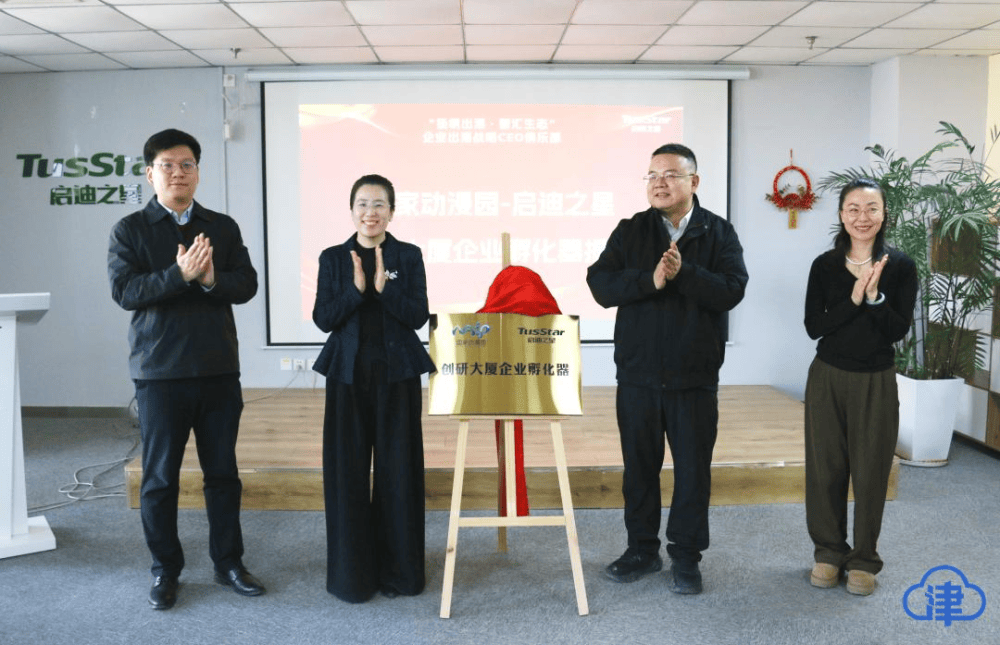
4500平方米!国家动漫园联合启迪之星打造全新“加速器”
Sou Hu Cai Jing· 2026-02-05 15:44
Group 1 - The newly unveiled incubation space, created by the National Animation Park and Tsinghua Unigroup (Tianjin Eco-City), covers approximately 4,500 square meters and offers office spaces ranging from 55 to 480 square meters to meet the needs of enterprises at different development stages [1][4] - Tsinghua Unigroup (Tianjin Eco-City) has been operational in the Eco-City for 10 years, successfully incubating over 400 companies and nurturing more than 100 high-quality enterprises, including national high-tech enterprises and specialized small and medium-sized enterprises [3] - The new incubation space will primarily serve high-growth enterprises, providing personalized services such as enterprise management, market expansion, project packaging, listing guidance, and cross-border operations [4] Group 2 - The unveiling of the incubation space is accompanied by the launch of the Trade Forest Cross-Border Industry-Education Integration Innovation Center, which focuses on addressing the challenges faced by small and medium-sized enterprises in international markets [4] - The center will offer comprehensive services including cross-border e-commerce operation guidance, policy interpretation, capital connection, and overseas market expansion to help enterprises seize new opportunities globally [4] - A service agreement was signed between LaiPIC and Tsinghua Unigroup (Tianjin Eco-City) to leverage the advantages of the Eco-City and the national cultural export base platform, aiming to expand into the Singapore and ASEAN markets [4]
2026年中国企业AI人才与组织发展报告
极客邦· 2026-02-05 09:25
Investment Rating - The report does not explicitly provide an investment rating for the industry Core Insights - The report highlights that AI is transitioning from experimental phases to becoming a foundational infrastructure for enterprises, with significant advancements expected by 2025 in various sectors including finance, manufacturing, and energy [4][5] - The focus is on the need for organizations to adapt their structures and talent development strategies to effectively integrate AI into their business processes, emphasizing the importance of creating quantifiable value from AI applications [4][5] Summary by Sections Section 1: Current State of AI Applications in Enterprises by 2025 - AI core talent constitutes less than 10% in nearly half of Chinese enterprises, indicating a reliance on application-oriented capabilities [20] - Internal training is the primary source for AI talent, with 75% of respondents indicating that internal development is preferred [23] - AI project implementation cycles are shortening, with nearly 50% of enterprises reporting that projects can be completed within one month, and some as quickly as one week [28] - Enterprises are entering a "scale validation period," with 75.3% of companies aware of their token consumption, indicating widespread application of large models [31][33] - The focus for 2026 will be on multi-agent collaboration and AI-assisted programming as key technological trends [34] Section 2: Intelligent Agents as Key Tools for AI Application - Technological breakthroughs and cost reductions are paving the way for the large-scale commercialization of intelligent agents [43] - The ecosystem is evolving, significantly lowering the barriers for the development and application of intelligent agents [45] - Policy support and market demand are mutually reinforcing the deep integration of intelligent agents into industry applications [47] Section 3: AI Technology Implementation Outcomes Below Expectations - The effectiveness of AI technology implementation is not meeting expectations, with only 39% of respondents reporting a significant impact on EBIT [59] - A lack of effective evaluation metrics for AI value is noted, with successful AI implementation often requiring business process redesign [59] Section 4: Demand for "Super Employees" in the AI Era - There is a growing demand for "super employees" who can manage end-to-end processes from demand discovery to product testing, leading to a reevaluation of traditional job roles [66] - The need for hybrid talent that combines business insight with AI technical skills is emphasized, with a shift towards roles that cover comprehensive workflows [67] Section 5: Talent Development Trends - The emergence of "super employees" who can navigate across traditional job boundaries is anticipated, driven by the integration of intelligent agents [72] - Management roles are expected to evolve, focusing on strategic oversight and resource allocation rather than traditional hierarchical functions [73] - New roles are likely to emerge that facilitate collaboration between humans and intelligent agents, enhancing operational efficiency [75]
宿迁全面启动数智新城建设,实施人工智能“百景应用”
Yang Zi Wan Bao Wang· 2026-02-02 16:00
Core Insights - The city of Suqian is focusing on building a "Smart City" to leverage opportunities from digital integration and e-commerce, aiming for a transition by 2030 from an e-commerce city to a smart city [1][2] Group 1: Strategic Planning - Suqian has developed a five-year plan and a three-year action scheme to support the construction of the Smart City, emphasizing scenario construction and the OPC (One Person Company) model [1] - The "14th Five-Year" development plan for Suqian's Smart City includes five dimensions: new smart economic structure, new urban space, new social forms, new governance models, and new infrastructure support [1] Group 2: Action Plans and Goals - An action plan for the Smart City from 2026 to 2028 has been established, targeting a digital economy output of 200 billion yuan, with 15% of revenue from core digital economy enterprises [2] - The plan aims to add 600 new digital economy enterprises and achieve an artificial intelligence industry cluster output of 72 billion yuan by 2028 [2] Group 3: Artificial Intelligence Initiatives - Suqian is implementing a "Hundred Scenarios Application" project in artificial intelligence, focusing on 165 specific scenarios across nine sectors, including public services and healthcare [2] - The integration of AI technologies such as robots and drones into these scenarios is expected to create significant market opportunities for AI companies [2] Group 4: OPC Development - The city is promoting the OPC model to foster entrepreneurship, with a specific implementation plan and tailored support policies to encourage innovation [3] - The "OPC Ten Hundred Thousand" initiative aims to create a conducive environment for mass entrepreneurship and innovation [3] Group 5: Societal Impact - The development of the Smart City is projected to create 50,000 new jobs, particularly in data annotation and collection [3] - Smart community and street initiatives will enhance the quality of life for residents, introducing new consumption patterns such as smart transportation and digital tourism [3] Group 6: Government Services Enhancement - The integration of data and AI into government services will lead to streamlined processes, improving user experience with features like "no application required" and "instant access" [4]