AI产品和解决方案

Search documents
价值引领,智启未来:宇信科技获评“金智奖”投资价值上市公司
Sou Hu Cai Jing· 2026-01-06 12:43
Core Viewpoint - The recognition of Yuxin Technology as an "Investment Value Listed Company" at the "Qihang·2025 Financial Summit" reflects its strong market performance and potential for long-term growth in the context of the financial industry's digital transformation [1][3]. Group 1: Award Significance - The "Jinzhi Award" aims to establish benchmarks for high-quality development, evaluating over 8,000 companies based on social responsibility, industrial contribution, investment returns, growth prospects, innovation efficiency, and brand excellence [3]. - Yuxin Technology's award signifies its comprehensive and balanced excellence under a rigorous evaluation system, highlighting its capital value and development potential [3]. Group 2: Company Strengths - Yuxin Technology has over 20 years of experience in the banking IT sector, focusing on financial digital transformation, which has contributed to its robust market position and revenue resilience [3][5]. - The company has built a comprehensive business system covering consulting, software, services, and operations, maintaining a leading client coverage rate in the banking industry for over a decade [3][5]. Group 3: Technological Innovation and Market Opportunities - The national implementation of the "Artificial Intelligence+" initiative positions Yuxin Technology to capitalize on the deepening financial digital transformation, particularly in areas like credit risk control and marketing services [5]. - Yuxin Technology's AI products and solutions have been widely adopted by various banking institutions, demonstrating its ability to convert cutting-edge technology into practical business value, which is a core competitive advantage [5][6]. Group 4: Future Outlook - The award is not only a recognition of past achievements but also a hopeful outlook for the future, emphasizing the need for the financial industry to actively promote AI applications and strengthen collaboration between financial institutions and technology companies [5][6]. - Yuxin Technology plans to continue focusing on its core business, enhancing technological innovation, and expanding its business boundaries, aligning with the long-term trends of increased digital and intelligent infrastructure investment in the financial sector [6][8].



变天警报,中国最大支柱产业崛起,发展加速抢占房地产头把交椅
Sou Hu Cai Jing· 2025-10-14 19:40
Core Insights - The real estate market in China is experiencing a significant downturn, transitioning from a symbol of wealth to a burden, with properties becoming inventory rather than sought-after assets [3][5][9] - The rise of artificial intelligence (AI) is reshaping the economic landscape, with a shift from real estate-driven growth to data and technology-driven opportunities [7][11][19] - The focus of local governments is shifting from land sales to attracting talent and data resources, indicating a fundamental change in economic strategy [13][19] Real Estate Market - The once-booming real estate sector is now facing challenges, with unsold properties and reduced demand leading to financial strain on local governments [3][5] - The narrative of real estate as a guaranteed investment is fading, as the market becomes saturated and consumer confidence wanes [9][17] Artificial Intelligence - AI is becoming integrated into everyday life and various industries, moving beyond theoretical applications to practical implementations [7][15] - The competition is now centered around technological capabilities, with cities vying to attract tech talent and establish data centers [7][13] Economic Transition - The economic structure is shifting from real estate dependency to a focus on technology and data, with AI emerging as a new growth engine [11][19] - Job markets are evolving, with traditional real estate roles declining while AI-related positions are on the rise, emphasizing the need for skill development [11][17] Government and Policy Changes - Local governments are adapting their strategies, moving from land sales to data resource management and talent acquisition [5][13] - China's position in the global AI landscape is strengthening, with the country not only catching up but also leading in certain applications [15][19] Societal Impact - The societal perception of wealth is changing, with individuals increasingly valuing skills and opportunities over property ownership [9][17] - The transition from a real estate-centric mindset to one focused on technology and skills is becoming evident across various demographics [17][19]

投入数百亿!欧盟拟在AI赛道弯道超车
Guo Ji Jin Rong Bao· 2025-07-30 15:26
Core Insights - The European Union (EU) is significantly lagging behind the US and China in the global AI competition and is focusing on establishing gigawatt AI factories to enhance its capabilities [1][2] - The EU has invested approximately €10 billion to build 13 AI factories, with an initial funding support of €20 billion, marking it as the largest public investment in AI globally [1] Group 1: Motivation for AI Factories - The EU's motivation for promoting AI factories stems from its clear shortcomings in AI computing power, large model development, and industrialization [1] - Despite having 30% more AI researchers per capita than the US and around 7,000 AI startups, European companies face severe bottlenecks in computing resources necessary for training large models [1] Group 2: Structural Challenges - High energy costs, cumbersome administrative approval processes, and the need for upgrades in power grid infrastructure are significant structural challenges hindering the development of startups in Europe [1] - The EU's stringent regulations on data sovereignty further exacerbate these challenges, with the Data Act set to be fully implemented by September 12, 2025, posing compliance challenges for global IoT, smart hardware, cloud computing, and connected vehicle companies [1] Group 3: Industry Perspectives - Telenor's Chief Innovation Officer, Hilsen, emphasizes that leveraging AI for innovation may require integrating sensitive business information into AI models, highlighting the potential for an "intelligent revolution" driven by autonomous AI factories [1] - The EU Commission's Executive Vice President, Vekkunin, noted that 76 letters of intent for super factory projects have been received from 16 member states, indicating widespread interest [2] Group 4: Infrastructure and Investment - Nvidia's CEO, Huang, highlighted the importance of infrastructure in driving AI industrialization and praised the initiative as a new "industrial revolution," with Nvidia collaborating with countries like France, Italy, and the UK to establish economically viable AI factories [2] - There are concerns regarding the feasibility of the super factory projects, with questions raised about the necessity of government funding and the clarity of private investment contributions [2] Group 5: Power Consumption Concerns - The power consumption of advanced super factories, potentially requiring up to 1 gigawatt of electricity each, raises concerns about whether the European power grid can accommodate these demands, necessitating significant investments in renewable energy capabilities [2]
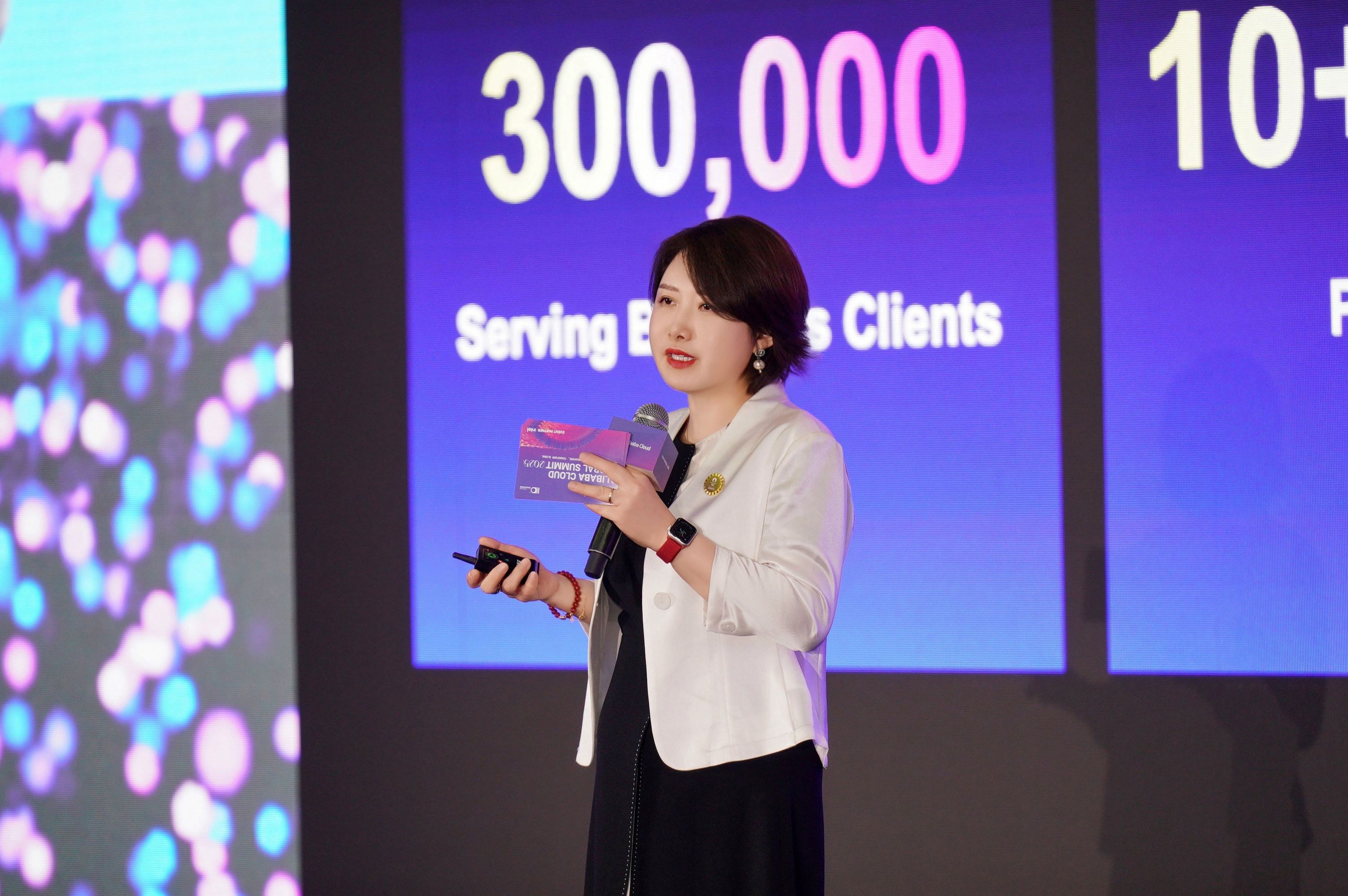
对话袁千| 从奥运到大模型开源,阿里云如何抢占全球市场?
Di Yi Cai Jing· 2025-07-14 13:33
Core Insights - Alibaba Cloud is entering a significant milestone in its international business as it approaches its ten-year anniversary in global operations, emphasizing a strategic commitment to global expansion [3][4][10] - The company has established a robust presence with 89 availability zones across 29 regions, serving approximately 5 million customers globally, and has seen over 20-fold growth in its overseas market in the past five years [4][10] - The focus on AI integration with cloud services is expected to drive future growth, with a prediction of a new wave of rapid development in the cloud and AI sectors over the next 3-5 years [18][24] Group 1: International Expansion - Alibaba Cloud has made significant investments in new data centers in Mexico, Thailand, South Korea, and Malaysia, enhancing its global cloud network [10][11] - The company aims to build a comprehensive cloud computing network covering China, Japan, South Korea, Southeast Asia, the Middle East, Europe, and the Americas [10][11] - The international business strategy is characterized by a long-term commitment to local market engagement and infrastructure development [4][24] Group 2: Client Engagement and Trust Building - The company has successfully partnered with high-profile clients such as the International Olympic Committee, BMW, SAP, and LVMH, demonstrating its capability to meet stringent requirements from top-tier companies [13][15] - Trust is built through a gradual process of collaboration, often taking 2-3 years for large enterprises to establish confidence in Alibaba Cloud's services [13][15] - The focus on long-term relationships is likened to maintaining a marriage, emphasizing the importance of sustained engagement and service quality [14] Group 3: AI Integration and Future Outlook - Alibaba Cloud's strategy includes a strong emphasis on integrating AI with cloud services, with 78% of global enterprises expected to adopt AI technologies [18][24] - The company has launched an open-source strategy for its AI models, with over 200 models available and more than 14,000 derivative models, positioning itself as a leader in the open-source AI space [19][20] - Future investments will focus on enhancing AI capabilities, expanding local service systems, and ensuring compliance with over 150 certifications already achieved [25][26]