AI修音

Search documents
花2亿给KTV装上AI,年轻人会买单吗?
3 6 Ke· 2026-01-26 11:40
Core Insights - The KTV industry is experiencing a revival with the integration of AI technology, leading to a new trend of "one room hard to book" during New Year's Eve 2026, despite previous predictions of its decline [1] - AI systems are being implemented to enhance the KTV experience, including scoring and competition mechanisms, but this has raised concerns about the emotional disconnect in social interactions [1][2] Group 1: AI Integration in KTV - KTV brands are adopting AI technology to innovate, with features like AI scoring and competition to attract younger audiences [1][10] - The AI scoring system evaluates singing performance based on pitch and rhythm, providing immediate feedback, which some users find stressful and competitive [2][4] - Users can participate in competitions for rewards, such as COACH brand bags, by achieving high scores through the AI system [6][8] Group 2: Market Dynamics and Challenges - The KTV market has seen a significant decline, with the number of KTV outlets dropping from over 120,000 to less than 50,000 by 2024, largely due to changing entertainment preferences among younger consumers [9] - KTV establishments are struggling to attract younger customers, who are increasingly drawn to alternative entertainment options like escape rooms and mobile karaoke [9] - To combat this, KTV brands are diversifying their offerings, integrating elements like gaming and fitness into the traditional karaoke experience [9][10] Group 3: Cost Efficiency vs. User Experience - The use of AI-generated music videos (AIMV) helps KTVs reduce copyright costs associated with traditional music videos, which have been a financial burden for the industry [14] - However, the quality of user experience has been compromised, as AI-generated videos often lack relevance to the songs, leading to a disjointed experience for consumers [15] - The success of AI in KTV will depend on its ability to enhance the overall experience rather than just serve as a marketing gimmick [16]

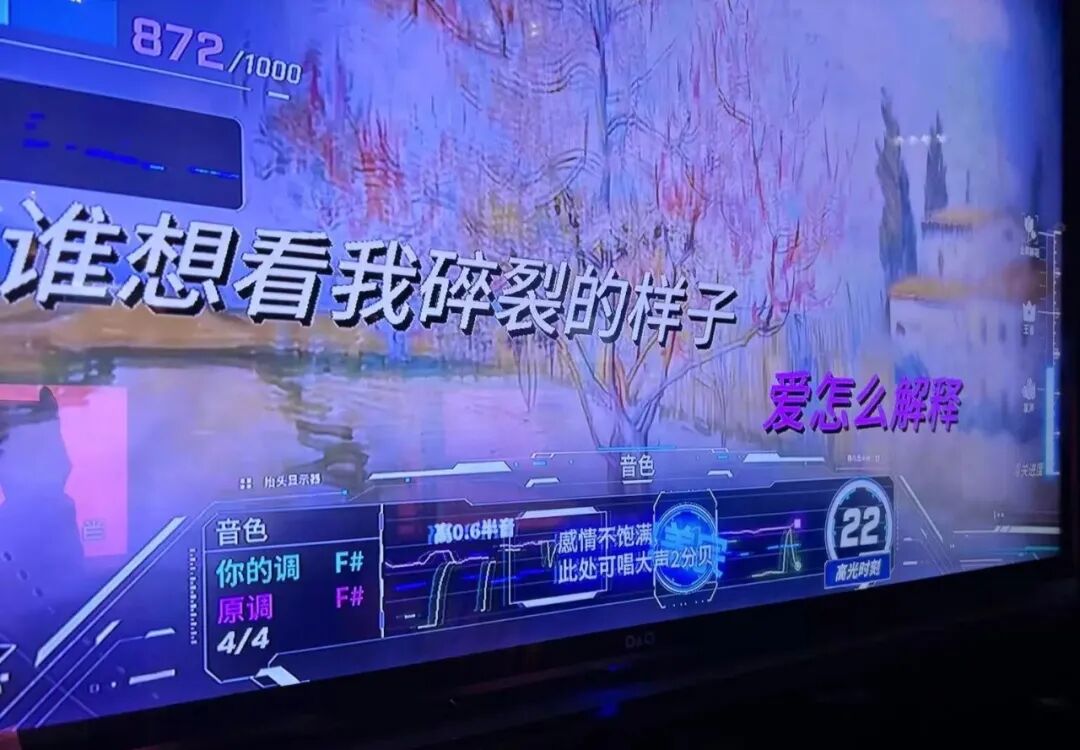
这年头去趟KTV ,我仿佛吃到了没熟的见手青
3 6 Ke· 2025-08-13 01:21
Core Viewpoint - The article discusses the impact of AI on the KTV industry, highlighting how AI-generated music videos (MVs) have transformed the KTV experience, often leading to confusion and dissatisfaction among customers due to their abstract and illogical nature [6][10][18]. Group 1: AI's Influence on KTV Experience - AI has reshaped the KTV experience, with customers expressing confusion and discomfort when faced with AI-generated MVs that do not align with the emotional context of the songs [6][18]. - The rapid and random visual changes in AI-generated MVs, such as transforming unicorns into pandas, contribute to a disjointed singing experience [9][10]. - Customers have reported a strong preference for traditional MVs over AI-generated content, with many requesting to switch back to original MVs during their KTV sessions [18][20]. Group 2: Business Strategy and Economic Implications - The establishment of MeikTV in 2017 aimed to differentiate itself in a saturated KTV market by embracing AI technology, including AI tuning and scoring systems [21][23]. - The use of AI-generated MVs is partly driven by economic considerations, as it can potentially reduce copyright costs associated with traditional MVs, which require licensing fees [27][33]. - KTV operators can save significantly on music and MV licensing fees by utilizing AI-generated content, which may also serve as a unique selling point in a competitive market [33][31]. Group 3: The Role of MVs in KTV - MVs play a crucial role in creating the emotional atmosphere necessary for a fulfilling KTV experience, with well-crafted MVs enhancing the connection to the song's lyrics [34][36]. - Traditional MVs often tell a coherent story that aligns with the song's themes, while AI-generated MVs lack this narrative coherence, leading to a less engaging experience [36][40]. - The article suggests that even simpler, more traditional methods of creating MVs may yield better results than the current AI approach, which often results in disjointed visuals [42][44].