
AI视频翻译

Search documents
【申万宏源研究春节见闻】从“鸡毛换糖”到“全球数贸中心”,见证义乌人基因里的生意经
Xin Lang Cai Jing· 2026-02-22 05:21
Core Viewpoint - The article highlights the transformation of Yiwu from a traditional trading hub to a global digital trade center, emphasizing its resilience and adaptability in the face of changing market dynamics [1][2][4]. Group 1: Global Digital Trade Center - The Yiwu Global Digital Trade Center officially opened on October 14, 2025, marking a significant shift from traditional trade to a digital trade ecosystem [4][31]. - The center covers an area of 1.25 million square meters, with 410,000 square meters dedicated to market space, housing merchants from eight new industries, including fashion jewelry and smart equipment [4][31][32]. - The center's development strategy includes a high-energy digital trade port and three digital trade platforms, aiming to empower commodity trade through data and cloud services [4][32][5]. Group 2: Industry Upgrade and Digital Trade - Yiwu's approach to digital trade is guided by decades of development experience, positioning it as a pioneer in applying digitalization to the trade sector [9][37]. - The essence of commodity trade is viewed as a competition of supply chains, with digitalization aimed at reducing information barriers and enhancing trade experiences [10][37]. - Despite market challenges, Yiwu's business entities have shown rapid growth, indicating that opportunities still exist, particularly in new industries and sectors [10][38]. Group 3: Cultural and Economic Significance - Yiwu's participation in the Spring Festival Gala as a sub-venue reflects its cultural significance and international engagement, showcasing its evolution from local markets to a global stage [18][46]. - The gala's themes highlight Yiwu's journey and its representation of modern China, emphasizing the blend of traditional culture with contemporary business practices [18][50]. - The integration of technology and intellectual property in Yiwu's branding is becoming a distinctive feature, enhancing its appeal as a global trade hub [50][54]. Group 4: Future Prospects - The article concludes that Yiwu is poised to enter a new chapter in its development, with the Global Digital Trade Center symbolizing its commitment to innovation and global trade [54][55]. - The ongoing evolution of Yiwu's market dynamics and the emergence of new business models suggest a promising future for the region as it aligns with China's broader industrial trends [54][55].



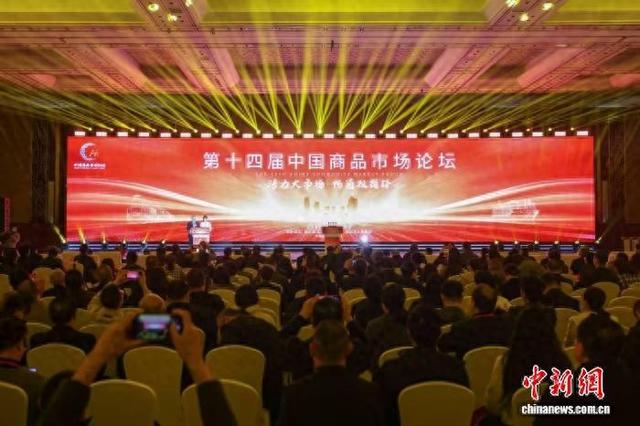
从买卖全球到链接全球 浙江商品市场探索转型新路径
Zhong Guo Xin Wen Wang· 2025-11-28 09:01
Core Insights - Zhejiang province is experiencing a transformation in its commodity market, with a total transaction volume expected to exceed 1.8 trillion yuan in 2024, reflecting a year-on-year growth of 4.73% [1] - The market is evolving from a traditional trading model to an integrated ecosystem that encompasses the entire industrial chain, driven by "digital intelligence integration" [1][2] Group 1: Market Performance - In 2024, Zhejiang's 786 specialized markets are projected to achieve a total transaction volume of 1.77 trillion yuan, with 1.28 trillion yuan already recorded in the first three quarters of the year [1] - Zhejiang boasts two markets with transaction volumes exceeding 100 billion yuan, 31 markets over 10 billion yuan, and 451 markets over 1 billion yuan, holding 29 positions in the "Top 100 Chinese Commodity Markets" [1] Group 2: Digital Transformation - Over 25% of operators in Zhejiang's commodity markets have engaged in e-commerce, with an average annual transaction volume of 3.62 million yuan per operator [2] - The live-streaming e-commerce sector in Zhejiang is projected to generate 80.75 billion yuan in transaction volume in 2024, marking an impressive year-on-year increase of 89% [2] - More than 50% of commodity markets in Zhejiang have completed digital transformation by the end of 2023, with total investments exceeding 3.4 billion yuan [2] Group 3: Quality and Brand Development - The focus on quality has become essential for gaining consumer trust, with Zhejiang's markets enhancing brand incubation and implementing differentiated management for quality protection zones [3] - Zhejiang is advancing mandatory and recommended standards for quality control, with some markets establishing unified quality inspection and supply chain platforms [3] - The establishment of intellectual property protection offices in many markets aims to safeguard original designs, trademarks, and patents [3] Group 4: Innovative Market Models - Haining China Leather City has transitioned from a "selling goods" model to leading fashion lifestyle trends, with over 60% of new leather designs originating from this market [4] - Pinghu China Garment City has integrated into local tourism initiatives, attracting family visitors and achieving annual sales exceeding 50 billion yuan [4] Group 5: Global Integration - Zhejiang's commodity markets are shifting from a simple distribution model to a hub ecosystem that efficiently integrates global resources [6] - Yiwu Small Commodity City has developed its own brand "Yi Payment," collaborating with over 400 banks globally and covering more than 100 countries [6] - The establishment of overseas warehouses and logistics systems aims to enhance global circulation capabilities, with new international stations set up in Russia and Turkey [6] Group 6: Future Development Strategies - The Zhejiang Market Regulatory Bureau emphasizes five key trends: full-chain integration, digital intelligence, quality enhancement, experiential scenarios, and internationalization [8] - Recommendations include creating new market-industry synergies, developing new consumption benchmarks, activating comprehensive service platforms, and leveraging AI for market innovation [8]
“世界超市”义乌将全力打造全球贸易标杆地
Zheng Quan Shi Bao Wang· 2025-10-21 00:42
Core Insights - Yiwu, known as the "world supermarket," hosted the 2025 Yiwu Trade Conference, attracting over 1,000 domestic and international buyers, trade association representatives, and e-commerce platforms [1] - The city aims to establish itself as a global trade benchmark and innovation hub through its "146" development strategy, focusing on marketization, internationalization, digitalization, and integration [1] - The Yiwu Global Digital Trade Center, a key project under the listed company Yiwu Small Commodity City, has a total investment of approximately 8.3 billion yuan and aims to enhance the digital capabilities of trade [1] Trade and Logistics Development - The conference theme "New Patterns, New Opportunities, New Benchmarks" addressed global economic trends and trade rules, alongside the second China Logistics Hub Development Conference and an AI-enabled trade forum [2] - Yiwu is enhancing its logistics capabilities through four main channels: land (Zhejiang-Europe Railway), sea (integration with Ningbo-Zhoushan Port), online (digital trade), and air (global air cargo network) [2] - From January to September this year, the Zhejiang-Europe Railway (Yixinou) operated 2,427 trains, a year-on-year increase of 18.3%, while the sea-rail intermodal transport saw a 22.6% increase in heavy container shipments [2] Digital Economy and AI Integration - Yiwu is recognized as a pioneer in the digital economy, developing a comprehensive trade model that includes 13 AI applications focused on small commodity trade [3] - The model has over 30,000 registered users and has recorded over 1 billion AI product calls, with businesses utilizing AI seeing order increases of over 30% [3]
“湘”约全球 逐梦AI
Chang Sha Wan Bao· 2025-09-18 23:37
Core Insights - The article highlights the emergence of Changsha as a significant player in the artificial intelligence (AI) sector, emphasizing its strategic initiatives and advancements in AI technology and applications [1][3][5]. Group 1: AI Development and Infrastructure - Changsha is home to major supercomputing centers, including the National Supercomputing Center, with a total computing power exceeding 12,000 PF, ranking third nationally [3][11]. - The city aims to establish itself as a global research and development hub, with plans to grow its AI industry to over 100 billion yuan by 2026 [8][10]. - The local government has implemented various policies to support AI development, including the "Artificial Intelligence + Action Plan" and investment in digital infrastructure [8][10]. Group 2: AI Applications Across Industries - The focus of Changsha's AI strategy is on practical applications, targeting sectors such as healthcare, manufacturing, and smart transportation [7][42]. - AI technologies are being integrated into manufacturing processes, enhancing efficiency and precision, as seen in companies like GAC Aion and various robotics firms [22][24][26]. - The healthcare sector is leveraging AI for innovations in diagnostics and patient management, with companies like Sanofi and the Beijing University Changsha Institute leading initiatives [43][44]. Group 3: Innovation and Talent Development - Changsha has established numerous innovation platforms and research centers, collaborating with universities to foster talent and technological advancements [12][17]. - The city has seen a surge in entrepreneurial activities, with over 4,000 new businesses registered by university students in the past year, reflecting a vibrant startup ecosystem [15][16]. - Major companies, including ZTE and Huawei, are setting up AI research centers in Changsha, contributing to the local talent pool and innovation landscape [17][18]. Group 4: Cultural Integration of AI - The integration of AI into cultural sectors is evident, with initiatives that enhance cultural heritage through technology, such as AI-driven digital exhibitions and content creation [30][32]. - Changsha is leveraging AI to transform cultural industries, enabling new forms of content creation and audience engagement [33][36]. - The city is positioned as a leader in the "AI + Culture" movement, utilizing AI to revitalize traditional cultural practices and expand their reach [38][41]. Group 5: Future Prospects and Challenges - Changsha aims to solidify its position in the AI landscape by attracting leading enterprises and enhancing its research capabilities [49][50]. - The city is focused on overcoming challenges in AI adoption, including the need for more robust talent development and investment strategies [49][50]. - With a commitment to innovation and quality development, Changsha is poised to become a key player in the global AI industry [51].
