AR技术体验

Search documents
跨年的仪式感拉满了
Xin Lang Cai Jing· 2026-01-03 05:55
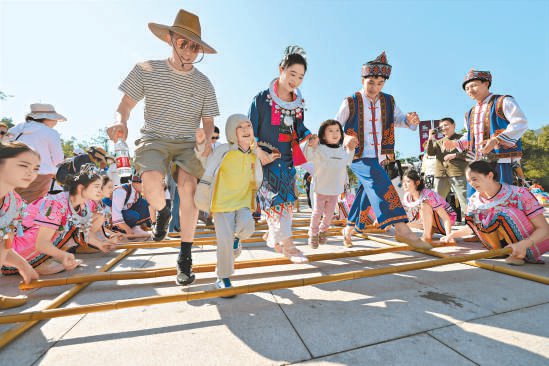
Group 1: Cultural and Tourism Activities - Unique cultural activities were held in Guizhou and Zhejiang, showcasing local traditions and attracting tourists for a distinctive New Year experience [3] - In Guizhou, over 800 non-heritage craft vendors participated in a market, offering various cultural products and experiences [3] - In Zhejiang, traditional games and local cuisine were featured, enhancing the cultural immersion for visitors [3] Group 2: Technological Integration in Tourism - The integration of technology in tourism has created new experiences, such as a 14-meter tall light installation in Ningxia and interactive AR features [4] - Robots were actively engaged in retail services, significantly reducing customer wait times in Suzhou [4][5] - Mechanical dogs designed for snowy conditions became popular attractions in Harbin, enhancing the winter tourism experience [5] Group 3: Transportation and Travel Trends - China's high-speed rail network has surpassed 50,000 kilometers, facilitating increased travel during the New Year holiday [6] - Popular travel routes included major cities like Beijing, Shanghai, and Guangzhou, with a high occupancy rate of 90% on special holiday trains [6] - The expansion of visa-free travel for Chinese citizens to Turkey has made it easier for tourists to visit, with the first flights arriving on the day the policy took effect [7] Group 4: Incentives for Consumer Spending - A pilot program for prize-linked receipts will be launched in about 50 cities, encouraging consumer spending in retail, dining, and tourism sectors [8] - The program allows consumers to win up to 800 yuan for eligible receipts, aiming to stimulate economic activity [8]

新华网财经观察丨不按套路出牌 撬动商业新模式
Xin Hua Wang· 2025-05-13 02:17
Core Insights - The article discusses the rise of "non-standard commercial" projects as a key to driving innovation in traditional business, which faces homogenization challenges [2][5][12] - These projects leverage unique local characteristics and immersive experiences to attract younger consumers, creating a new consumption trend [7][9][19] Group 1: Characteristics of Non-Standard Commercial - Non-standard commercial spaces break away from traditional standardized shopping experiences, offering unique and personalized environments [5][9] - Examples include Shanghai's Panlong Tiandi, which integrates modern commerce with historical architecture, and Changchun's "This Has Mountains," which creates an immersive shopping experience [5][7] - Data from Meituan indicates that commercial spaces with regional cultural tags have a 38% higher repurchase rate compared to standard malls [9] Group 2: Consumer Engagement and Experience - Younger consumers are drawn to non-standard commercial spaces for their interactive and aesthetically pleasing environments, which foster a sense of community and engagement [11][19] - Non-standard commercial projects often feature high-frequency content updates and customized operations, enhancing consumer retention and experience [11][12] - The emotional release and immersive experiences offered by these spaces are becoming significant factors influencing consumer decisions [12][19] Group 3: Market Trends and Growth - The non-standard commercial sector is rapidly expanding, with significant growth in new projects, particularly in cities like Chengdu, where the supply of non-standard commercial space has surpassed traditional formats [17][19] - The rise of "first-store economy" complements non-standard commercial, with many new brands seeking unique spaces to enhance their market presence [17][19] - Industry experts highlight the importance of strategic planning and location selection for the success of non-standard commercial projects, emphasizing the need for a deep understanding of target demographics [19][23] Group 4: Operational Challenges and Sustainability - Despite the popularity of non-standard commercial spaces, challenges remain regarding their long-term sustainability and operational efficiency [18][19] - Issues such as poor design and high operational costs can hinder the consumer experience, leading to potential declines in foot traffic [18][19] - Successful non-standard commercial projects require experienced management teams capable of integrating brand resources and creating engaging consumer experiences [23]