AW119医疗直升机

Search documents
粤港澳大湾区领跑低空经济新赛道
Ren Min Ri Bao Hai Wai Ban· 2026-01-07 23:00
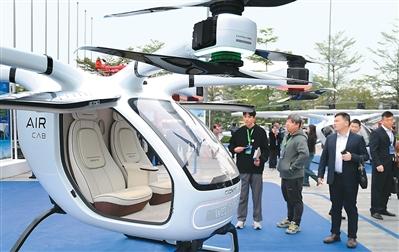
Core Insights - The Guangdong-Hong Kong-Macao Greater Bay Area is positioned as a leading hub for the emerging low-altitude economy, with significant policy support and industry collaboration [2][4]. Group 1: Event Overview - The 2025 Greater Bay Area Low Altitude Economy High-Quality Development Conference was held in Guangzhou, showcasing the region's commitment to developing a comprehensive low-altitude economic ecosystem [2]. - Various flying vehicles were presented, including drones and air ambulances, illustrating the practical applications of low-altitude economic initiatives [3]. Group 2: Market Potential - The low-altitude economy market in China is projected to reach 1.5 trillion yuan by 2025 and is expected to exceed 2 trillion yuan by 2030, with Guangdong accounting for over 30% of the industry chain [4]. - Guangdong is set to produce 6.94 million civilian drones in 2024, leading the nation with a 95% market share in consumer drones and 54% in industrial drones [4]. Group 3: Policy Initiatives - New policies were introduced to support low-altitude economic infrastructure, technological innovation, and management services, including a comprehensive low-altitude airspace management reform plan [5]. - The "Twelve Measures for Low Altitude Finance" were released to enhance financial support for low-altitude economic clusters, focusing on systemic support and collaboration [5]. Group 4: Infrastructure and Talent Development - The Guangdong Low Altitude Flight Comprehensive Management Service Platform was launched, capable of monitoring over 50,000 flights daily and processing 80 million data points [6]. - A talent cultivation service platform for the low-altitude economy was established, aiming to build a robust talent pool for the sector's development [6]. Group 5: Collaborative Efforts - Multiple cities in the Greater Bay Area are collaborating to drive low-altitude economic growth, with Guangzhou planning significant infrastructure developments and a government fund of 20 billion yuan to support the industry [7]. - Hong Kong and Macau are also taking steps to establish regulatory frameworks and support systems for low-altitude economic development [7]. Group 6: Future Development - The "2025 Greater Bay Area Low Altitude Economy Blue Book" emphasizes the importance of collaborative integration among core cities like Guangzhou, Shenzhen, and Zhuhai, and the need for cross-border cooperation with Hong Kong and Macau [8].

大湾区低空经济掘金千亿风口
21世纪经济报道· 2025-12-27 12:35
Core Viewpoint - The development of the low-altitude economy hinges on identifying real scene demands, with a focus on high-frequency, low-risk scenarios to drive regulatory and management improvements [1]. Low-altitude Logistics: Competition Among Tech Giants - Major companies like JD.com, Meituan, and SF Express are actively competing in the low-altitude logistics sector, showcasing their unmanned aerial vehicles (UAVs) [3][6]. - JD.com plans to achieve normalized operations for its drones and unmanned vehicles by 2025, with significant logistics improvements in the Greater Bay Area, including a 70% increase in transportation efficiency for medical supplies across the Pearl River [4][6]. - Meituan has launched 65 flight routes and completed 740,000 commercial orders by December, with a focus on instant delivery services [6]. - SF Express has established 1,400 flight routes and operates over 1,000 drones, aiming to expand its coverage in the Greater Bay Area [8]. Low-altitude Cultural Tourism: A New Consumption Trend - The low-altitude cultural tourism sector is transitioning from niche experiences to mass consumption, projected to reach a market size of 200 billion yuan by 2030 [10][12]. - The Ministry of Culture and Tourism and the Civil Aviation Administration have issued a plan to support the development of low-altitude tourism, encouraging the creation of unique routes and products [14]. - Guangzhou is leading in low-altitude tourism development, with plans for 10 low-altitude takeoff and landing bases and a government fund of 20 billion yuan to support the industry [14]. - The integration of low-altitude tourism with various applications, such as aerial sightseeing and emergency rescue, provides a testing ground for regulatory frameworks and operational safety [15]. Business Model Validation - The profitability of low-altitude tourism has been validated, with operators beginning to generate revenue, indicating a significant step towards the economic viability of the low-altitude sector [17].