Agent Payments Protocol(AP2)

Search documents
“商业的HTTP”来了:谷歌CEO劈柴官宣 UCP,Agent 直接“剁手”下单,将倒逼淘宝京东“拆家式重构”?
AI前线· 2026-01-20 06:35
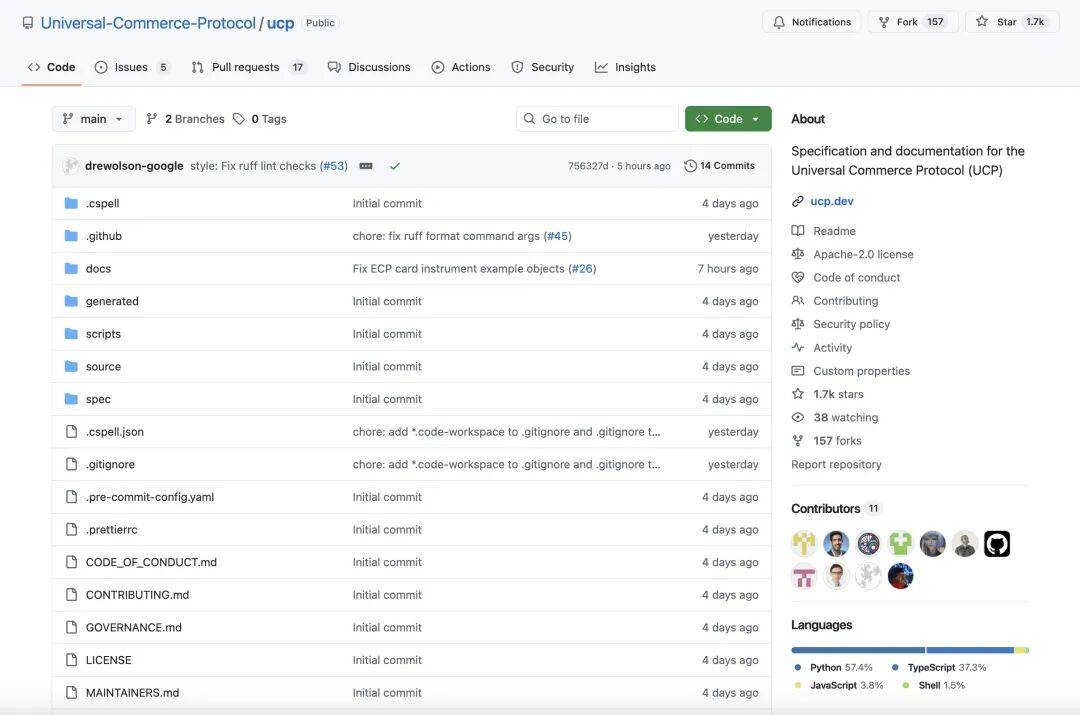
Core Viewpoint - Google has introduced the Universal Commerce Protocol (UCP), aiming to standardize online shopping through a new open standard that allows agents to facilitate direct purchases online [2][4]. Summary by Sections Introduction of UCP - Google CEO Sundar Pichai announced UCP at the NRF conference, which aims to break down the shopping process into reusable components, enhancing the interaction between agents and merchants [2][5]. Ambition of UCP - UCP is likened to HTTP for commerce, aiming to streamline the traditional e-commerce process from "search-ad-product page-checkout" to "intention-agent reasoning-purchase" [5][6]. Structure and Capabilities of UCP - UCP aims to connect various stages of the purchasing process, including product discovery, checkout, and post-purchase support, under a unified standard [7][10]. - The protocol includes six core capabilities: product discovery, shopping cart, identity linking, checkout, order management, and other vertical capabilities [10][11]. Communication and Integration - UCP is designed to work alongside other agent protocols like Agent Payments Protocol (AP2) and Agent2Agent (A2A), allowing flexibility in how agents and merchants interact [11][14]. Product Discovery and Shopping Cart - Product discovery is expected to be linked with Google Shopping Feed, while the shopping cart aims to create a unified experience across merchants, potentially revolutionizing e-commerce [12][19]. Data and Discoverability - UCP focuses on enhancing product discoverability by requiring merchants to provide extensive product data, which is crucial for AI-driven searches [16][18]. - Google is expanding its Merchant Seller tools to include new data attributes, which will help brands optimize their product listings for better AI search rankings [17][19]. Industry Partnerships - UCP has attracted significant partners from both retail and payment sectors, including Shopify, Walmart, and Visa, indicating a strong collaborative effort to establish the standard [21][23]. Future Implications - The introduction of UCP signals a shift in the retail landscape, where agents will play a crucial role in transactions, potentially reshaping the relationship between consumers and brands [24][25].



“商业的HTTP”来了:谷歌CEO劈柴官宣 UCP,Agent 直接“剁手”下单,将倒逼淘宝京东“拆家式重构”?
Sou Hu Cai Jing· 2026-01-17 16:02
Core Insights - Google has introduced the Universal Commerce Protocol (UCP), aiming to standardize online shopping through agents, allowing for a seamless end-to-end shopping experience [1][2][4] - UCP is designed to enable interoperability among various agents and merchants, facilitating direct communication and transactions without the need for traditional web navigation [2][4] - The protocol is released under the Apache 2.0 open-source license, indicating a commitment to community collaboration and development [3] Group 1: UCP Overview - UCP aims to streamline the entire shopping process, from product discovery to post-purchase support, under a unified standard [6][12] - The protocol includes six core capabilities: product discovery, shopping cart, identity binding, checkout, order management, and other vertical capabilities [8][10] - UCP is not an isolated protocol; it is designed to work alongside other agent protocols like Agent Payments Protocol (AP2) and Agent2Agent (A2A) [9][12] Group 2: Market Impact - The introduction of UCP is seen as a transformative move in e-commerce, potentially reshaping the traditional sales funnel into a more efficient process [4][12] - Major retailers and payment systems, including Shopify, Walmart, and Visa, have already joined the UCP initiative, indicating strong industry support [17] - The protocol's focus on discoverability aims to change how products are accessed and purchased, moving away from traditional web pages to data-driven interactions [12][14] Group 3: Future Implications - The evolution of UCP suggests a significant shift in the retail landscape, where AI-driven agents may redefine the roles of traditional e-commerce platforms [18][20] - As agents become more integrated into commerce, the potential for a new business model emerges, combining social, e-commerce, and service elements [18][20] - The ongoing development of UCP and its adoption by major players signals a trend towards a more automated and efficient retail environment [17][19]