Aibrary

Search documents
同属热门赛道,冰火重两天|回看2025 AI播客篇
创业邦· 2026-02-19 01:08
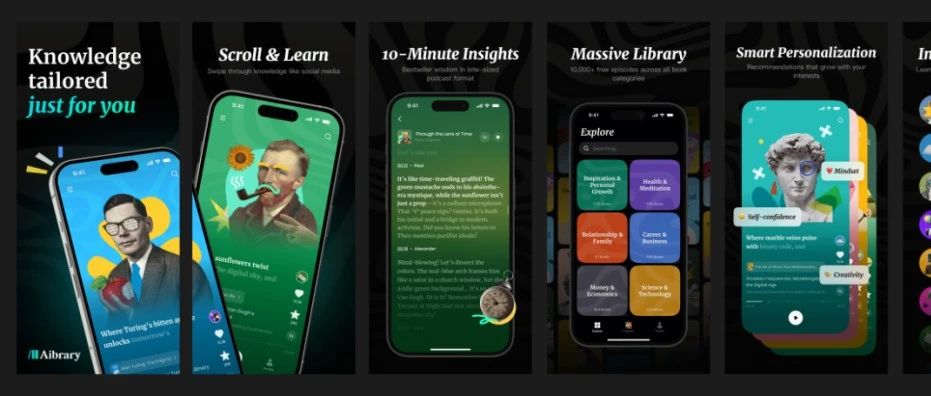
Core Insights - The article discusses the rise and challenges of AI podcasting products, highlighting the mixed success of various offerings in the market [5][32]. - It emphasizes the importance of finding a "strong scenario" for AI products to succeed, particularly in knowledge acquisition [5][32]. Group 1: AI Podcasting Products Overview - NotebookLM's AI podcast feature gained popularity in late 2024, transforming notes and papers into digestible audio formats, targeting users with limited time [5]. - ChatPods, launched by Beijing Muyan Zhiyu Technology, aimed to aggregate existing podcast content and assist users in digesting it but ultimately failed to meet user needs and was removed from app stores [10][13]. - The AI podcast "Lai Fu," launched in July 2025, generated content based on user interests and performed better than ChatPods, achieving around 1,000 daily downloads by mid-December [14]. Group 2: User Engagement and Market Dynamics - User feedback indicated that podcast listeners often prefer entertainment and emotional value content, leading to a mismatch between the efficiency tools offered by products like ChatPods and user preferences [12][14]. - Aibrary, an AI podcast product focused on transforming books into personalized audio content, showed some success with 17,000 downloads in 30 days but generated only $171 in revenue [17][21]. - Befreed, another similar product, achieved better results with 125,000 downloads and $12,000 in revenue, emphasizing personalized recommendations and goal-oriented content [21]. Group 3: Successful Strategies and Market Trends - Speechify, a text-to-speech tool, has maintained a strong market presence, generating over $500,000 in monthly revenue at its peak, by targeting ADHD users and offering a subscription model [24][25]. - ListenHub, focusing on professional creators, achieved an ARR of over $3 million and secured $2 million in funding, demonstrating the viability of productivity tools in the audio space [26]. - Ancher, an AI news reader, aims to provide high-quality information to professional users, having raised millions in funding and focusing on delivering valuable insights beyond just news headlines [29][30]. Group 4: Conclusion and Future Directions - The article concludes that the mismatch between entertainment and knowledge acquisition in AI podcasting products is a significant barrier to market success [32]. - It suggests that identifying strong value propositions and adapting to specific user needs will be crucial for future AI knowledge acquisition products [32].

前字节高管创业教育类出海项目,用Agent做“终身学习搭子”,红杉投了
3 6 Ke· 2026-02-14 09:27
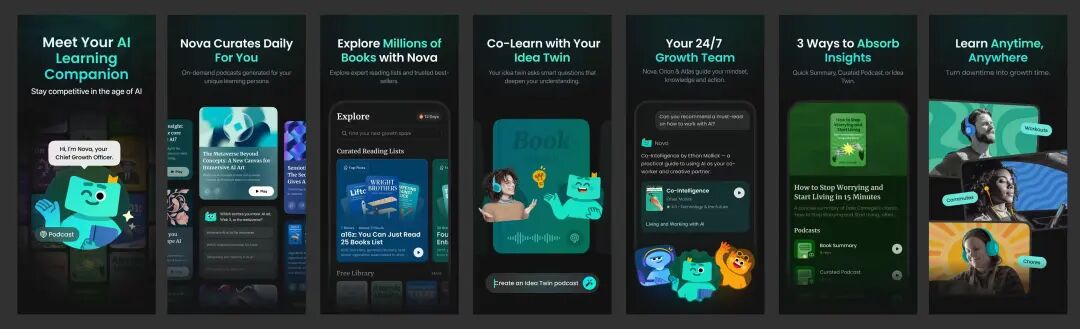
Core Insights - Ouraca, founded by experienced professionals in the internet education sector, aims to create an AI Agent for lifelong learning, with its first product, Aibrary, set to launch in September 2025 [1][2]. Company Overview - Ouraca was officially established in March 2025 and secured $7 million in seed funding from notable investors including Sequoia China and Initial Capital [2]. - The founding team consists of industry veterans: CEO Li Kejia, co-founder Wu Jundong, and co-founder Zhang Qiming, all with significant backgrounds in education technology [1]. Product Development - Aibrary features a unique "AI-generated podcast" function called Idea Twin, which guides users in their learning journey by allowing them to ask questions and receive tailored responses [2][3]. - The product is designed to facilitate high-quality questioning, addressing the challenge of users not knowing what to ask [3][7]. User Engagement - Aibrary provides users with daily topic suggestions and integrates insights and reading lists into its podcasts, enhancing the learning experience [4][5]. - The platform aims to create personalized interactions by learning user profiles through initial registration and ongoing engagement [11][12]. Target Market - The primary user demographics identified include busy professionals, recent graduates, and parents seeking continuous learning opportunities [13][14]. - The team conducted extensive research to understand user needs, confirming that the desire for lifelong learning is widespread, not limited to elite groups [15]. Marketing Strategy - Ouraca employs a dual marketing approach, utilizing online platforms like LinkedIn and YouTube for outreach while also engaging in local partnerships with book clubs and universities [17]. - The founders leverage their experience in promoting consumer products in China to adapt strategies for the U.S. market [17]. Future Directions - Ouraca is exploring the concept of "Agent learning," with the introduction of BotLearn, a community for agents to share knowledge and skills, indicating a shift towards AI-driven education [19][22]. - The potential for agents to learn from each other and provide feedback to human users represents a novel approach in the education sector, creating a network effect not previously seen [22].

又一明星创始人入局AI播客、红杉中国押注,这次能翻出水花吗?
创业邦· 2025-10-28 04:19
Core Viewpoint - The article discusses the emergence of Aibrary, an AI podcast platform aimed at enhancing personal learning experiences, differentiating itself from existing products by focusing on personalized content delivery and interactive learning pathways [12][14][35]. Group 1: Product Overview - Aibrary was launched on April 23, 2023, in the US App Store and officially on September 23, 2023, with a focus on transforming books into personalized podcasts for individual learning [12][14]. - The platform features a recommendation system and a content framework that tailors suggestions based on user preferences, including a six-step registration process to gather user interests [16][14]. - A key feature is the "Idea Twin Podcast," which allows users to engage in a dialogue with an AI host, using their own voice as a "twin" to enhance the immersive experience [24][25]. Group 2: Market Positioning - Aibrary targets the adult lifelong learning market, a shift from the traditional K12 education focus of its founders, reflecting a strategic pivot towards addressing the needs of adult learners in the AI era [30][32]. - The platform's pricing strategy is competitive, with a subscription model priced at $6.99 per week or $89.99 per year, significantly lower than traditional audio book services like Audible [35]. Group 3: Differentiation and Innovation - Aibrary's differentiation lies in its dual audio content format, providing both a summary and a podcast-style discussion for each book, which is designed to lower the barrier to reading [22][28]. - The platform emphasizes the importance of feedback mechanisms in learning, aiming to create a closed-loop system that fosters user growth through personalized content and interactive experiences [32][33].
又一明星创始人入局AI播客、红杉中国押注,这次能翻出水花吗?
3 6 Ke· 2025-10-23 23:59
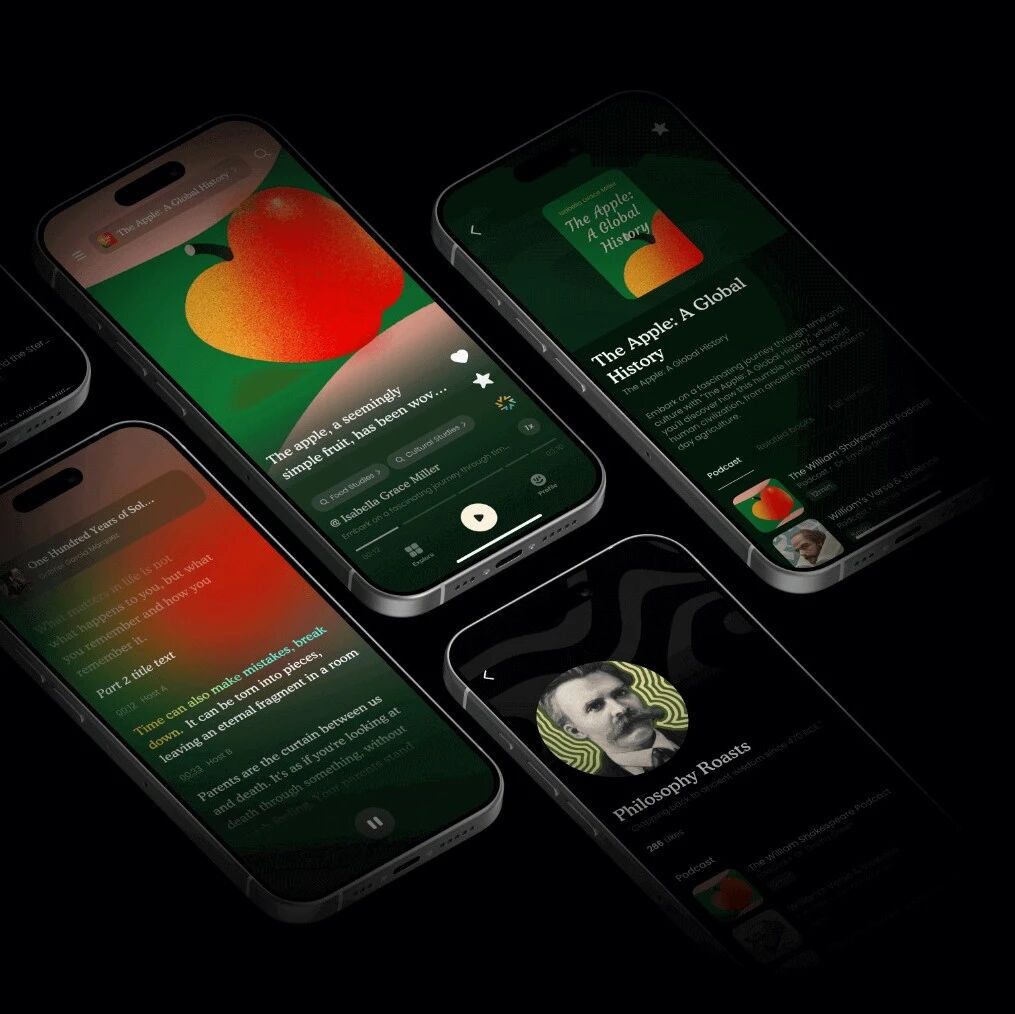
Core Insights - The article discusses the emergence of AI podcasting products, particularly focusing on Aibrary, a new entrant in the market that aims to enhance personal learning experiences through AI-generated content [4][5][19]. Group 1: Product Performance and Market Context - ChatPods and Laifu, two earlier AI podcast products, have shown disappointing performance with ChatPods achieving only 35,000 downloads in September and generating less than $100 in monthly revenue, while Laifu had around 2,000 downloads [2]. - Aibrary, launched on April 23, 2023, and officially on September 23, 2023, is positioned differently by transforming books into personalized podcasts and offering interactive learning paths [4][5]. Group 2: Aibrary's Unique Features - Aibrary differentiates itself with a robust recommendation system and content framework, focusing on personal learning enhancement rather than competing directly with human hosts [5][21]. - The platform includes a six-step registration process that tailors content recommendations based on user preferences, including admired figures and learning goals [7][21]. - Aibrary features a unique "Idea Twin Podcast," where users can engage in a dialogue with an AI host, enhancing the learning experience through personalized interaction [15][16]. Group 3: Founders and Vision - Aibrary's founders, including Ethan KJ Li, have extensive backgrounds in the education sector, previously working on K12 educational platforms before pivoting to lifelong learning in the AI era [19][20]. - The founders emphasize the importance of shifting educational focus from content delivery to cognitive restructuring, aiming to foster critical thinking and effective feedback mechanisms in learning [20][21]. Group 4: Business Model and Pricing - Aibrary operates on a subscription model, with annual pricing significantly lower than traditional audio book services, aiming to attract users through a combination of personalized learning and affordability [22]. - The platform's monetization strategy includes requiring subscriptions for most book access and limiting the number of AI-generated podcasts available to non-subscribers [22].

深度|被字节收购后再创业:硅谷100天,写在Aibrary正式上线前
Z Potentials· 2025-08-07 03:12
Core Viewpoint - The article discusses the challenges and opportunities in the AI startup landscape, emphasizing the need for a shift from traditional metrics like Product-Market Fit (PMF) to a focus on continuous value delivery and user outcomes in the AI tools sector [4][5][9]. Group 1: Product-Market Fit and Value Creation - The concept of PMF is being misused in the AI tools market, where subscription models do not equate to actual value realization for users [5][6]. - Many AI tools are currently catering to early adopters, leading to a potential revenue decline as user budgets stabilize [6]. - A new model of value creation is emerging, where continuous value delivery is essential for long-term user retention and growth [7]. Group 2: Outcome vs. Output - The traditional B2B model focuses on selling products, while the new paradigm emphasizes creating outcomes for customers [9]. - AI products should not just provide capabilities but should ensure users achieve tangible results, integrating customer success mechanisms into the product [9][10]. Group 3: AI Evaluation Systems - Finding PMF is just the beginning; the real challenge lies in building effective AI evaluation systems that understand user behavior and measure performance [10]. - The shift from a waterfall model to a discovery-based approach allows for rapid iteration and testing, enhancing collaboration and reducing development time [12][13]. Group 4: AI-Native Organizations - AI-native organizations are reshaping management paradigms, reducing the need for middle management and promoting a flatter organizational structure [14]. - The traditional management theories are becoming obsolete as AI tools enhance decision-making and execution efficiency [14]. Group 5: Human-AI Collaboration - The "1+N" model promotes collaboration between humans and multiple AI agents, enhancing productivity and efficiency [17]. - New roles are emerging within teams, such as "Product Owners" and "Infrastructure Builders," to better leverage AI capabilities [18]. Group 6: Lifelong Learning in the AI Era - The future of education is shifting from content delivery to feedback-driven learning, emphasizing continuous improvement and personal growth [22][25]. - The design of effective feedback mechanisms is crucial for creating a closed-loop learning system that fosters individual development [25]. Group 7: The Unique Value of Humans - In a world where AI can replicate knowledge and skills, the unique human perspective and creativity become invaluable [26]. - The ultimate goal of education should be to help individuals become unique and irreplaceable, leveraging their personal experiences and insights [26].