
AirJet

Search documents
广汽成立飞行汽车公司,注册资本3000万元
Ju Chao Zi Xun· 2026-02-25 03:07
Group 1 - Gao Yu Flying Car Manufacturing (Guangzhou) Co., Ltd. was established on February 11, 2026, with a registered capital of 30 million RMB, focusing on manufacturing automotive parts, selling aviation equipment, and producing intelligent unmanned aerial vehicles [2][3] - The company is a wholly-owned subsidiary of Guangdong Gao Yu Technology Co., Ltd., which is primarily owned by GAC Group, holding a 34.73% stake [3] Group 2 - GAC Group's first mass-produced flying car, GOVY AirCab, is a multi-rotor unmanned aerial vehicle, set to debut globally at the Hong Kong International Auto Show in June 2025, with a price not exceeding 1.68 million RMB [4] - GOVY AirCab has received over 2,000 intention orders, amounting to more than 3.3 billion RMB, and is currently undergoing comprehensive airworthiness certification, expected to be completed by the end of 2026 [4] - GAC Group has additional flying car concepts, including GOVY AirCar and AirJet, each focusing on different technological aspects such as lightweight materials and intelligent driving, indicating a long-term strategy in the flying car sector [4] - With the upcoming milestones of solid-state battery installation and flying car deliveries in 2026, GAC's asset value in cutting-edge technology is anticipated to gradually be realized [4]


等离子散热“勇闯”CES2026:比纸薄、零噪音,但两座大山仍待翻越
3 6 Ke· 2026-01-09 11:23
Core Viewpoint - The introduction of YPlasma's DBD plasma cooling technology at CES 2026 represents a potential revolution in laptop cooling systems, aiming to replace traditional methods with a quieter, more efficient solution [3][22]. Group 1: Technology Overview - YPlasma's DBD technology utilizes a thin film, only 200 micrometers thick, to create airflow through ionized air, eliminating the need for traditional fans and mechanical components [4][6]. - The system operates at a noise level of approximately 17 decibels, significantly quieter than conventional gaming laptops, which can reach 50-60 decibels [7]. - The absence of moving parts makes the DBD system resistant to dust accumulation, potentially enhancing longevity and performance [8]. Group 2: Challenges and Considerations - The DBD technology faces challenges such as ozone production during operation, which can be harmful to human health, and the requirement for high voltage, complicating integration into consumer electronics [11][24]. - Reliability and safety concerns regarding high-voltage components must be addressed before widespread adoption can occur [24]. Group 3: Market Implications - If successful, DBD technology could liberate laptop design from the constraints of traditional cooling systems, allowing for larger batteries and thinner devices, thus enhancing user experience [22]. - The competition in solid-state cooling technologies is intensifying, with alternatives like Frore Systems' AirJet also emerging, each with distinct operational principles and market readiness [19][21].

高域:2025年以来累计融资金额已达5亿元
Zhong Zheng Wang· 2025-12-16 06:34
Core Viewpoint - The company GaoYu has raised a total of 500 million yuan in financing since 2025, with a recent Pre-A round of 200 million yuan completed in November, backed by several investment funds [1] Group 1: Financing and Investment - GaoYu's cumulative financing amount since 2025 has reached 500 million yuan [1] - The recent Pre-A round financing of 200 million yuan was jointly invested by Guotai Junan Fund, Sichuan Hongwei Fund, and Guangzhou Development Zone Low-altitude Fund [1] Group 2: Product Offerings - GaoYu has three different product configurations: the AirCar for land and air use, the multi-rotor AirCab for urban commuting, and the hybrid AirJet for intercity travel, covering all terminal scenarios of eVTOL (electric vertical takeoff and landing aircraft) [1] - The multi-rotor AirCar and AirCab can meet short-distance travel needs within 30 km, effectively connecting "economic islands" in local areas [1] - The hybrid AirJet is designed for intercity travel within 200 km, with future plans to incorporate GAC's all-solid-state battery, potentially extending its range beyond 400 km [1] Group 3: Production and Collaboration - The first phase of GaoYu's production line is about to be put into operation, and the company has begun deep collaboration with local governments, scenic areas, and travel platforms [1] - GaoYu was awarded a plaque for the "Flying Car Test Flight Detection Base" in collaboration with the Southern Experimental Field at the 2025 World Drone Conference held on December 11 [1]
高域:以低空载人科技,全方位构建低空出行新范式
3 6 Ke· 2025-12-11 03:52
Core Insights - The company GaoYu, which was incubated by GAC Group, has successfully completed a Pre-A round financing of 200 million yuan, with a total financing amount expected to reach 500 million yuan by 2025 [4] - GaoYu aims to become a leading technology enterprise in low-altitude technology, leveraging GAC Group's decade-long experience in electrification and supply chain systems to develop eVTOL aircraft for efficient urban mobility [4] Product Development - GaoYu has developed three different eVTOL products: the AirCar for land and air use, the multi-rotor AirCab for urban commuting, and the hybrid-wing AirJet for intercity travel, covering all terminal scenarios of eVTOL [5] - The AirCab and AirCar are designed for short-distance travel within 30 km, while the AirJet targets intercity travel up to 200 km, with future plans to enhance its range to over 400 km using GAC's solid-state batteries [5] Technological Advancements - GaoYu has achieved comprehensive self-research capabilities in core components such as flight control, autonomous driving, and navigation, addressing critical issues in civil aviation equipment [7] - The company possesses L4-level low-altitude autonomous driving technology and advanced materials, enabling intelligent obstacle avoidance and route control in complex environments [7] Supply Chain Integration - Originating from GAC Group's intelligent connected vehicle sector, GaoYu benefits from inherent capabilities for large-scale production and supply chain integration, allowing for over 70% resource reuse in eVTOL manufacturing [7] - The integration of automotive and aviation expertise enhances the reliability and scalability of both sectors, significantly improving quality and reducing costs compared to traditional industry solutions [7] Ecosystem Development - GaoYu recognizes the complexity of the low-altitude economy, which requires not only aircraft manufacturing but also infrastructure, software support, and operational platforms [8] - The company is focused on top-level design to promote a systematic approach to building a new low-altitude service system in collaboration with government, scenic areas, and operators [10] Policy and Market Outlook - The low-altitude economy is gaining governmental support, similar to the early days of the electric vehicle industry, with clear policy signals indicating a forthcoming industry breakthrough [11][13] - GaoYu plans to complete its production line and obtain airworthiness certification by 2026, while actively establishing standardized landing points and exclusive operational rights [14][15] Strategic Partnerships - GaoYu is collaborating with local governments and transportation hubs to promote standardized landing points, which will serve as integrated service units for low-altitude travel [14] - The company is also working with various partners, including ride-hailing platforms and aviation companies, to integrate low-altitude orders into existing transportation ecosystems [15] User Experience Focus - GaoYu emphasizes user experience, particularly for safety-sensitive demographics, by conducting extensive research to address user concerns about safety and comfort [16] - The company estimates that low-altitude travel can save over 70% of travel time while costing only 2-3 times that of ground transportation, aiming to make low-altitude technology accessible to the public [16] Future Prospects - The convergence of favorable policies and industrial momentum is expected to create a thriving new market in the low-altitude passenger industry, with GaoYu positioned to lead the sector [17]
中国eVTOL突围 自研黑科技叩开天空
2 1 Shi Ji Jing Ji Bao Dao· 2025-09-26 11:07
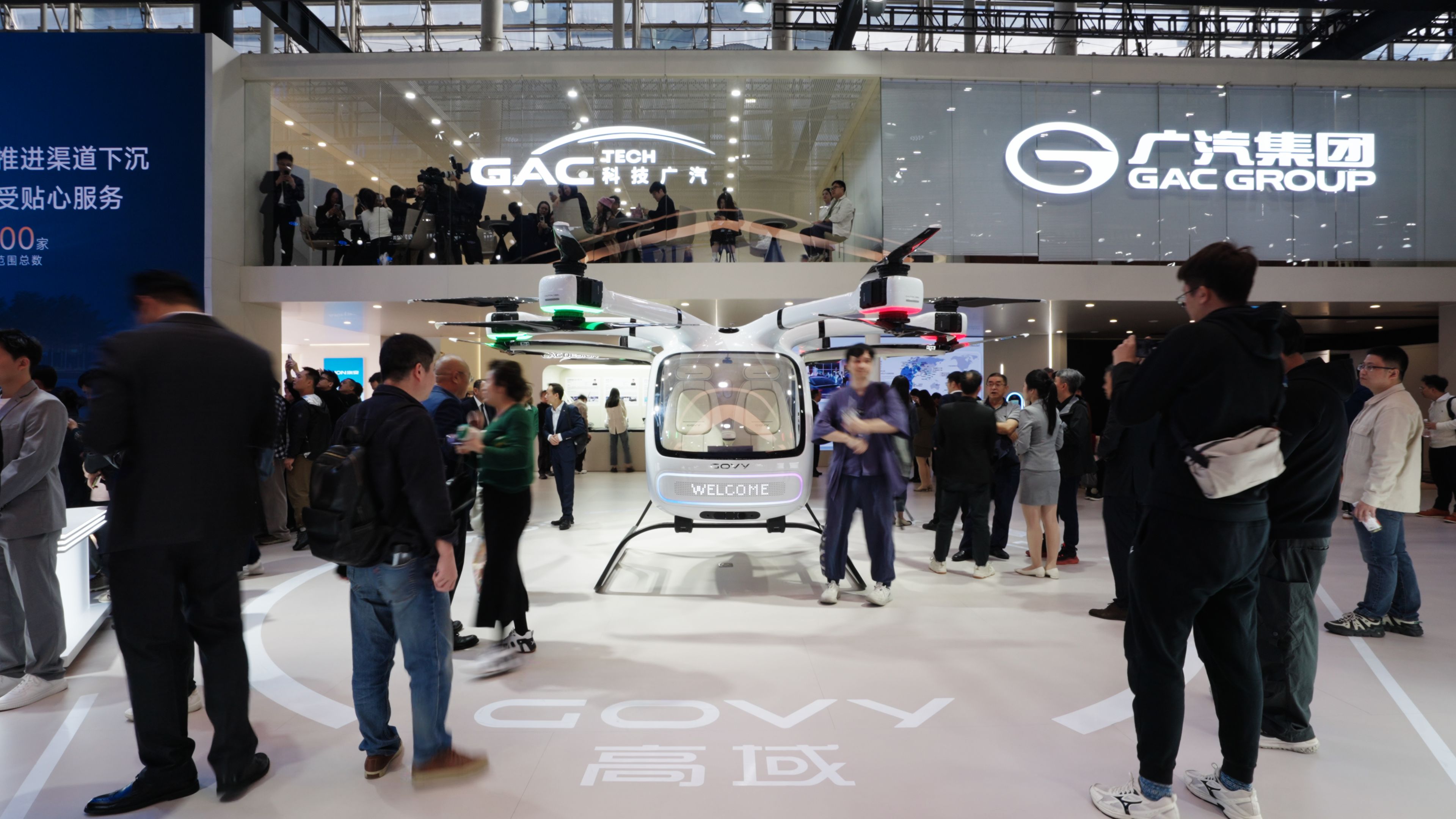
Core Insights - The domestic low-altitude economy is transitioning from explosive growth to a stable and orderly development phase in 2025, with increasing competition and accelerated technological iteration and commercialization [1] Industry Developments - The 2025 Shenzhen eVTOL Industry Development Conference showcased a variety of eVTOL models, including multi-rotor and tilt-rotor designs, indicating a diversification of exhibitors compared to the previous year [1] - Companies like Guangqi Gaoyu and Huayu Xianxiang presented their eVTOL models, highlighting advancements in materials and design, such as Guangqi's use of over 90% aviation-grade carbon fiber composite materials, reducing material costs by nearly 30% [1] Safety and Technology - Safety remains the primary concern in the development of eVTOLs, with multiple redundancies built into models like AirCab, which features six independent electric drives to ensure stable flight even with failures [2] - Huayu Xianxiang's Honghu eVTOL employs a fully tilt-rotor design, with self-developed flight control and electric propulsion systems, marking a significant achievement in domestic eVTOL technology [2][3] Certification Progress - The flight control system of the Honghu eVTOL requires high-performance hardware and efficient software algorithms for real-time data processing, which is critical for safety and stability [3] - The certification process for eVTOLs is crucial for commercialization, with more models entering the airworthiness certification phase in 2025, including the acceptance of Honghu's application for a Type Certificate (TC) [3][4] - Guangqi Gaoyu's AirCab has also had its airworthiness application accepted, with expectations to receive certification by the second half of next year [5] Future Outlook - The eVTOL industry in China is progressing steadily, with expectations for significant advancements in airworthiness certification and commercial viability by the end of 2026 [4][5]