
Auto Omni全模态端侧大模型实车方案

Search documents
对话独角兽 | 斑马智行的生态构建答卷:横向开放与技术深耕
Di Yi Cai Jing· 2026-01-26 09:04
Core Insights - The core idea of smart cockpit design has shifted from "users finding functions" to "services finding users," indicating a proactive approach in user experience through AI technology [2] - Banma Zhixing has transitioned from an "operating system provider" to an "AI technology company for smart cockpits," emphasizing the importance of AI capabilities in the competitive landscape of smart cockpits [2] Group 1: Technological Advancements - Banma Zhixing's Auto Omni full-modal edge model marks a fundamental shift in technology, enabling full-modal interaction and scene understanding through optimized models on limited computing power [4] - The company is developing a new human-machine interaction paradigm called "No Touch, No APP," exemplified by its collaboration with BMW, which will feature AI Agent technology in new models starting in the second half of 2026 [4] Group 2: Strategic Partnerships and Market Positioning - Banma Zhixing follows a "layered decoupling" strategy for both domestic and international collaborations, adapting AI capabilities and ecosystem services to local market needs [5] - The company focuses on a "horizontal open cooperation" model, allowing it to concentrate on core technologies while partnering with various chip manufacturers and ecosystem partners, providing an alternative for automakers seeking advanced capabilities without full dependency on a single supplier [5][6] Group 3: Software Value Challenges - The industry faces a threefold dilemma regarding software value: high hardware costs with weak software service experiences, low user willingness to pay for software subscriptions, and a lack of clear software value assessment frameworks [8] - Banma Zhixing aims to address these challenges by enhancing hardware-software integration and exploring new business models, such as software subscriptions, while gradually changing perceptions about software pricing in the automotive sector [8][11] Group 4: Practical Solutions and Future Directions - The company has implemented strategies to achieve experience and cost leadership through deep hardware integration, such as the Auto Omni model, which has garnered significant attention from automakers [9] - Banma Zhixing has established a clear value assessment system for software, achieving over 1 billion yuan in pure software revenue, serving as a reference for commercialization in the industry [11] - The future of the automotive industry will hinge on technology, ecosystem, and collaborative efficiency, necessitating a macro perspective to foster shared technology and risk in the industry [12]

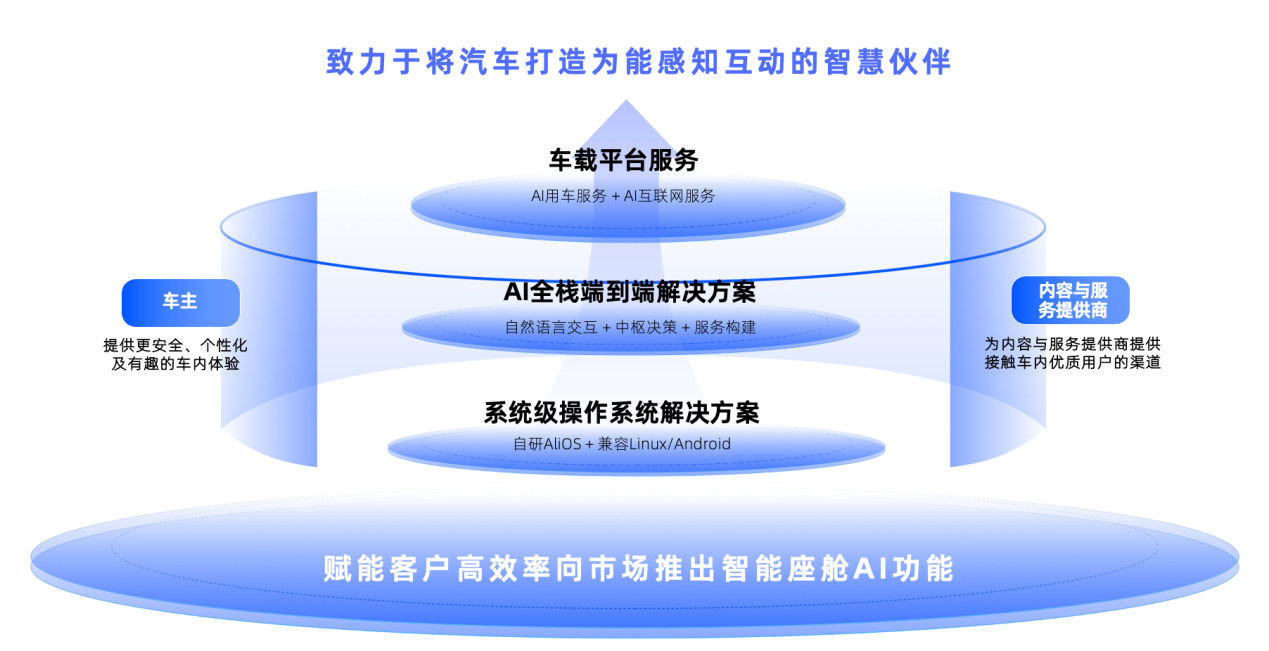
斑马智行持续发力软硬一体 打造AI原生车载平台服务生态
Zheng Quan Ri Bao Wang· 2025-10-23 14:14
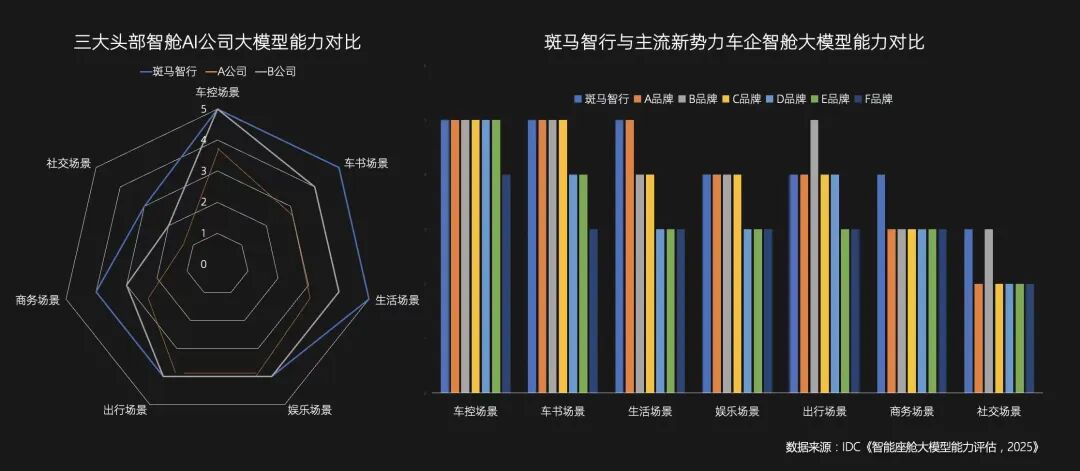
Core Insights - The automotive industry is entering an era of cloud-integrated large models, where software capabilities, particularly those driven by AI, are crucial for enhancing user experience and driving the performance of new-generation smart automotive hardware [1][2] - Zebra Network Technology Co., Ltd. (Zebra Smart Travel) showcased its latest achievements in foundational software and cockpit AI large models, emphasizing a strategy that integrates "chip + OS + AI" to transform chip potential into user experience [1][2] Group 1 - The maturity of endpoint models will further accelerate the performance enhancement of onboard chips [1] - Zebra Smart Travel's self-developed Yuan Shen AI OS features cross-platform and cross-model capabilities, expediting the deployment of large models in vehicles [1][2] Group 2 - Zebra Smart Travel has achieved AI leadership based on a full-stack AI technology system for smart cockpits, ranking first in a global evaluation of smart cockpit AI technologies by IDC [2] - The company launched the Auto Omni full-modal edge large model real vehicle solution in collaboration with Tongyi at the Cloud Habitat Conference, leading the industry by over six months and effectively addressing issues of computational redundancy and low hardware utilization efficiency [2] - The Chief Product Officer of Zebra Smart Travel stated that the collaboration between software and hardware is a dynamic process that promotes each other, with software driven by user needs and scenario-based services [2]
AI创新进入「中国时间」,智能座舱领域「OpenAI」崛起
Feng Huang Wang· 2025-10-21 11:53
Core Insights - The traditional belief that the U.S. excels in 0-1 technological innovation while China is better at 1-100 replication is being challenged in the AI era, particularly in the automotive sector [1][12] - The launch of OpenAI's Apps SDK in October 2025 is set to revolutionize cross-platform AI applications, while China's smart cockpit sector is already moving towards mass production [1][3] - The CEO of Zhibo Zhixing, Dai Wei, predicts an imminent explosion in smart cockpit technology, marking a critical point in industrial transformation [1][4] Company Developments - Zhibo Zhixing's CTO, Si Luo, emphasizes that AI large model technology will drive interaction and service transformation in the automotive sector, highlighting the company's advantageous position [2][8] - The Auto Omni full-modal vehicle solution was launched at the Yunqi Conference, showcasing Zhibo Zhixing's proactive smart cockpit capabilities [4][9] - Zhibo Zhixing has established a strong foundation in smart cockpit AI technology since introducing the AliceMind pre-training model in 2021 [7][15] Market Positioning - Zhibo Zhixing is positioned as the "OpenAI" of the smart cockpit sector, having already implemented features that allow for proactive intelligent services in vehicles [5][19] - The company has formed an AI vehicle platform service alliance with major partners, aiming to create new business models in the automotive ecosystem [5][12] - The smart cockpit AI large model capabilities of Zhibo Zhixing have been ranked first in evaluations by global authorities [9][15] Future Outlook - The automotive industry is on the brink of a significant transformation, with Zhibo Zhixing leading the charge in smart cockpit AI innovation [9][11] - The company aims to become the leading AI platform service provider in the automotive sector, with projections indicating that the market for vehicle platform services in China could reach 14.7 billion yuan by 2030 [16][17] - Zhibo Zhixing's AIOS is expected to accelerate the integration of AI models into vehicles, enhancing the overall user experience [16][18]
智能汽车政策技术协同,机器人技术突破促落地提速 | 投研报告
Zhong Guo Neng Yuan Wang· 2025-10-09 01:26
Core Viewpoint - The report from Southwest Securities highlights the growth in the new energy vehicle (NEV) sector, with significant retail sales figures and a focus on technological advancements in smart vehicles and robotics [2][4]. Group 1: New Energy Vehicle Sales - From September 1 to 21, retail sales of new energy passenger vehicles reached 1.191 million units, a year-on-year increase of 1% and a month-on-month increase of 8% [2][3]. - Cumulatively, retail sales for the year have reached 15.955 million units, representing a year-on-year growth of 9% [2][3]. - For the same period, new energy passenger vehicle sales were 697,000 units, showing a year-on-year increase of 10% and a month-on-month increase of 11%, with a penetration rate of 58.8% [2][3]. Group 2: Smart Vehicle Development - The Ministry of Industry and Information Technology announced plans to compile an industrial development plan focusing on key technologies such as automotive artificial intelligence and operating systems [4]. - As of July, the penetration rate of L2-level passenger vehicles reached 62.58%, supported by over 35,000 kilometers of open testing roads [4]. - Companies are releasing innovative results, such as the OTA upgrade from Zhijie and the Auto Omni solution from Zebra Smart Travel, indicating a shift towards large-scale application in the industry [4]. Group 3: Heavy-Duty Trucks - In August, the penetration rate of new energy heavy-duty trucks reached 26.61%, with expectations for record sales in September due to seasonal demand and policy support [5]. - The cumulative penetration rate for new energy commercial vehicles from January to September is expected to increase from 25.03% [5]. Group 4: Robotics Sector - Google released Gemini Robotics 1.5, promoting the realization of general intelligence through cross-robot skill transfer [5]. - The Shanghai Industrial Expo showcased significant technological breakthroughs from domestic industrial robot companies, marking a critical period for the industry's transition to large-scale implementation [5].


