BiME

Search documents
科望医药港股招股书更新:冲刺MCE第一股 多家明星资本“护航”
Zheng Quan Ri Bao Wang· 2025-11-26 07:15
Core Insights - The article discusses the updated prospectus of Kewang Pharmaceutical Group, which is primarily focused on developing innovative therapies for cancer and autoimmune diseases through a novel technology called Myeloid Cell Engager (MCE) [1][2]. Company Overview - Kewang Pharmaceutical was established in 2017 and is a research-driven clinical-stage biopharmaceutical company [1]. - The company aims to regulate immune cells to treat tumors and autoimmune diseases, positioning itself as the first company to utilize MCE technology in this field [1]. Technology and Product Pipeline - Kewang Pharmaceutical's MCE technology employs bispecific antibodies to modulate myeloid cells, such as macrophages, for therapeutic effects [1]. - The company has three products in clinical development for cancer treatment, with ES102 targeting OX40 currently in Phase II trials in China, aimed at patients with non-small cell lung cancer (NSCLC) and head and neck squamous cell carcinoma (HNSCC) [2]. - ES104 is the only clinical-stage VEGF/DLL4 bispecific antibody in China, showing anti-tumor activity across various cancer types [3]. - ES014 is a globally pioneering CD39/TGFβ bispecific antibody, expected to treat NSCLC and other tumors [3]. Market Context - Major pharmaceutical companies like Novartis, Sanofi, and Eli Lilly are also investing in the MCE space, indicating a growing interest in this therapeutic approach [2]. - Kewang Pharmaceutical has attracted investments from prominent firms such as Hillhouse Capital and Tencent Investment, reflecting confidence in its technology and market potential [2]. Leadership Team - The founding team of Kewang Pharmaceutical has over 25 years of experience in the biopharmaceutical industry, with backgrounds in leading companies like Roche and Bayer [4].
科望医药递表港交所 核心产品ES102临床开发进展领先
Zhi Tong Cai Jing· 2025-11-25 01:21
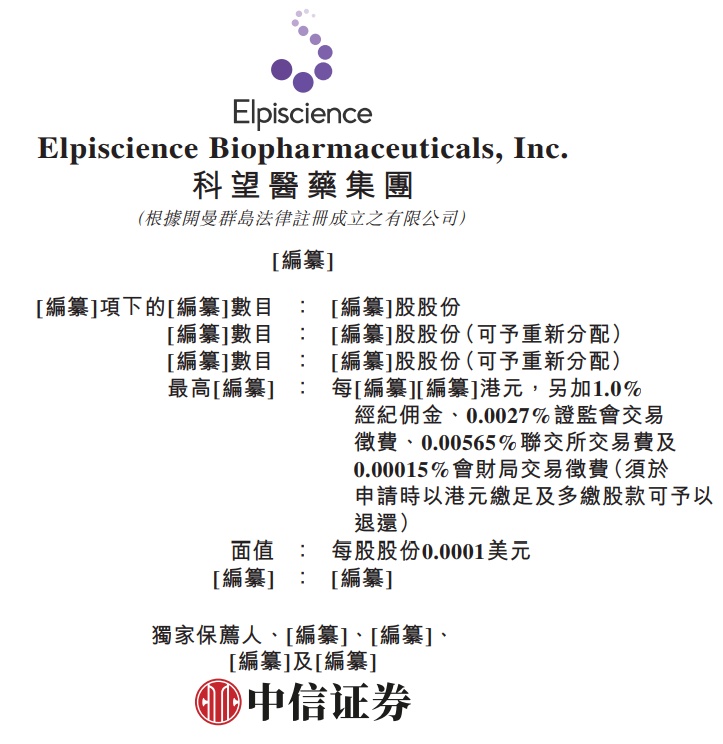
Core Viewpoint - Kewang Pharmaceutical Group has submitted an application for listing on the Hong Kong Stock Exchange, with CITIC Securities as the sole sponsor. The company aims to develop next-generation cancer therapies globally, focusing on its core product ES102, an advanced six-valent OX40 agonist currently in clinical development [1][6]. Company Overview - Kewang Pharmaceutical, established in 2017, is a clinical-stage biopharmaceutical company dedicated to developing innovative cancer therapies by understanding the tumor microenvironment (TME) [6]. - The core product, ES102, is designed to treat cancer patients who respond poorly to immune checkpoint inhibitors (ICIs) and has shown controllable safety and anti-tumor activity in clinical trials [6][7]. Clinical Development - Since acquiring ES102 from Inhibrx in 2018, Kewang has completed two Phase 1 clinical trials in China for advanced solid tumor patients and has initiated a Phase 2 trial combining ES102 with a PD-1 inhibitor for advanced NSCLC patients [7]. - The company has a differentiated pipeline with five major assets, three of which are in clinical stages, targeting unmet medical needs in major tumor types [7]. Research and Development Capabilities - Kewang has established a comprehensive drug development engine, equipped with proprietary technologies covering the entire R&D cycle from drug discovery to clinical development [8]. - The company has developed multiple proprietary antibody discovery platforms, which are crucial for accelerating drug discovery and improving cost-effectiveness [8]. Strategic Partnerships - Kewang has formed a strategic partnership with AstraZeneca to collaborate on a new bispecific macrophage connector project, potentially earning over $1.7 billion in milestone payments [9]. - The company has also partnered with Partex N.V. to develop a platform for designing new therapeutic antibodies, leveraging AI technology [8]. Financial Overview - For the year 2024, Kewang is projected to generate revenue of RMB 106.566 million from its collaboration with AstraZeneca [10]. - The company reported a loss of RMB 729.508 million for the year 2023, with a significant reduction in losses expected in subsequent periods [10].