Brent crude
Search documents
X @The Economist
The Economist· 2026-04-09 18:20
If futures prices are to be believed, Brent crude will end the year at around $80 a barrel, about a third higher than was expected at the start of 2026. Similar hangovers will be felt in other commodities markets https://t.co/NVSG7skDZW ...
X @Bloomberg
Bloomberg· 2026-04-09 18:02
Intercontinental Exchange will boost the margins traders have to post for its Brent crude and European diesel futures contracts as the war in Iran sends volatility surging across commodity markets https://t.co/fgrIm0604E ...
X @Cointelegraph
Cointelegraph· 2026-04-06 03:20
🚨 JUST IN: Oil prices pare earlier gains on reports of U.S.-Iran ceasefire talks, with Brent crude easing to $109.77 and U.S. crude at $111.58. https://t.co/DocR00W2LB ...
石油追踪_红海航运存在风险;霍尔木兹海峡流量仍处低位-Oil Tracker_ Risks to Red Sea Flows; Hormuz Flows Still Low
2026-04-13 06:12
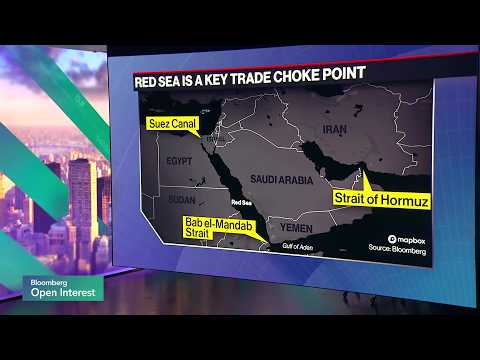
Summary of Key Points from the Conference Call Industry Overview - The report focuses on the oil industry, particularly the dynamics surrounding oil flows through the Red Sea and the Strait of Hormuz, amid geopolitical tensions involving Iran and the US [1][7][11]. Core Insights and Arguments - **Brent Crude Price Movement**: The Brent crude price increased by 13% from the previous week, remaining above $110 per barrel, and is projected to average nearly $100 per barrel in March. WTI also closed above $100 for the first time since June 2022 [1]. - **Investor Positioning**: Net long options managed money positioning is 50 times higher than its 10-year average, with investors purchasing options with strikes as high as $450 per barrel [1]. - **Geopolitical Tensions**: Limited signs of peace talks between the US and Iran persist, with ongoing attacks, including an incident where Iran struck a Kuwait oil tanker in Dubai [1]. President Trump indicated potential military action if negotiations fail [1]. - **Oil Flow Dynamics**: Oil flows through the Bab el-Mandeb Strait exceeded 7 million barrels per day (mb/d) at the end of March, marking a significant increase from previous months [1][7]. Crude accounts for nearly 70% of these flows, with a 1 mb/d increase from February due to larger Saudi exports [1]. - **Impact of Conflict on Oil Flows**: The estimated total hit to Persian Gulf oil flows has decreased to 13 mb/d as pipeline flows have increased, with Yanbu and Fujairah ports seeing flows rise to 8.7 mb/d [1][11]. - **Global Oil Stocks**: A net hit to global commercial oil stocks is estimated at 11.4 mb/d, which is 1.4 mb/d larger than previous assumptions [1][11]. - **Demand Destruction**: Global jet fuel demand is projected to decline by 41,000 barrels per day (kb/d) year-over-year in April, driven by a significant decline in Middle Eastern demand [1][11]. Additional Important Insights - **Risks to Oil Tankers**: Attacks on oil tankers resumed after a two-week pause, indicating ongoing risks in the region [1][11]. - **Production Recovery**: Recovery timelines for crude production vary among Middle Eastern producers, with Kuwait expecting three to four months to return to full production levels, while Saudi Arabia claims it can ramp up production quickly [1][11]. - **Refining Capacity**: Nearly 2.5 mb/d of oil refining capacity in the Middle East is estimated to be offline due to ongoing conflicts [1][11]. - **Policy Responses**: Various countries are implementing oil-saving measures in response to rising prices, including Egypt, South Korea, and the Philippines [1][11]. This summary encapsulates the critical points discussed in the conference call, highlighting the current state of the oil industry, geopolitical influences, and market dynamics.
Here's the best-performing stock sector in Q1 2026
Finbold· 2026-03-31 12:46
Core Insights - The energy sector has emerged as the top performer in the first three months of 2026, delivering a 38.38% return among S&P 500 stocks, significantly outperforming the broader market and other sectors [1][8] Energy Sector Performance - The rally in the energy sector was primarily driven by escalating tensions in the Middle East, particularly involving Iran, which disrupted the Strait of Hormuz, a critical route for 20% to 30% of global oil supply [2] - This disruption triggered a supply shock, causing Brent crude prices to rise from approximately $60 to over $110 per barrel, before settling between $90 and $100, while WTI briefly reached $115 [2] - Major oil companies, such as ExxonMobil and Occidental Petroleum, saw their stock prices increase by over 25% to 30% as profit margins expanded due to the price surge [3] Structural Demand Factors - Structural demand factors also supported the energy rally, including increased power needs from AI data centers, which boosted natural gas demand [4] - There was a broader market rotation from high-valuation tech stocks to undervalued energy equities, which were considered attractive at the beginning of 2026 [4] Broader Market Context - Utilities followed the energy sector with a 6.21% gain, while consumer defensives rose by 5.27% as a safe haven [5] - Other sectors, such as financials and technology, experienced declines of 11.72% and 12.6%, respectively, reflecting a shift in investor sentiment away from high-valuation growth stocks [6] Future Outlook - The sustainability of energy's leadership will depend on the duration of Middle East disruptions, crude price trends, and the balance between supply risks and potential inventory builds later in 2026 [7]
Gas prices hit $4 per gallon average in U.S. as Iran war drags on
Yahoo Finance· 2026-03-31 12:20
Core Insights - The average price of regular gasoline in the U.S. has surpassed $4 a gallon, reaching $4.018, marking a significant increase from $3.99 the previous day and $2.982 a month ago, indicating a 35% surge in prices over the past month [1] - The rise in gasoline prices is attributed to escalating conflicts in the Middle East and increasing oil prices, with Brent crude nearing $116 a barrel and West Texas Intermediate around $102 [3] - Diesel prices have also seen a substantial increase, now 44% above pre-war levels, with U.S. motorists expected to incur an additional $10 billion in gasoline costs since the onset of the conflict [5] Price Variations - Regular gasoline prices vary significantly across states, with the highest-priced states averaging between $4.199 and $5.887 per gallon, while the lowest-priced states range from $3.272 to $3.625 [5] - Premium gasoline is averaging $4.904 per gallon, and diesel is priced at $5.454 [1] Market Sentiment - Analysts express concern that rising gas prices could impact consumer behavior, affecting decisions on travel and leisure activities [2] - Discussions are ongoing regarding potential negotiations with Iran, which could influence oil shipments through the Strait of Hormuz, a critical point for global oil flow [4]
S&P 500 Correction Amid Iran War Isn't Typical Bear Market, It Lacks 'Quick Drop' Signature, Says Strategist
Benzinga· 2026-03-31 12:12
Market Overview - The S&P 500 has experienced a 9.4% decline, which is atypical for historical bear market patterns, indicating that the current volatility may represent a "growth scare" rather than a prolonged downturn [1] - The current market environment lacks the rapid decline typically associated with the onset of a true bear market, as evidenced by the S&P 500's slower pace in reaching a 5% decline [2] Market Dynamics - The current pullback that began on January 27 took 35 trading days to reach a 5% decline, which is significantly longer than the historical average of 14.5 trading days since 1950, suggesting a potentially bullish signal for long-term investors [3] - Morgan Stanley analysts believe that the market correction is nearing its end stages, despite ongoing geopolitical risks, such as the Iran war and the closure of the Strait of Hormuz, which are already reflected in current prices [4] Economic Indicators - Brent crude oil prices have risen to $107.35 per barrel amid escalating conflicts in the Middle East, while the 10-year Treasury yield is approaching 4.5%, currently at 4.33% [5] - Morgan Stanley has cautioned that interest rate hikes pose a significant threat, noting that equities are currently highly sensitive to interest rate changes [5] Earnings and Recovery Outlook - Positive earnings growth is seen as a buffer against potential downturns, leading to a higher "cumulative probability" of resuming trade flows compared to the likelihood of entering a full-blown recession [6] Index Performance - As of Monday's close, the S&P 500 is down 9.41% from its record high of 7,002.38 points, with a year-to-date decline of 7.51% but an annual increase of 13.04% [7] - The Nasdaq Composite index has declined 13.43% from its record of 24,019.99 points, with a year-to-date drop of 10.51% and an annual increase of 20.21% [7]
Oil seesaws as traders weigh Trump’s Iran stance, Hormuz disruption
Yahoo Finance· 2026-03-31 11:47
Group 1 - Oil prices experienced volatility as market participants assessed the potential for US President Donald Trump to end military actions against Iran, juxtaposed with the ongoing impact of the partial closure of the Strait of Hormuz [1][2] - Brent crude futures for May rose by $0.65 to $113.43 per barrel, while the June contract was at $107.31, indicating fluctuations between a 2% gain and a 1% loss during the session [1] - US West Texas Intermediate (WTI) futures for May increased by $0.02, or 0.02%, to $102.90 per barrel, marking the highest level since March 9 [2] Group 2 - The effective blockage of the Strait of Hormuz by Iran has led to a significant increase in oil prices, with Brent futures rising by 59% in March, the highest monthly increase on record, and WTI rising by 58%, the largest surge since May 2020 [3] - The Strait of Hormuz is crucial for global oil distribution, accounting for approximately one-fifth of it, and is also significant for liquefied natural gas (LNG) transport [3] - In response to regional tensions, Saudi Arabia has rerouted its crude exports through the Red Sea port of Yanbu, with shipments reaching 4.658 million barrels per day last week, a substantial increase from the January and February averages of 770,000 barrels per day [5] Group 3 - Kuwait Petroleum reported that its crude oil tanker Al Salmi was allegedly attacked by Iran in a Dubai port, raising concerns about regional stability [4] - Yemen's Houthi forces, aligned with Iran, targeted Israel with missiles, increasing fears of disruptions to the Bab el-Mandeb strait, a vital shipping route between Asia and Europe [4]
US gas prices top $4 a gallon for first time since 2022 as Iran war drags on
Yahoo Finance· 2026-03-31 10:02
Core Insights - Gasoline prices have reached a national average of $4.02 per gallon, the highest since August 2022, primarily due to the ongoing US-Iran war, which has caused prices to rise by approximately $1 over the past month [1][2] - The surge in oil prices has been significant, with Brent crude and US West Texas Intermediate crude increasing by about 50% each since the conflict began, currently trading at around $107.80 and $102 per barrel respectively [2][6] - Despite government measures to ease fuel prices, such as waiving federal ethanol restrictions and temporary shipping regulations, these actions have not effectively reduced gasoline prices nationwide [3][2] Industry Impact - The national average price for diesel has also escalated, reaching $5.45 per gallon, indicating that truckers are facing even higher costs than regular consumers [3] - Analysts from Goldman Sachs have raised their Brent crude forecast for April from $85 to $115, citing the potential for further price increases if the conflict continues, with predictions of Brent prices reaching $180 or even $200 depending on the duration of the war [6][5] - The ongoing conflict is expected to maintain a risk premium on oil prices, which could lead to further increases in refined product prices, including gasoline, diesel, and jet fuel [5][6]
Smart Money Is Piling Into These 2 Energy Stocks as the Iran Crisis Deepens -- Should You Follow?
The Motley Fool· 2026-03-31 08:05
Group 1: Oil Market Overview - The price of Brent crude has increased over 44% in the past month, currently trading around $107 per barrel, with projections suggesting it could rise to between $150 and $200 per barrel due to restricted shipments through the Strait of Hormuz [1][4]. - The ongoing military actions and Iran's rejection of the U.S. peace plan indicate that the conflict in the Middle East is likely to persist, impacting oil prices [1]. Group 2: Chevron Analysis - Chevron's stock has risen over 13% recently, trading at approximately $210.65, with a market cap of $420 billion [6][7]. - The company operates strong upstream operations in North America and other regions, positioning it favorably despite geopolitical tensions [5]. - Chevron has a gross margin of 14.66% and a dividend yield of 3.28%, with a commitment to returning capital to shareholders, having increased its dividend for 39 consecutive years [7][8]. Group 3: Oneok Analysis - Oneok's stock has increased by 13.7% over the past month, currently priced at $92.96, with a market cap of $59 billion [10][11]. - The company operates a diverse range of midstream assets, including 60,000 miles of pipeline, which helps mitigate risks associated with downturns in specific commodities [11]. - Oneok's business model is largely fee-based, with projections indicating that over 90% of its earnings will remain fee-based through 2026, and it offers a forward dividend yield of 4.5% [12][13].