CA42飞机

Search documents
【高端访谈】创新驱动打造行业标杆——对话中电科芜湖钻石飞机制造有限公司总经理田满林
Xin Hua Cai Jing· 2025-09-29 08:12
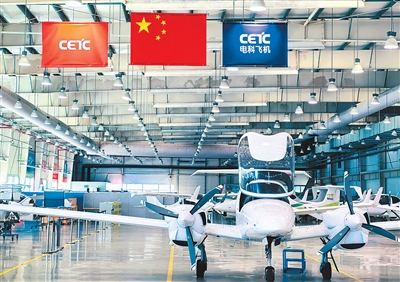
Core Insights - The low-altitude economy is experiencing rapid innovation and development driven by both policy and market forces, presenting strategic opportunities for companies in the sector [1][2] - The company, China Electronics Technology Group Corporation Wuhu Diamond Aircraft Manufacturing Co., Ltd., focuses on unmanned and general aviation aircraft, adapting to trends of automation and intelligence in low-altitude equipment [1][3] Industry Development - The low-altitude economy is characterized as a technology and capital-intensive industry with high growth potential and strong industry radiation capabilities [2] - The company has delivered over 100 aircraft and has maintained the highest delivery volume in the general aviation segment for several consecutive years [2] - The low-altitude economy in China is entering a rapid development phase, providing new opportunities for companies to enhance capabilities and achieve high-quality growth [2] Technological Innovation - The company has transitioned from importing foreign aircraft models to developing a series of proprietary manned aircraft, enhancing R&D efficiency and core competitiveness [3] - The CA42 aircraft, developed by the company, is the only dual-engine four-seat fixed-wing aircraft certified by the Civil Aviation Administration of China [3] - The company has successfully developed domestic composite materials, previously reliant on imports, which can now be supplied to other enterprises in the low-altitude industry [3] Collaborative Innovation - The company has established the Wuhu General Aviation Industry Alliance to facilitate information exchange and collaborative innovation among over 200 low-altitude manufacturing enterprises [3] - The alliance aims to enhance supply-demand matching and stimulate industry vitality, enabling the production of aircraft with independent intellectual property rights within the industrial park [3] Future Trends - The future of low-altitude equipment is shifting from traditional manned aircraft operations to a focus on unmanned aircraft for applications such as agriculture, logistics, and emergency rescue [4] - By 2024, civil unmanned aircraft in China are expected to accumulate 26.67 million flight hours, reflecting a year-on-year growth of 15.4% [4] - The company is developing a series of unmanned aircraft products, including the "Tian Gong" series, to meet the demands of various applications [4] International Expansion - The company is actively expanding into overseas markets, particularly in countries involved in the Belt and Road Initiative, with a focus on establishing after-sales service systems [5] - The company delivered its first aircraft to Thailand's aviation industry in May, and expects a revenue growth of over 40% for the year [5] Market Dynamics - Scene applications are seen as a driving force for the low-altitude economy, providing the necessary technology, infrastructure, and operational systems [6] - The low-altitude economy is transitioning from B2B to B2C applications, which is expected to activate a trillion-dollar market [6] - The company invests approximately 20% of its revenue annually in R&D to address specific market demands [6] Technological Synergy - The company leverages its experience in manned aircraft to enhance the development of unmanned aircraft, creating a dual-line collaborative development path [7] - The integration of electronic information systems with unmanned platforms is a key strategy to enhance the company's competitive edge [7] - The company collaborates with local entities to explore various operational services, promoting a shift from manufacturing to a manufacturing-plus-service model [7]
低空飞机协同造、花样飞(科技瞭望)
Ren Min Ri Bao Hai Wai Ban· 2025-08-03 22:41
Core Insights - The article highlights the rapid development of the low-altitude economy and general aviation industry in Wuhu, Anhui Province, showcasing the establishment of a comprehensive industrial chain that includes manufacturing, operation, training, logistics, and maintenance of aircraft [8][10][19]. Industry Overview - The Wuhu Aviation Industrial Park has evolved from a barren land to a thriving hub with an annual output value of hundreds of billions, focusing on the full-process manufacturing of general aviation aircraft and drones [8][10]. - The park is home to over 200 aviation-related enterprises, with a complete industrial chain covering core component research and development, aircraft manufacturing, and operational services [9][10]. Company Highlights - China Electronics Technology Group's Wuhu Diamond Aircraft Manufacturing Co., Ltd. has delivered over 100 manned and 300 unmanned aircraft since 2018, achieving a local supply rate of 100% for core components [11]. - The company has developed the CA40 aircraft, which features fully domestic avionics and engine systems, setting new standards for piston engine flight testing in China [10][11]. Market Growth - The low-altitude economy in Wuhu is projected to generate revenues of 46.38 billion yuan in 2024, reflecting a nearly 16% year-on-year growth [11]. - The industry is expected to become a trillion-yuan market, driven by policy support and technological innovation [10]. Technological Advancements - The TD550 coaxial unmanned helicopter, known as the "Sky Heavyweight," is widely used across various sectors including emergency response, logistics, and firefighting [6][16]. - The development of eVTOL (electric vertical takeoff and landing) aircraft is anticipated to revolutionize logistics and transportation, with the R6000 tilt-rotor aircraft being a notable example [19]. Educational Initiatives - The Oriental Flying Valley Aviation Camp offers innovative educational programs, engaging over 100,000 students and families through hands-on experiences in aviation [12][14]. - The curriculum includes various themes such as flight experience, model aircraft making, and drone operation, catering to different age groups [13][15]. Future Prospects - The low-altitude economy is expected to continue expanding, connecting production and daily life more closely, thereby enhancing efficiency and driving growth [19].