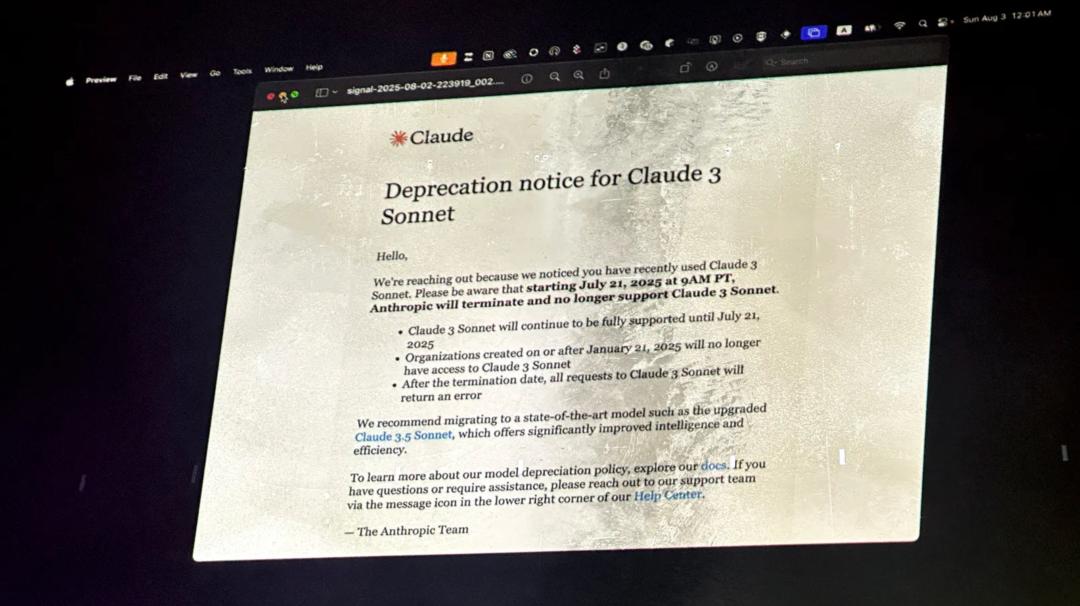
Claude 3 Sonnet

Search documents
复旦大学最新Cell子刊:DeepSeek-R1、GPT-4等大语言模型可增强肺癌筛查的临床决策
生物世界· 2025-11-28 04:05
Core Insights - Lung cancer is one of the most aggressive and prevalent cancers globally, with an estimated 2.2 million new cases and 1.8 million deaths in 2020, leading to a five-year survival rate of less than 10% due to late-stage diagnosis [2] Group 1: Research Findings - A multi-center benchmarking study evaluated six large language models (LLMs) for clinical decision support in lung cancer screening, revealing that Claude 3 Opus had the highest readability, while GPT-4 achieved the highest clinical accuracy [3][7] - The study involved a cross-sectional analysis of 148 anonymized low-dose computed tomography (LDCT) reports from three medical institutions, assessing the performance of LLMs in providing management recommendations for incidental lung nodules [6][8] - The results indicated that the performance differences among LLMs were not significant across different hospital reports, highlighting their robustness and practicality in various medical environments [7][10] Group 2: Implications for Clinical Practice - The findings suggest that LLMs could enhance clinical decision support in lung cancer screening, particularly in managing incidental findings from LDCT scans, which is a pressing challenge in cancer screening management [6][10] - The study underscores the potential of LLMs to assist outpatient physicians in making timely decisions regarding follow-up interventions or surveillance strategies for lung nodules [5][6]


GPT-5,让多少年轻人集体“赛博失恋”?
3 6 Ke· 2025-08-20 10:10
Core Insights - The release of GPT-5 by OpenAI has faced significant backlash from users who preferred the previous version, GPT-4o, due to its perceived warmth and emotional engagement [1][8] - Users increasingly view AI as companions rather than mere tools, highlighting a shift in the relationship between humans and AI [4][8] - The emotional value provided by AI is becoming a critical factor for users, leading to a phenomenon described as "cyber heartbreak" when AI fails to meet these emotional needs [8][30] Group 1: User Experience and Emotional Connection - Users have expressed deep emotional connections to AI, referring to models like GPT-4o as "friends" and even holding funerals for AI models that were retired [6][8] - The introduction of AI companions has led to a market with over 337 active revenue-generating applications, with users spending approximately $82 million in the first half of 2025, projected to exceed $120 million for the year [10] - Social media platforms show significant engagement with topics related to human-AI relationships, indicating a growing community around these interactions [13][16] Group 2: Challenges and Limitations - AI models face limitations such as "memory loss," where they forget past interactions once the conversation exceeds a certain length, leading to user frustration [23][25] - Users have reported issues with AI models changing personality or behavior after system updates or adjustments, which can lead to feelings of loss [27][30] - The lack of standardized safety measures for AI companions raises concerns about potential psychological impacts on users, particularly vulnerable individuals [34][36] Group 3: Societal Implications - The rise of AI companions reflects a broader societal trend where emotional support and understanding are increasingly sought from algorithms rather than human relationships [36][37] - Reports indicate that a significant portion of young people are willing to pay for emotional support services, suggesting a market demand for AI-driven companionship [36] - The phenomenon of "cyber love" serves as a mirror to human relationships, prompting reflection on the quality of emotional connections in contemporary society [37][38]
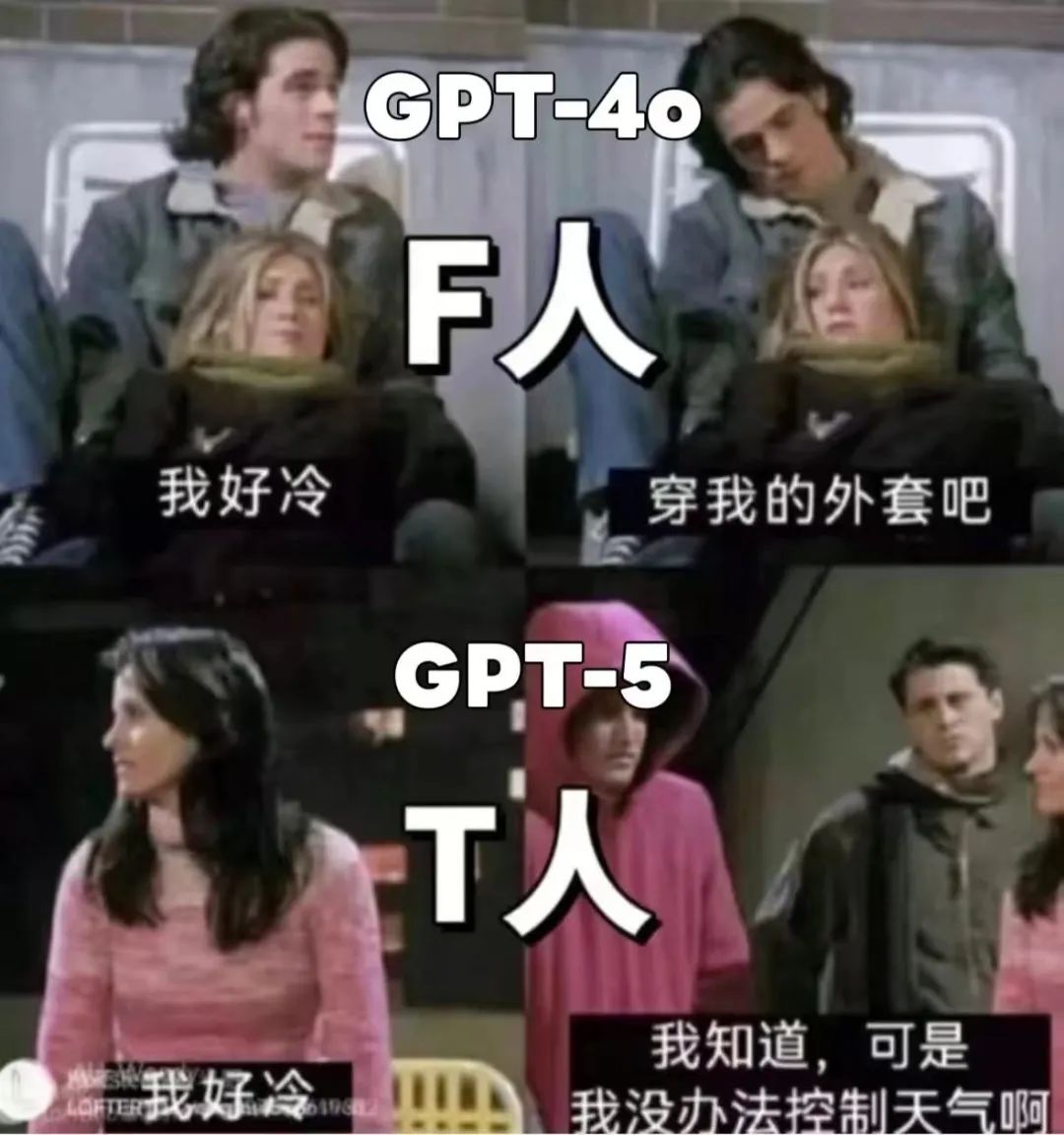
重新体验GPT-5后,我想它比GPT-4o更需要一场葬礼
Hu Xiu· 2025-08-11 12:57
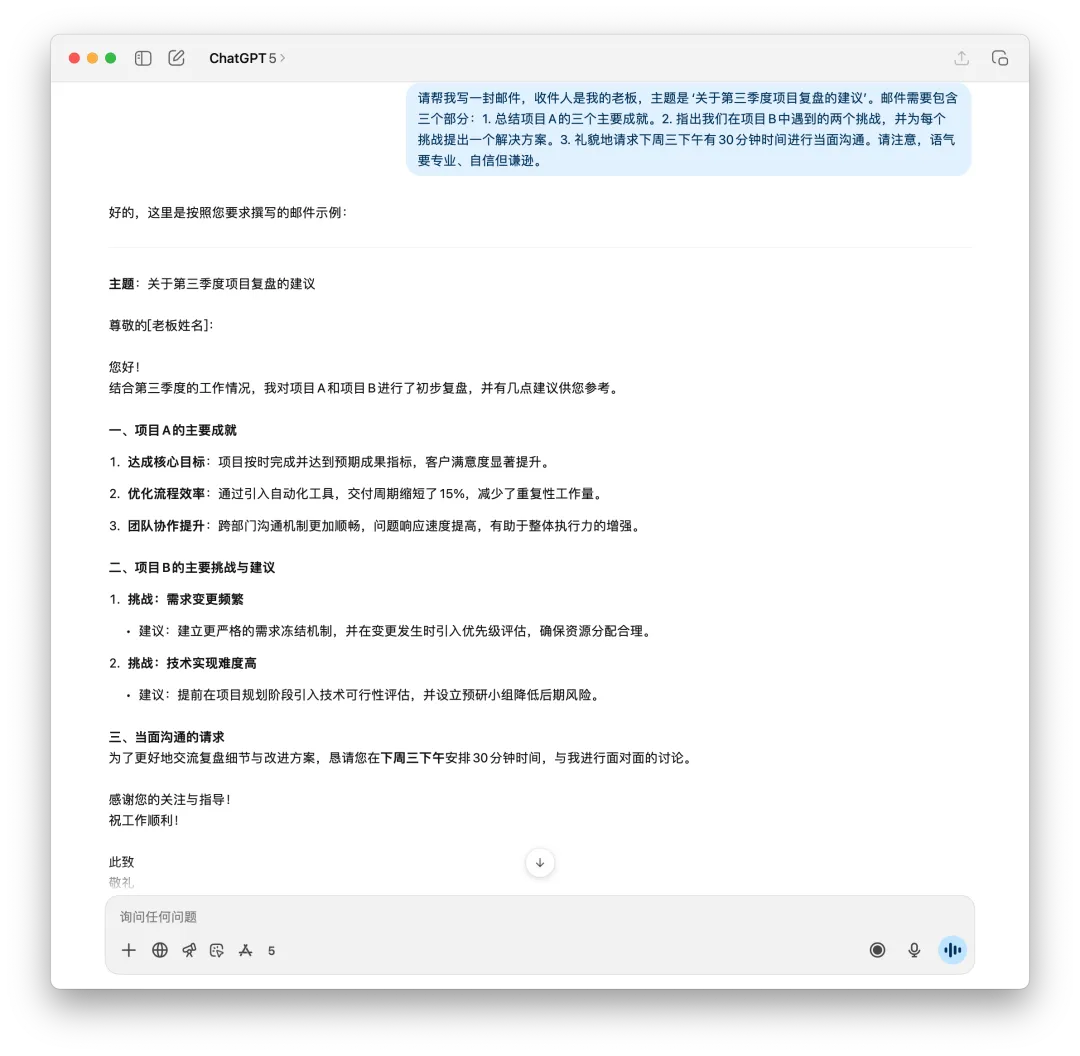
Core Insights - The release of GPT-5 has not met user expectations, leading to disappointment compared to its predecessor GPT-4o [1][14][106] - OpenAI has reintroduced GPT-4o due to user demand, indicating dissatisfaction with GPT-5 [2][6][108] Performance Comparison - GPT-5 performs better in technical tasks but struggles with tasks requiring human-like understanding and emotional nuance, making it less effective for everyday productivity tasks [16][20][22] - In creative tasks, GPT-5 has not shown significant improvement over GPT-4o, producing formulaic outputs lacking originality [18][80] - User experience with GPT-5 is perceived as less empathetic and more robotic, affecting its ability to engage in meaningful conversations [19][91][98] Testing Methodology - A rigorous testing process was designed to compare GPT-5 and GPT-4o across various tasks, focusing on speed, accuracy, usability, and user experience [10][11][12] - The tests included generating emails, data analysis, and creative writing, with results documented for direct comparison [9][21][33] User Feedback - Users have expressed frustration with GPT-5's performance, often stating it is less useful than GPT-4o, leading to a metaphorical "funeral" for the older model [4][5][107] - The community's reaction has been overwhelmingly critical, with many users preferring the older model for its reliability and effectiveness [7][8][108] Conclusion - The overall sentiment is that GPT-5, while faster, does not provide a substantial upgrade over GPT-4o, leading to calls for a reassessment of its capabilities and user experience [14][106][110]
重新体验 GPT-5 后,我想它比 GPT-4o 更需要一场葬礼
3 6 Ke· 2025-08-11 12:09
Core Insights - The release of GPT-5 has not met user expectations, leading to disappointment compared to its predecessor, GPT-4o [1][10][96] - OpenAI has reintroduced GPT-4o in response to user feedback, indicating dissatisfaction with GPT-5 [2][10] Performance Comparison - GPT-5 performs better in technical tasks such as programming, while it struggles with tasks requiring human-like understanding and emotional nuance, where GPT-4o excels [10][11] - Users have reported inconsistent logical reasoning in GPT-5, with some tasks being solved correctly while others are not, highlighting reliability issues [10][11][55] - Creative outputs from GPT-5 have not shown significant improvement over GPT-4o, often resulting in formulaic responses lacking originality [10][11][70] User Experience - The interaction experience with GPT-5 has been described as more robotic and less empathetic, leading to a less engaging user experience [10][11][88] - Users have noted that GPT-5's responses can feel overly analytical, lacking the warmth and relatability found in GPT-4o's outputs [10][11][88] Task-Specific Insights - In productivity tasks, GPT-5 is perceived as more rational but less personable, making it less suitable for tasks like email writing compared to GPT-4o [10][15] - The models were tested across various scenarios, revealing that while GPT-5 has strengths in STEM-related tasks, it falls short in everyday conversational and creative contexts [10][12][13] Conclusion - Overall, the advancements in GPT-5 do not justify its designation as a major upgrade, with many users expressing a preference for the capabilities of GPT-4o [10][96]