
Clesrovimab

Search documents
Merck & Co (NYSE:MRK) FY Conference Transcript
2026-01-13 01:32
Merck Conference Call Summary Company Overview - **Company**: Merck - **Key Executives Present**: CEO Rob Davis, President of Merck Research Labs Dean Li - **Context**: The call discusses Merck's strategic transformation, pipeline advancements, and future growth opportunities Key Points Industry and Company Position - Merck is undergoing a significant transformation with a focus on advancing its late-stage pipeline, currently having **80 phase three studies** underway [3][4] - The company anticipates **over $70 billion** in commercial opportunities by the mid-2030s, with a significant portion expected to be clinically de-risked in the next two years [4][14] Product Approvals and Innovations - Merck received approval for **QLex**, a subcutaneous form of Keytruda, and **Clesrovimab**, an infant RSV vaccine, highlighting innovation in patient administration [5] - The animal health segment is also seeing new product introductions, including **Numelvy**, a next-generation JAK inhibitor for atopic dermatitis in animals [5][6] Pipeline Developments - Key products in the pipeline include: - **Enlicitide**: An oral PCSK9 inhibitor aimed at democratizing care for LDL-C management [6] - **Islatravir**: Expected to be a significant treatment in HIV, with a first approval anticipated in April [7] - **Sacituzumab tirumotecan**: An antibody-drug conjugate with **16 phase three studies**, 11 of which are potentially first-in-class [7][19] - **Tulisokibart**: In phase 2b studies for ulcerative colitis and Crohn's disease [8] Business Development and Financial Outlook - Merck has invested over **$60 billion** in business development since 2021, focusing on augmenting its pipeline with external opportunities [12] - The company expects to achieve **$50 billion** in commercial opportunities by the early 2030s, with a significant portion of the $70 billion target being de-risked by the end of 2027 [14][16] Market Dynamics and Competitive Landscape - The company is confident in managing the transition post-Keytruda's loss of exclusivity (LOE), viewing it as a "hill, not a cliff" [21][24] - Merck's animal health business is projected to double from 2024 to the mid-2030s, driven by new product innovations [23] Specific Product Insights - **Cidara's MK1406**: A potential first-in-class antiviral for flu, targeting high-risk populations, with a projected market opportunity exceeding **$5 billion** [39][43] - **Oral PCSK9**: Expected to launch potentially in early 2024, with a focus on both secondary and primary prevention markets [44][50] Gardasil Update - Gardasil sales reached **$2.2 billion** in the first nine months, with a shift to a single-dose recommendation by the CDC expected to impact future sales [57][58] - The company anticipates modest growth for Gardasil, with a focus on maintaining physician recommendations for the two-dose regimen [56][59] Additional Insights - Merck emphasizes the importance of scientific conviction in business development decisions, focusing on unmet medical needs and strategic alignment [27][28] - The company is committed to maintaining a disciplined approach to investments, ensuring long-term growth and sustainability [29][30] This summary encapsulates the key points discussed during the conference call, highlighting Merck's strategic direction, product pipeline, and market outlook.

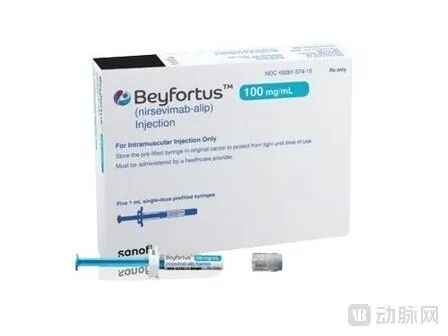
三千多一针的网红疫苗排队打,却被国内企业忽略了?
3 6 Ke· 2025-12-08 00:02
Core Insights - The RSV (Respiratory Syncytial Virus) season this year has been unusually prolonged, with parents now having the option to vaccinate their children with a high-cost monoclonal antibody, Nirsevimab, developed by Sanofi, to reduce the risk of severe RSV infections [1][2] - Nirsevimab has gained significant traction in the market, generating substantial revenue in the U.S. and Europe, and is expected to continue its growth trajectory as it expands into other markets [7][8] Group 1: RSV Infection and Treatment Landscape - RSV is the leading cause of severe lower respiratory infections in infants, with hospitalization rates for infants under three months reaching 10%-20% [2] - Prior to Nirsevimab, the RSV prevention market was dominated by Palivizumab, which had a narrow application range and was not effective for the majority of infants [2][3] - Nirsevimab is advantageous as it can be administered to healthy infants, unlike Palivizumab, which is limited to high-risk groups [3][6] Group 2: Market Demand and Supply Challenges - The demand for Nirsevimab has surged, with approximately 2.4 million infants in the U.S. eligible for treatment during the 2024 RSV season, leading to significant supply shortages [6][8] - Sanofi reported that Nirsevimab generated approximately $598 million in sales in 2023, with projections of $1.829 billion in 2024, marking it as a blockbuster drug [7][8] Group 3: Competitive Landscape - The introduction of Clesrovimab, another monoclonal antibody for RSV prevention, is anticipated to further intensify competition in the market, with its approval expected in June 2025 [9][10] - Both Nirsevimab and Clesrovimab have similar indications, but Nirsevimab has a broader age range for application, which may give it a competitive edge [9][10] Group 4: Domestic Development and Future Prospects - In China, the development of RSV monoclonal antibodies is still in its early stages, with only a few candidates in clinical trials, such as TNM-001 and RB0026, which are expected to enter the market by 2027 [14][15][16] - The complexity and high failure rates associated with developing RSV monoclonal antibodies pose challenges for domestic companies, leading to a slower response in the market compared to vaccines [16][17]


科创板“第五套”重启首单解析:泰诺麦博核心药品刚上市遇竞品“打5折”?
Hua Er Jie Jian Wen· 2025-08-02 05:12
Core Viewpoint - The acceptance of Zhuhai Tainuo Maibo Pharmaceutical Co., Ltd.'s IPO application under the fifth set of standards for the Sci-Tech Innovation Board marks a significant milestone after a two-year hiatus for similar projects [1][9]. Financial Performance - Tainuo Maibo's revenue from 2022 to 2024 was 4.34 million yuan, 0 yuan, and 15.06 million yuan, respectively, while net losses during the same period were 429 million yuan, 446 million yuan, and 515 million yuan, totaling over 1.4 billion yuan [2]. - The company plans to raise 1.5 billion yuan through the IPO to fund new drug development, expand antibody production facilities, and supplement working capital [6]. Product Pipeline - Tainuo Maibo's core products include the recombinant anti-tetanus toxin monoclonal antibody, "Xintuituo" (new tetanus antibody), which has been approved for market, and TNM001, which is currently in Phase III clinical trials [3][15]. - "Xintuituo" is the first recombinant anti-tetanus toxin monoclonal antibody globally, aimed at reducing reliance on human blood-derived products for passive immunity [11][12]. Market Challenges - The competitive landscape for "Xintuituo" is challenging, with similar products priced below 200 yuan, leading to a price drop of over 50% compared to pre-collection prices [5][13]. - The terminal market price for "Xintuituo" is set at 798 yuan per injection, while competing products have significantly lower prices due to recent price reductions in the market [13]. Competitive Landscape - TNM001 targets respiratory syncytial virus (RSV) and is facing competition from established products like Synagis and Clesrovimab, which are already available in the market [15][17]. - The global market for RSV treatments is projected to reach $12.8 billion by 2030, indicating significant commercial potential for TNM001 [15]. Strategic Implications - The progress of Tainuo Maibo's core products exceeds the requirements for the fifth set of IPO standards, suggesting a more certain commercial outlook [18]. - The acceptance of Tainuo Maibo's IPO application may serve as a reference for other companies considering similar paths in the future [18].