
Consumer Price Index

Search documents
Review & Preview: All Fueled Up
Barrons· 2026-03-11 23:55
Core Viewpoint - The latest inflation report indicates a 2.4% rise in consumer prices for February, aligning with estimates and maintaining the same pace as January, which may have influenced stock market reactions [1] Group 1 - The consumer price index (CPI) rose by 2.4% in February [1] - The inflation rate for February matched the pace observed in January [1]


Stock market today: Dow, S&P 500, Nasdaq futures slip amid continued Iran fallout, with CPI on deck
Yahoo Finance· 2026-03-10 23:13
Market Overview - US stock futures showed a slight decline, with S&P 500 and Nasdaq 100 down approximately 0.1% and Dow Jones Industrial Average futures slipping 0.2% as investors reacted to developments in the Iran war and awaited inflation reports [1][2] - Concerns regarding the Iran war have led to increased volatility in the oil market, impacting stock performance [2] Oil Market - Oil prices experienced fluctuations, with West Texas Intermediate and Brent crude both rising over 2%, trading above $85 and $90 respectively, following reports of a proposed record release of reserves by the IEA to alleviate supply issues [3] Inflation Data - The Consumer Price Index report for February is set to be released, followed by the Personal Consumption Expenditures index on Friday, which are expected to provide insights into inflation trends and the overall health of the US economy [4] Company Earnings - Oracle reported strong Q3 earnings, exceeding expectations and raising its 2027 revenue guidance to $90 billion, resulting in a stock price increase of up to 10% in premarket trading [7] - Groupon's stock fell by 10% in premarket trading due to disappointing financial guidance, forecasting 2026 revenue between $513 million and $523 million, below analyst expectations [10]

US PCE inflation heats up in December
Yahoo Finance· 2026-02-20 13:50
Core Insights - Underlying U.S. inflation increased more than expected in December, with further acceleration anticipated in January, reinforcing expectations that the Federal Reserve will not cut interest rates before June [1] Inflation Data - The personal consumption expenditures (PCE) price index, excluding food and energy, rose by 0.4% in December, following a 0.2% increase in November. Economists had predicted a 0.3% rise [2] - Year-over-year core PCE inflation advanced to 3.0% in December, up from 2.8% in November [2] - The PCE price index increased by 0.4% in December, with year-on-year inflation at 2.9%, compared to 2.8% in November [5] Consumer Spending - Consumer spending, which constitutes over two-thirds of economic activity, rose by 0.4% in December, matching the increase from November. When adjusted for inflation, consumer spending gained 0.1% [6]
Minneapolis Fed's Kashkari: 'We're pretty close to neutral' on rates
Yahoo Finance· 2026-02-19 16:39
Core Viewpoint - The Minneapolis Fed president Neel Kashkari believes the central bank is nearing a neutral policy rate, indicating limited room for further rate cuts [1][2]. Monetary Policy Insights - Kashkari noted that interest rates have been significantly reduced in recent years, and the current monetary policy is close to neutral, contingent on inflation trends and unemployment rates [2][3]. - The yield on the 10-year government Treasury bond suggests that the neutral rate is likely higher than before, influenced by increased investment in data centers [2][3]. Job Market Analysis - The job market is described as "softer" compared to one or two years ago, yet it remains relatively strong across the country [3]. Federal Reserve Officials' Perspectives - Fed officials exhibit a divided stance on interest rates, with some anticipating cuts if inflation decreases, while others prefer to maintain rates until inflation shows clear signs of stabilization [4]. - Fed Governor Michael Barr and Chicago Fed president Austan Goolsbee emphasize the need for evidence of declining goods prices and further progress towards the 2% inflation target before considering rate cuts [3][4]. Inflation Metrics - The Consumer Price Index for January indicated a 2.4% increase year-over-year, with core prices rising 2.5% [4]. - The upcoming release of the Personal Consumption Expenditures index is expected to show a 2.9% increase in December on a core basis, slightly up from 2.8% in November [5].
Friday Could Be a Big Day for Markets
Yahoo Finance· 2026-02-19 16:13
Economic Indicators - The Bureau of Economic Analysis (BEA) will publish the Personal Consumption Expenditure (PCE) Price Index on February 20, which is closely monitored by the Federal Reserve and could influence monetary policy for 2026 [1] - The PCE Price Index is preferred by the Fed over the Consumer Price Index (CPI) because it provides a broader measure of inflation and quickly reflects changes in consumer behavior [2] Inflation Trends - Recent CPI data showed consumer prices rose 2.4% annually in January, slightly below the expected 2.5%, with core CPI (excluding food and energy) at 2.5%, the lowest since April 2021 [3] - If the upcoming PCE Price Index confirms a moderation in inflation, it would align with the CPI report, indicating inflation is moving closer to the Fed's target [4] Monetary Policy Implications - A confirmation of moderating inflation would give the Fed room to implement additional interest rate cuts, with the futures market currently pricing in two to three quarter-percentage point cuts in 2026 [5] - Lower interest rates or the expectation of them could positively impact the stock market by reducing borrowing costs for companies and consumers, potentially boosting spending [6]
The Federal Reserve Is Still Dealing With The Shutdown's 'Data Fog'
Investopedia· 2026-01-23 01:00
Core Insights - The 43-day government shutdown has delayed and distorted key economic data, complicating the Federal Reserve's decision-making regarding monetary policy [2][10] - The Personal Consumption Expenditures (PCE) inflation report will not return to its regular schedule until April, covering only October and November data [3][10] - The Consumer Price Index (CPI) was also affected, with October data not collected and November data gathered later than usual, potentially distorting holiday sales data [4][10] Economic Implications - The lack of timely inflation data increases the risk of investors and policymakers being caught off guard when reports are finally released [5][10] - Federal Reserve officials are expected to maintain the current interest rate due to the uncertainty caused by the delayed data [5][10] - Policymakers face a dilemma between keeping interest rates high to combat inflation and lowering them to support the job market [6][10] Data Collection Challenges - The shutdown's effects may persist for months, particularly affecting housing cost measures, as the Bureau of Labor Statistics (BLS) had to estimate changes in rent and home ownership costs [8][10] - A methodological assumption of no inflation in October has led to an understatement of shelter inflation, which may not be corrected until April 2026 [9][10] - The distortion in housing costs could temporarily make inflation appear lower than it actually is, impacting household budgets and inflation calculations [9][10] Current Inflation Trends - Annual core inflation showed a decrease to 2.6% in December from 3% in September, but this may not reflect the true situation due to data distortions [11][10] - The "data blackout" during the shutdown has made it challenging for policymakers to assess the underlying inflation trend [12][10]
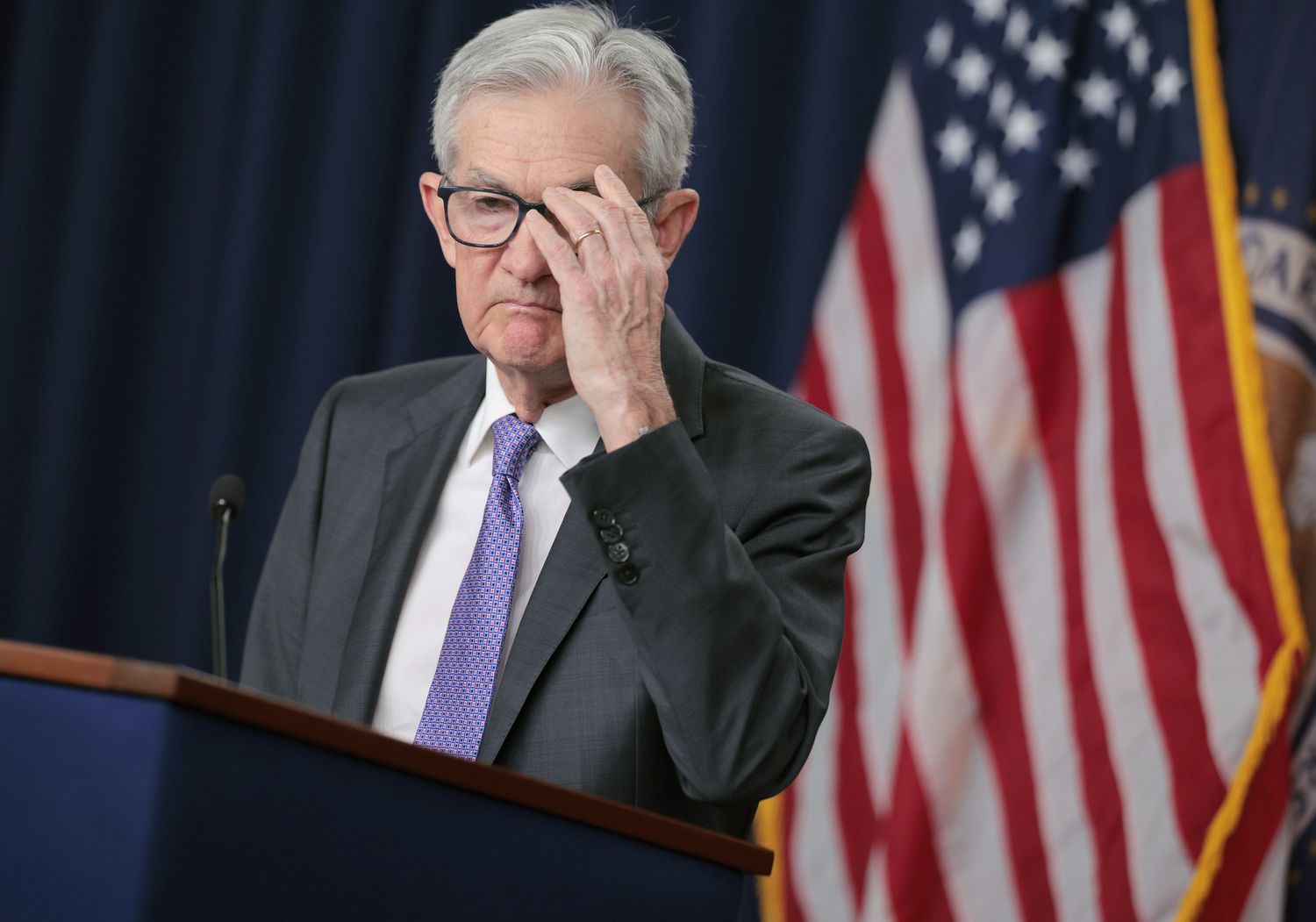
Fed's Goolsbee says rates ‘could come down' if economy stays on ‘golden path'
Fox Business· 2025-12-19 17:11
Core Viewpoint - The Federal Reserve Bank of Chicago President Austan Goolsbee indicated that the potential for further interest rate cuts could arise if economic indicators continue on their current positive trajectories, particularly regarding inflation data [1][2]. Economic Indicators - Goolsbee highlighted the positive aspects of the recent Consumer Price Index (CPI) report, noting a 0.2% increase over two months from September to November and a year-over-year rise of 2.7%, which was below economists' expectations of a 0.3% monthly increase and a 3.1% year-over-year rise [2][4]. - The CPI report reflects a delayed reporting window due to a recent government shutdown, which did not include the standard one-month change from October to November [2]. Interest Rate Decisions - The Federal Reserve recently announced its third interest rate cut of the year, reducing the benchmark federal funds rate by 25 basis points to a range of 3.5% to 3.75%, following similar cuts in September and October [4]. - Goolsbee expressed discomfort with preemptively front-loading rate cuts before confirming a return to the 2% inflation target, suggesting that rates could be lowered significantly if full employment and stable inflation are achieved [5][8]. Labor Market Concerns - In response to concerns about the U.S. job market and rising unemployment rates, Goolsbee noted that most job market measures, aside from payroll employment, have shown steady but mild cooling [6][7]. - He emphasized the need for assurance that inflationary spikes are transitory and not indicative of a longer-term trend before considering further rate reductions [8].
Weekly Economic Snapshot: Inflation Cools Yet Consumer Sentiment Stumbles
Etftrends· 2025-10-27 15:40
Economic Data Overview - The Consumer Price Index (CPI) rose to 3.0% in September, slightly up from 2.9% in August but below the expected 3.1% [2] - Monthly price growth was 0.3%, a deceleration from the 0.4% increase in August and below the projected 0.4% [2] - Core inflation, excluding food and energy, cooled to 3.0% in September, down from 3.1% in August and below the expected 3.1% [2] Inflation Drivers - The primary contributor to the CPI increase in September was higher gas prices, while food, shelter, airline fares, recreation, household furnishings, and apparel also saw price increases [3] - Conversely, prices for motor vehicle insurance, used cars, and communication costs declined [3] Consumer Sentiment - The University of Michigan Consumer Sentiment Index fell nearly 3% to 53.6 in October, below the forecast of 55.0, marking the lowest level since May [5] - The decline in sentiment was attributed to ongoing inflation concerns, with younger consumers showing improved sentiment but older demographics experiencing noticeable drops [6] Housing Market Insights - Existing home sales rose 1.5% in September, reaching a seasonally adjusted annual rate of 4.06 million units, aligning with expectations [8] - The median price for existing homes decreased by 1.7% from August, marking the lowest level in five months, although it was up 2.1% year-over-year [9] Market Reactions - The S&P 500 index briefly crossed above 6,800 for the first time, finishing the week with a 1.9% gain [11] - The CME FedWatch Tool indicates a 97% likelihood of a 25 basis point rate cut by the Federal Reserve in the upcoming meeting [12] Upcoming Economic Outlook - The economic outlook remains complex due to the ongoing government shutdown, with private and regional reports expected to provide insights into economic activity [13] - Attention will be focused on the Federal Reserve meeting, which will influence market expectations, alongside housing market reports and manufacturing sector data [14]

Inflation Is Running High—Here's What Experts Expect for the Rest of the Year
Yahoo Finance· 2025-09-26 16:51
Core Insights - Economists anticipate inflation to rise in the fourth quarter due to the impact of President Trump's tariffs on consumer prices [2][8] - The Consumer Price Index (CPI) is projected to increase by 3% year-over-year in the fourth quarter, up from 2.9% in August, marking the highest level since May 2024 [3][8] - Inflation, as measured by Personal Consumption Expenditures (PCE), is expected to reach 3.2% in December, a rise from 2.9% in August, with a forecasted decline starting in 2026 [4][9] Inflation Trends - The CPI is expected to accelerate in the fourth quarter as companies begin to pass on tariff-related costs to consumers [3][8] - The PCE index rose by 2.7% year-over-year in August, indicating a slight increase from 2.6% in July, while core PCE remained stable at 2.9% [4] - A significant portion of tariff costs, estimated at 70%, is being passed on to consumers, with expectations of further increases in the coming months [6][7] Consumer Impact - Rising inflation is affecting household budgets, particularly for essential goods like gas and groceries, with wage increases not being evenly distributed among Americans [5] - Companies have been hesitant to raise prices due to potential loss of business, but surveys indicate a shift towards passing on costs to consumers [6][7]
Consumer prices rose at annual rate of 2.9% in August, as weekly jobless claims jump
CNBC· 2025-09-11 12:33
Economic Indicators - Consumer prices increased by 0.4% in August, which is double the increase from the previous month, resulting in an annual inflation rate of 2.9% [1] - The core consumer price index, excluding food and energy, rose by 0.3% in August, maintaining a 12-month figure of 3.1%, aligning with forecasts [2] Employment Data - Weekly unemployment compensation filings unexpectedly rose to a seasonally adjusted 263,000, surpassing the estimated 235,000, and increasing by 27,000 from the previous period [2]