
Dollar Index

Search documents
Markets Edge Toward a Critical Inflection Point
Mott Capital Management· 2026-03-28 21:20
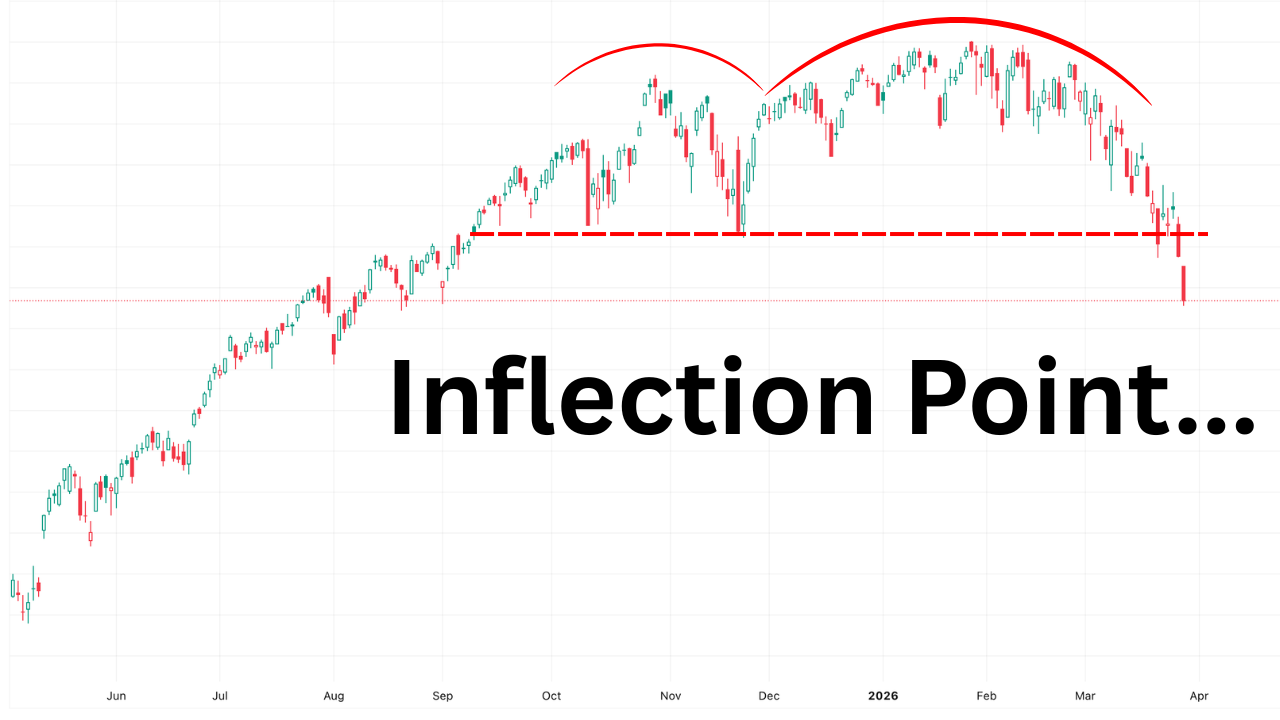
Core Insights - Financial conditions are tightening due to rising oil prices, which are driving inflation expectations higher, strengthening the dollar, pushing interest rates up, and pressuring risk assets [2][5][13] Group 1: Financial Conditions and Market Impact - The "four horsemen" of tightening financial conditions are in play, affecting risk assets negatively [2][9] - The S&P 500 has broken below a pennant pattern, currently around 6,350, with further downside risk indicated by systematic selling flows and negative gamma positioning [2][23][26] - The dollar index is poised for a potential breakout, which could lead to further strengthening against other currencies [17][27] Group 2: Oil Prices and Inflation - Crude oil prices closed at their highest level in the current move, consolidating in the $84–$86 range, which is expected to maintain upward pressure on inflation [5][10][12] - The relationship between oil prices and financial conditions has shifted post-COVID, with higher oil prices now leading to tighter financial conditions, contrary to historical trends [14][15][30] Group 3: Interest Rates and Yield Curve - Interest rates are rising as the market anticipates potential actions from the Federal Reserve in response to higher oil prices, with Fed fund futures indicating a rate around 3.70% [28] - The yield curve has steepened, with the two-year rate moving above 4% before closing lower, indicating market volatility and uncertainty [21][22] Group 4: Options Market Dynamics - The options market shows a put wall at 6,300, which may provide some support, while the JPMorgan collar at 6,475 is unlikely to have a significant impact [24][25] - Systematic flows in the market suggest continued selling pressure in the S&P and Nasdaq, indicating bearish sentiment among traders [26][27]


Bank of America has a stark warning for stock investors
Yahoo Finance· 2026-03-14 18:03
Core Insights - The stock market is on the brink of requiring intervention from policymakers, particularly if the S&P 500 drops below 6,600, which is only about 1% below its recent close [1] - The S&P 500 has declined approximately 2.8% in 2026 and is about 5% off its peak, influenced by rising oil prices and escalating tensions in Iran [2] Market Thresholds - Four critical market levels have been identified as "trip wires" that could trigger intervention if breached [3] - Three of these trip wires are already near their thresholds, with the S&P 500 being the only one not yet triggered [4] Potential Policy Interventions - A drop in the S&P 500 below 6,600 would likely prompt a response from the White House or the Federal Reserve [6] - Oil prices exceeding $100 per barrel could lead to intervention, as Brent crude was already trading just above this level [6] - The dollar index surpassing 100 is squeezing global liquidity, which could necessitate a policy response [6] - A 30-year Treasury yield above 5% would prompt recommendations to buy Treasuries, as the yield was at 4.9% recently [6] Specific Policy Actions - Possible actions include rolling back tariffs to ease inflation and support risk assets [7] - A ceasefire or diplomatic resolution in the Iran conflict could lower oil prices and restore confidence in supply chains [7] - The Federal Reserve could cut rates or resume asset purchases to inject liquidity into the markets [7] Asset Valuation Insights - Hartnett's analysis includes a breakdown of overbought and oversold assets, indicating potential value areas once market conditions stabilize [8]

X @Wu Blockchain
Wu Blockchain· 2026-01-29 11:17
JPMorgan Private Bank notes that while the Dollar Index (DXY) has fallen 10% over the past year, Bitcoin has dropped 13% during the same period, failing to rally as it historically has amidst dollar weakness. Analysts explained that the dollar's decline was primarily driven by short-term flows and sentiment rather than fundamental shifts in economic growth or monetary policy expectations. https://t.co/IdQ0PIl6qA ...
Dollar meanders as traders await key US economic data
The Economic Times· 2026-01-07 02:00
Geopolitical Tensions and Market Reactions - Markets have largely ignored deepening geopolitical tensions, with stocks rallying and currencies and bonds showing little movement following U.S. intervention in Venezuela and the capture of President Nicolas Maduro [1][8] - China has banned exports of dual-use items to Japan, a response to remarks by Japanese Prime Minister Sanae Takaichi regarding Taiwan, but this has not significantly impacted foreign exchange markets [1][2][8] Currency Market Overview - The Australian dollar fell 0.3% to a session low of $0.6717 but later recovered, while the British pound remained flat at $1.3502 and the Japanese yen strengthened slightly to 156.63 [8] - The euro increased by 0.03% to $1.1692 after a previous session decline of 0.3%, attributed to inflation slowing more than expected in major eurozone economies [5][8] U.S. Economic Data and Federal Reserve Outlook - Currency traders are in a wait-and-see mode ahead of U.S. labor market data, including private payrolls and job openings, with a focus on the upcoming nonfarm payrolls report [5][8] - There is a belief among investors that the Federal Reserve will cut rates at least two more times this year, which has contributed to a weaker dollar [7][9] - The ADP's monthly jobs report is anticipated to be particularly impactful, with concerns about rising unemployment and the potential underperformance of AI investments [6][9]


Dollar Falls on Expectations of Easier Fed Policy
Yahoo Finance· 2025-12-15 15:11
Economic Indicators - The December Empire manufacturing survey unexpectedly contracted by 22.6 points to -3.9, significantly weaker than the expected 10.0 [3] - The NAHB housing market index for December rose by 1 to an 8-month high of 39, aligning with expectations [3] - Eurozone industrial production for October increased by 0.8% month-over-month, marking the largest rise in 5 months and meeting expectations [6] Federal Reserve Policy - The dollar index is down by 0.24% due to the contraction in the Empire manufacturing survey, which is seen as a dovish factor for Federal Reserve policy [1] - Fed Governor Stephen Miran indicated that the current policy stance is unnecessarily restrictive for the economy, citing a benign inflation outlook and labor market concerns [3] - There is a 27% chance that the FOMC will cut the fed funds target range by 25 basis points at the upcoming January meeting [4] Currency Movements - The euro (EUR/USD) is up by 0.23%, reaching a 2.5-month high, supported by dollar weakness and positive Eurozone industrial production data [5] - The yen (USD/JPY) is down by 0.60%, climbing to a 1-week high against the dollar due to stronger-than-expected Japanese economic indicators and expectations of a potential interest rate hike by the Bank of Japan [7] Market Sentiment - Concerns are growing that President Trump may appoint a dovish Fed Chair, which could negatively impact the dollar [2] - Markets are pricing in a 0% chance of a rate cut by the European Central Bank at the upcoming policy meeting, indicating a divergence in central bank policies between the Fed and the ECB [6]
Why Is the Dollar Index Stuck in Neutral?
Yahoo Finance· 2025-11-04 20:00
Core Insights - The dollar index is currently consolidating below the 100 level, indicating a bearish trend for 2025 [2] - The index has shown a pattern of lower highs and lower lows from January to September 2025, suggesting ongoing weakness [3] - Recent inflation data indicates pressures above the Fed's 2% target, which may lead to further rate cuts, negatively impacting the dollar index [5] Dollar Index Trends - The dollar index has been consolidating in a range of 96.22 to 100.26 since August 4, 2025, reflecting a bearish sentiment [4] - The index has made higher lows and higher highs since the low on September 17, but remains near the bottom of its trading range for 2025 [4] Inflation and Interest Rates - The September consumer and producer price index data hovered around 3%, indicating inflationary pressures that are still above the Fed's target but below the current Fed Funds Rate [5] - The Fed's recent rate cut of 25 basis points further narrows the rate differential between the U.S. dollar and other reserve currencies, contributing to a bearish outlook for the dollar index [5] Gold Market Dynamics - Gold has surpassed the euro to become the second most widely used currency, reflecting a decline in fiat currency values, including the U.S. dollar [6] - COMEX gold futures have rallied nearly 59% from the end of 2024, reaching a high of $4,398 per ounce, although they have corrected to around $4,000 in early November [7]
X @THE HUNTER ✴️
GEM HUNTER 💎· 2025-09-16 19:34
Tomorrow is going to be a crazy day#fomcTHE HUNTER ✴️ (@TrueGemHunter):💥 Dollar Index $DXY is dumping — down 11% since January.Driven by expectations of upcoming #FOMC rate cuts.Positive: Risk assets love it. #Bitcoin, alts & equities usually pump as investors flee cash.Negative: A weaker dollar can reignite inflation pressures.The dollar’s https://t.co/4lT7IYOoCb ...
Elliott Wave: Dollar At Risk Ahead Of CPI And Fed Cut
Benzinga· 2025-09-11 12:32
Core Insights - The dollar is currently trapped in a range, with a potential for a downward breach below July lows, indicating a possible ending diagonal pattern [1] - Upcoming US CPI data is crucial, as it may influence market expectations regarding interest rate cuts by the Federal Reserve [2][3] - A significant drop in crude oil prices could lead to a flat or softened inflation reading, impacting the dollar's performance [3] Economic Indicators - US inflation is expected to rise to 2.9% from 2.7%, but a softer reading could trigger a sell-off in the dollar [3] - The market anticipates that the Federal Reserve may cut rates, with speculation on the extent of the cuts [2] Technical Analysis - The Elliott Wave analysis suggests that the dollar's rise from July lows is corrective, indicating potential further weakness [4] - A target below 96 is indicated for wave C of wave five, but caution is advised as ending diagonals can signal trend reversals [4] Historical Context - A comparison is made to September 2024, where the dollar initially fell before stabilizing and recovering after a rate cut, suggesting a possible similar scenario may unfold [6]