
Dolphin(海豚)

Search documents
在日系遍地的东南亚,中国车凿开了一道口子
创业邦· 2026-03-04 00:36
Core Viewpoint - Japanese car brands are losing market share in Southeast Asia, with a significant decline expected by 2025, as Chinese brands and local manufacturers gain ground [5][11][19]. Market Share Trends - Japanese brands hold about 30% of global sales, with Southeast Asia being a crucial market where their share has historically exceeded 80% [5][6]. - By 2025, Japanese car sales in six ASEAN countries are projected to drop by 22% compared to 2019, while their sales in the U.S. remain stable at around 6 million units [11][13]. - In Thailand, the market share of Japanese cars has decreased from nearly 90% in 2019 to 68% in 2025, while Indonesia's share remains at 81% but is also declining [15][17]. Chinese Brand Growth - Chinese brands have increased their market share in Southeast Asia from less than 1% in 2019 to approximately 12% now, with Thailand reaching 22% and Indonesia at 14% [17]. - In Thailand's top ten car manufacturers for 2025, brands like BYD and MG are showing significant growth rates, with BYD's sales increasing by 47.5% [18]. Local Brand Competition - Local Southeast Asian brands are also capturing market share previously held by Japanese manufacturers, with VinFast in Vietnam surpassing Toyota in sales [19][21]. - Malaysian brands Perodua and Proton account for 60% of the market, with some models being influenced by Chinese technology [21]. Historical Context - Japanese car manufacturers have established a strong presence in Southeast Asia since the 1960s through local assembly and production, which created a long-standing market dominance [23][24]. - The shift in market dynamics is attributed to Southeast Asian countries' desire to develop their own automotive industries and reduce reliance on Japanese brands [27]. Government Support for EVs - Southeast Asian governments are actively promoting electric vehicles (EVs) and providing incentives for local and Chinese manufacturers to establish production facilities [29][30]. - Thailand's EV 3.5 plan offers significant tax reductions and cash subsidies for electric vehicles, encouraging foreign investment [29]. Export and Manufacturing Strategy - China's export strategy has shifted towards high-tech industries, including automotive and battery production, contributing to a record trade surplus [30]. - This aligns with Southeast Asian countries' interest in collaborating with Chinese manufacturers to enhance their automotive capabilities [30][31].






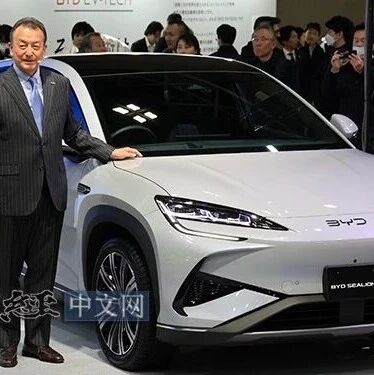
比亚迪为日本市场量身打造的轻型EV将首次亮相
日经中文网· 2025-10-08 07:32
Core Viewpoint - BYD is set to showcase its lightweight electric vehicle at the Japan Mobility Show 2025 in Tokyo, marking its first tailored offering for the Japanese market [2][4]. Group 1: Product Launch and Market Entry - BYD plans to enter the Japanese lightweight vehicle market by the second half of 2026, developing a platform specifically for this market [4]. - The targeted price for the new lightweight electric vehicle is approximately 2.5 million yen (around 117,000 RMB), aiming to be one of the lowest-priced models in its category [4]. - This will be the first time BYD has designed a vehicle specifically for a foreign market, as it has previously focused on exporting models primarily sold in China [4]. Group 2: Exhibition Details - At the Japan Mobility Show, BYD will display a total of eight passenger vehicles, including existing models such as "Sea Lion 7," "Dolphin," and "Seal" [5]. - The company will gradually announce the details of the vehicles to be exhibited at the event [5].
比亚迪印尼工厂年底将竣工,投资10亿美元
汽车商业评论· 2025-01-21 15:48
编 译 / 郑浩钧 设 计 / 师 超 比亚迪的出海战略正在稳步实施。2023年5月开始规划的比亚迪印尼工厂将按计划在今年底竣工, 可为当地新增超18000个就业岗位。除了生产制造外,比亚迪还计划在印尼工厂建设研发中心、培 训设施等等,形成一个更完整的电动汽车生态系统。目前,比亚迪在印尼的电动汽车市场中已经占 据三分之一以上的份额。 1月20日,据路透社报道,比亚迪印度尼西亚公司总裁赵鹰(Eagle Zhao)表示,比亚迪计划在2025 年底前建设完成投资10亿美元的印度尼西亚比亚迪工厂。在长期规划中,该工厂主要面向出口市 场。 "我们在印尼当地建设工厂的每一个步骤都非常顺利,都在按计划进行。我们会信守承诺,到2025 年底,我们将完成工厂的建设工作,"赵鹰在接受路透社和CNBC印尼频道的联合采访时表示。 比亚迪印尼工厂位于西爪哇省梳邦的"梳邦智能城市"(Subang Smartpolitan)工业区内,年产能为 15万辆电动汽车。凭借这项投资,比亚迪运往印度尼西亚的汽车将暂时免征进口税,这一政策旨在 刺激电动汽车需求,同时吸引汽车制造商在印尼投资。印尼政府的目标是到2030年在国内生产60万 辆电动汽车。 ...