新能源车崛起

Search documents
在日系遍地的东南亚,中国车凿开了一道口子
创业邦· 2026-03-04 00:36
Core Viewpoint - Japanese car brands are losing market share in Southeast Asia, with a significant decline expected by 2025, as Chinese brands and local manufacturers gain ground [5][11][19]. Market Share Trends - Japanese brands hold about 30% of global sales, with Southeast Asia being a crucial market where their share has historically exceeded 80% [5][6]. - By 2025, Japanese car sales in six ASEAN countries are projected to drop by 22% compared to 2019, while their sales in the U.S. remain stable at around 6 million units [11][13]. - In Thailand, the market share of Japanese cars has decreased from nearly 90% in 2019 to 68% in 2025, while Indonesia's share remains at 81% but is also declining [15][17]. Chinese Brand Growth - Chinese brands have increased their market share in Southeast Asia from less than 1% in 2019 to approximately 12% now, with Thailand reaching 22% and Indonesia at 14% [17]. - In Thailand's top ten car manufacturers for 2025, brands like BYD and MG are showing significant growth rates, with BYD's sales increasing by 47.5% [18]. Local Brand Competition - Local Southeast Asian brands are also capturing market share previously held by Japanese manufacturers, with VinFast in Vietnam surpassing Toyota in sales [19][21]. - Malaysian brands Perodua and Proton account for 60% of the market, with some models being influenced by Chinese technology [21]. Historical Context - Japanese car manufacturers have established a strong presence in Southeast Asia since the 1960s through local assembly and production, which created a long-standing market dominance [23][24]. - The shift in market dynamics is attributed to Southeast Asian countries' desire to develop their own automotive industries and reduce reliance on Japanese brands [27]. Government Support for EVs - Southeast Asian governments are actively promoting electric vehicles (EVs) and providing incentives for local and Chinese manufacturers to establish production facilities [29][30]. - Thailand's EV 3.5 plan offers significant tax reductions and cash subsidies for electric vehicles, encouraging foreign investment [29]. Export and Manufacturing Strategy - China's export strategy has shifted towards high-tech industries, including automotive and battery production, contributing to a record trade surplus [30]. - This aligns with Southeast Asian countries' interest in collaborating with Chinese manufacturers to enhance their automotive capabilities [30][31].






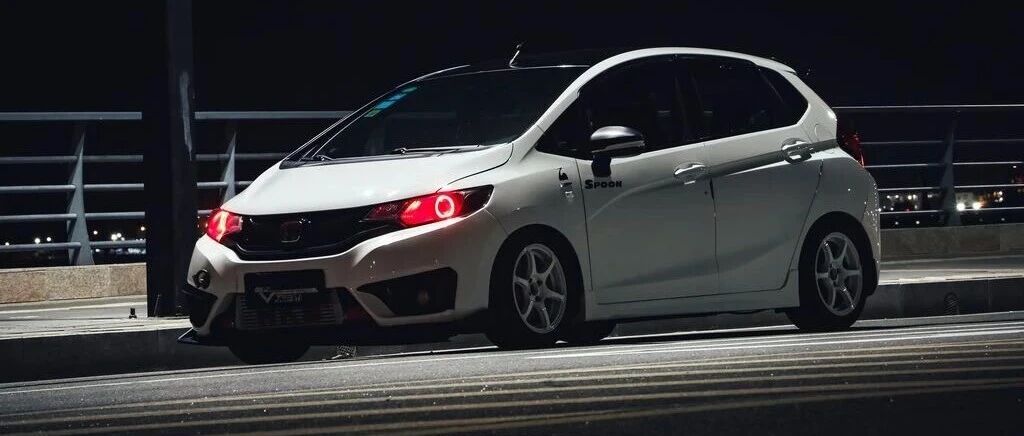
“国民神车”连续两个月 0 销量之后,搞了个骚操作
商业洞察· 2026-01-24 09:39
Core Viewpoint - The article discusses the decline of Honda Fit, once a popular model, highlighting its recent sales struggles and the implications of its limited release strategy of 3,000 units as a means to manage production and target a specific customer base [4][32][43]. Group 1: Sales Performance - Honda Fit's sales have drastically declined, with only 2,695 units sold in the previous year, marking a 98% drop from its peak sales of 129,000 units in 2018 [26][27]. - The model experienced zero sales in the last two months of the previous year, indicating a significant loss of market interest [7][34]. - The limited release of 3,000 units is seen as a response to the model's inability to compete with both electric vehicles and traditional fuel vehicles in the same price range [32][39]. Group 2: Market Position and Competition - The rise of electric vehicles has eroded Honda Fit's competitive advantages, such as space and driving experience, which are now outmatched by newer models from competitors like Geely and BYD [21][24][30]. - The article notes that even traditional fuel vehicles are now offering better specifications and features than Honda Fit, further diminishing its market appeal [29][30]. Group 3: Strategic Decisions - The limited release strategy is interpreted as a way for Honda to control production capacity and avoid excess inventory, allowing the company to allocate resources to more profitable models [33][35]. - This strategy also aims to refine the customer base, targeting loyal fans who value the brand's heritage rather than price-sensitive consumers [36][39]. - The article suggests that this approach may not significantly boost sales, as the model's value proposition remains weak in the current market context [40][43].

“国民神车”连续两个月 0 销量之后,搞了个骚操作
3 6 Ke· 2026-01-20 10:20
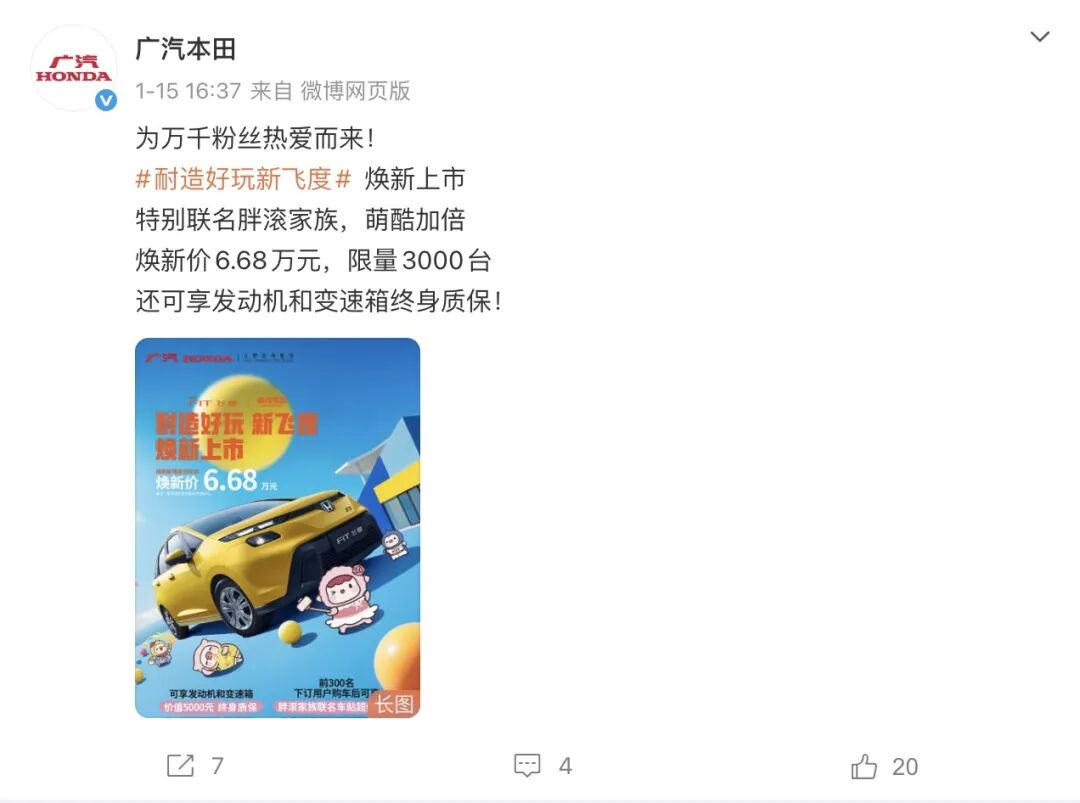
Core Viewpoint - The Honda Fit, once a popular model, is now facing a dramatic decline in sales, with a recent announcement of a limited release of 3,000 units amidst a backdrop of zero monthly sales for the past two months, highlighting the challenges traditional fuel vehicles face against the rise of electric vehicles [1][3][22]. Group 1: Sales Performance - The Honda Fit's sales plummeted to just 3 units in October last year, and it recorded zero sales in November and December, culminating in a total of only 2,695 units sold for the entire year [3][19]. - In stark contrast, the peak sales year of 2018 saw the Fit sell 129,000 units, indicating a 98% decline in sales over seven years [19][21]. Group 2: Market Position and Competition - The emergence of electric vehicles has significantly eroded the competitive advantages that the Fit once held, such as space and fuel efficiency, making it less appealing compared to newer models from domestic manufacturers [6][13][21]. - Domestic fuel vehicles are now offering better space, power, and features at similar price points, further diminishing the Fit's market relevance [21][22]. Group 3: Strategic Decisions - The decision to limit production to 3,000 units is seen as a strategy to control capacity and avoid excess inventory, allowing Honda to allocate resources to more profitable models [22][25]. - This limited release also serves to target a niche market of loyal customers who value the brand's heritage and performance, rather than appealing to the broader market that has shifted towards electric vehicles [26][28]. Group 4: Product Features and Upgrades - The new Fit model features a 10.1-inch smart screen and supports various smartphone connectivity options, representing a significant upgrade from previous models [14]. - Despite these upgrades, the Fit's core attributes, such as its size and performance, are no longer sufficient to compete in a market increasingly dominated by electric vehicles [13][17].
告别BBA
投资界· 2025-03-16 07:19
以下文章来源于雷叔写故事 ,作者雷斯林&乌卡 春江水暖鸭先知,公司冷暖销售先知。 "过完年老板说底薪打七折,KPI 倒是一点没减。"入行十年,先后在奥迪、宝马当过销售的智鑫敏锐地觉察到大事不妙:"当时我就感 觉 BBA 恐怕要 BBQ 了。" 这也是同行们心照不宣的事实: BBA 在中国卖不动了 。 雷叔写故事 . 为你写一个故事改名啦,雷斯林欢迎你关注。 时代变了。 作者 | 雷斯林 & 乌卡 来源 | 雷叔写故事 (ID:raistlin2017) 01 现如今,随便找条大马路站会,都能看出端倪,顶着 BBA 车标的越来越少,取而代之的是满地绿牌,瞅着环保又护眼。 BBA 的线下展厅更是门可罗雀,"一个月过完开不了单是常有的事。有时候一天都迎不来一个客,保洁阿姨扫地扫出来的都是我掉的 头发。" 那时的智鑫,每天都在展厅里,为蓝天白云远在巴伐利亚的机械元神赛博渡劫。 这是巅峰时期的智鑫做梦都想不到的。曾经,他一个月就能卖掉 23 辆宝马,月入 8 万,结果没过几年,风向就变了, "收入远不到以 前的一半,最差的时候我还想过去搞直播卖车,就是遗憾自己长得没有优势。" "我们同行群里都觉得情况不乐观,收入下滑得 ...