ESG指数基金

Search documents
清华五道口:ESG数据资产化:风险与治理白皮书(2025)
Sou Hu Cai Jing· 2025-11-04 02:07
Core Insights - The report "ESG Data Assetization: Risks and Governance White Paper (2025)" focuses on the development of ESG data assetization at the intersection of the digital economy and green transformation, providing a comprehensive guide for industry development [1][3]. Group 1: ESG Data Assetization Overview - ESG data assetization involves transforming decentralized, unstructured ESG-related data into digital assets with clear ownership, quantifiable value, and tradability through processes such as collection, cleansing, rights confirmation, evaluation, pricing, and trading [1][27]. - The economic significance of ESG data assetization includes enhancing asset pricing efficiency, attracting long-term capital, fostering green financial innovation, empowering supply chain risk management, and providing data support for government regulation and policy-making [1][28]. Group 2: Policy Environment and International Trends - Domestic ESG information disclosure has transitioned from voluntary guidelines to mandatory regulations, establishing clear compliance boundaries [2][33]. - Internationally, three main frameworks—EU CSRD, US SEC climate rules, and ISSB standards—coexist, showing a trend towards unified disclosure standards while differing in substantive principles and focus [2][34]. Group 3: Technological Support and Implementation Path - The lifecycle of ESG data assetization encompasses five stages: data source aggregation, collection and preprocessing, governance and quality control, analysis and modeling, and service application, with cutting-edge technologies like privacy computing, blockchain, and artificial intelligence playing crucial roles [2][38]. - Privacy computing ensures data is usable but not visible, blockchain guarantees trustworthy data storage and traceability, and AI aids in processing vast amounts of data for value extraction [2][40]. Group 4: Governance Framework - The white paper proposes a multi-level collaborative governance framework based on three core principles: safety, efficiency, and fairness, which includes national data governance committees, top-level legal regulations, industry standards, market constraints, public supervision, and internal controls within enterprises [2][49]. - Effective governance requires a dynamic regulatory technology (RegTech) system that utilizes automated reporting, intelligent monitoring, and penetrative regulation to manage ESG data throughout its lifecycle [2][50]. Group 5: Strategic Outlook and Future Path - The report emphasizes the need for consensus among various stakeholders through technological innovation, regulatory improvement, and collaborative governance to build a trustworthy, inclusive, and sustainable ESG data ecosystem [3][30]. - It highlights the importance of ESG data assetization as a key node in bridging the gap in green finance, addressing challenges such as value measurement, risk assessment, and circulation [3][30].


ESG:指数化投资的新元素—ESG指数和ESG指数化投资的发展
Sou Hu Cai Jing· 2025-05-13 02:01
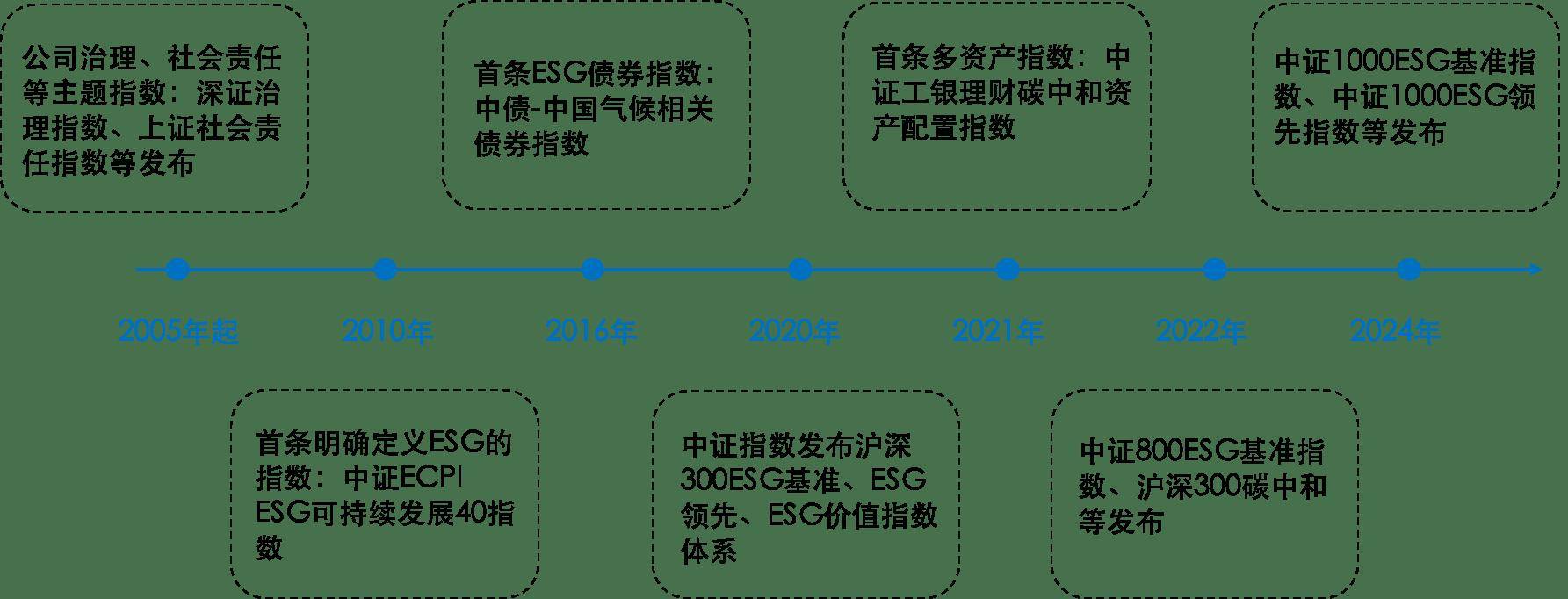
Core Insights - The ESG investment concept has gained significant attention from investors, leading to rapid growth in global ESG indices and index-based investments [1] - The number of global ESG indices has surpassed 50,000, with a year-on-year growth of 55.1% in 2022 [1] - By the end of 2024, the scale of overseas ESG equity ETFs is projected to reach $557.9 billion, reflecting a year-on-year increase of 17.5% [1] Group 1: Growth of ESG Indices - In recent years, the number of ESG indices in China has been increasing, with early development focusing on corporate governance and social responsibility themes [2] - Driven by supportive policies, domestic index providers have accelerated the establishment of ESG index systems, resulting in a significant increase in the pace of index releases [4] - From 2021 to 2023, over 100 new equity ESG indices were launched each year, with 68 new equity ESG indices released in 2024, accounting for 6.19% of all new equity indices during the same period [4] Group 2: Expansion of ESG Index Investment - The scale of ESG index investments in China has been continuously expanding, with 148 existing ESG index fund products and a total scale of 371.7 billion RMB by the end of 2024, representing 8.13% and 7.86% of all index funds, respectively [6] - ESG index products can be categorized into four main themes: pure ESG, environmental protection, social responsibility, and corporate governance [8] - By the end of 2024, the number and scale of pure ESG theme products are expected to reach 69 and 181.1 billion RMB, making up 46.62% and 48.72% of all ESG index products [8]