Fedora

Search documents
Linus 亲手组装“理想的 Linux PC”,谈 Linux 未来:若有人更适合,我愿退位!
程序员的那些事· 2025-12-22 12:25
Core Viewpoint - The article discusses a collaboration between Linus Torvalds, the creator of Linux, and Linus Sebastian, founder of Linus Tech Tips, to build an ideal Linux PC, highlighting Torvalds' hardware preferences and philosophy on system reliability and performance [1][4]. Group 1: Hardware Choices - Torvalds selected the Intel Arc B580 graphics card, which has 12GB of memory, for its compatibility with Linux, despite previously using an AMD RX 580 [4][6]. - The ideal Linux PC configuration includes a 24-core AMD Ryzen Threadripper 9960X processor, 64GB of Kingston DDR5-4800 ECC memory, and a 2TB Samsung SSD 9100 Pro [7][6]. - Torvalds emphasizes the importance of ECC memory for reliability, stating that he avoids machines without it due to potential memory errors [16][20]. Group 2: System Preferences - Torvalds prefers a quiet system and avoids water cooling due to reliability concerns, opting instead for air cooling solutions [23][28]. - The chosen power supply is a Seasonic Prime TX-1600, which provides ample power and is known for its reliability [6][35]. - Fedora is Torvalds' preferred Linux distribution due to its close ties with kernel developers, making it convenient for his work [37][40]. Group 3: Philosophy on Development - Torvalds believes that the number of lines of code is not a valid measure of a developer's value, emphasizing the importance of quality over quantity [67][72]. - He expresses that he does not care whether Linux becomes mainstream, as long as it has users who find value in it [78]. - Torvalds acknowledges the dual nature of generative AI, seeing it as both a bubble and a potential revolution in technology, while cautioning against the hype surrounding it [62][63].


2025 年最受欢迎 Linux 发行版本,首选Ubuntu,游戏上 Pop!_OS?
菜鸟教程· 2025-07-07 01:35
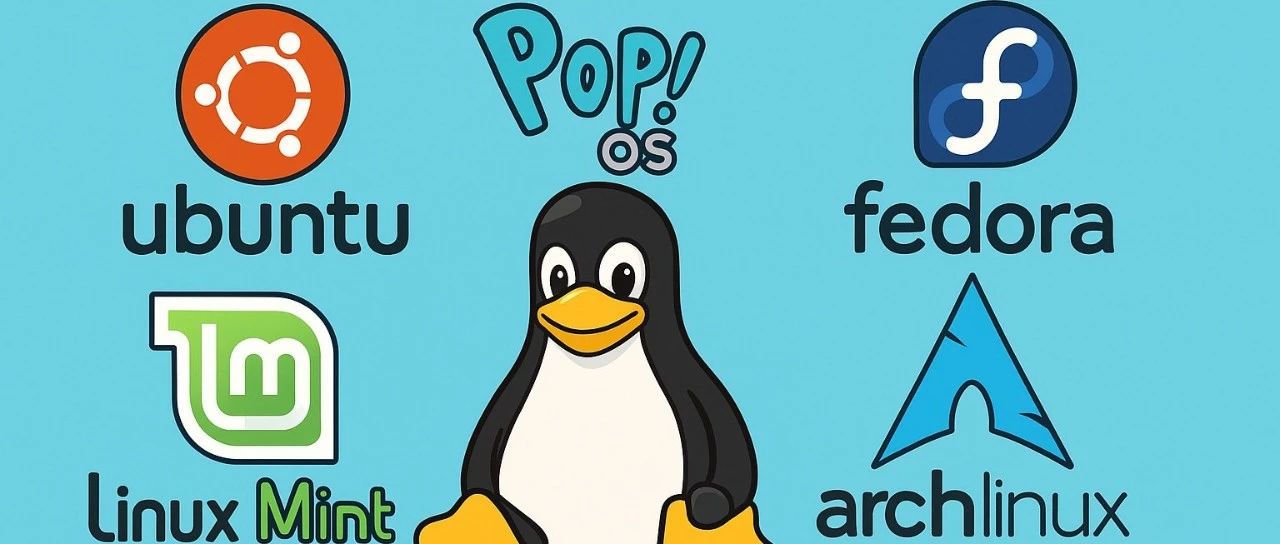
Core Viewpoint - Linux is a free and open-source operating system inspired by Minix and Unix, created by Linus Torvalds in 1991, allowing anyone to use, modify, and redistribute its source code under the GNU General Public License (GPL) [1] Distribution Recommendations - **Ubuntu**: One of the most popular Linux distributions, known for its stability, long-term support (LTS), and large community. It is suitable for beginners, developers, and enterprise users, with the upcoming Ubuntu 24.04 LTS set to enhance performance and security [3][7] - **Linux Mint**: Based on Ubuntu, it is favored for its user-friendly interface and aesthetic appeal, making it ideal for new Linux users transitioning from Windows [6][9] - **Fedora**: Sponsored by Red Hat, it is recognized for its rapid adoption of new technologies and serves as a testing ground for enterprises before they adopt Red Hat [11][13] - **Debian**: Known for its stability and extensive hardware support, it serves as the foundation for many other distributions and is ideal for server deployment and users prioritizing reliability [15][17] - **Pop!_OS**: Developed by System76, it is optimized for NVIDIA users and AI developers, featuring a modern desktop environment that enhances multitasking efficiency [19] - **Arch Linux**: A lightweight and flexible distribution that allows users complete control over their system, suitable for advanced users and those who prefer a customized environment [21] - **MX Linux**: A lightweight distribution that excels in performance on older hardware, making it suitable for users prioritizing efficiency [23][24] - **openSUSE**: Offers both stable and rolling release versions, appealing to developers and server administrators with its unique management tools [26] - **Zorin OS**: Designed for users transitioning from Windows, it features a modern interface and pre-installed tools for a seamless experience [27][29]