Fluxless(无助焊剂)TCB

Search documents
HBM,撞墙了
3 6 Ke· 2026-01-16 01:57
Core Insights - HBM technology is evolving towards higher stacking layers, with a clear progression from 4 layers to 8, 12, and now approaching 16 layers, enhancing capacity and bandwidth for AI GPUs [1] - The introduction of 16-layer HBM4 by SK Hynix marks a significant milestone, with a single stack capacity of 48GB [1] - The industry is divided between those pursuing revolutionary changes and those advocating for practical improvements [2] Group 1: HBM Technology Evolution - HBM's evolution is characterized by increasing stacking layers, with 8 layers being the most common configuration for AI GPUs due to stable yield and mature supply chains [1] - The transition to 12 layers has become the main production direction in recent years, balancing capacity, performance, and cost effectively [1] - The recent CES 2026 showcased the world's first 16-layer HBM4 sample, indicating the industry's readiness for higher stacking [1] Group 2: Hybrid Bonding and Fluxless Technology - Hybrid bonding is a cutting-edge interconnection technology that eliminates solder and flux, achieving closer to direct connections with higher I/O density [3] - The recent JEDEC revision allows for a height increase in HBM modules, providing more space for traditional micro-bump technology, which may delay the commercial debut of hybrid bonding [5] - Fluxless technology is emerging as a transitional solution, addressing the challenges of traditional interconnection methods in the context of 16-layer HBM production [7][11] Group 3: Industry Players and Strategies - SK Hynix remains cautious about adopting Fluxless technology for HBM4, opting to continue with its Advanced MR-MUF process, which has proven effective in previous generations [16][19] - BESI is positioned as a proponent of hybrid bonding, focusing on refining technology and market strategies to prepare for future demands [23] - ASMPT emphasizes the importance of TCB as the core platform for HBM stacking, advocating for Fluxless approaches to enhance production stability and yield [24][25] Group 4: Market Dynamics and Future Outlook - The relaxation of HBM4 height standards has extended the lifecycle of micro-bump technology, impacting the competitive landscape among equipment suppliers [22] - The ongoing patent disputes between Hanmi Semiconductor and Hanwha highlight the competitive tensions within the supply chain for HBM technology [27][26] - The industry is likely to see a gradual integration of hybrid bonding rather than an abrupt shift, as companies balance performance and yield in their production strategies [29]

HBM,撞墙了!
半导体行业观察· 2026-01-16 01:48
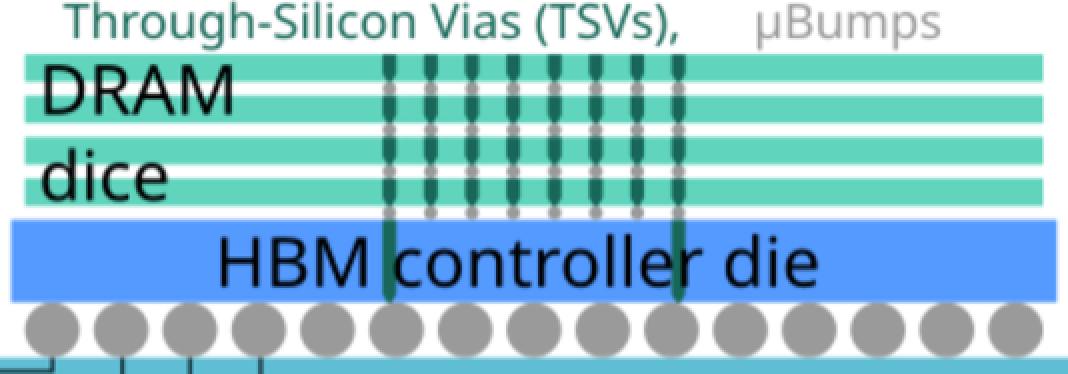
Core Viewpoint - The evolution of HBM technology is characterized by increasing stack heights, enhancing capacity and bandwidth, which is crucial for AI GPUs due to their need for high data feeding speeds [1]. Group 1: HBM Technology Development - HBM has progressed from 4 layers to 8 layers, 12 layers, and is approaching 16 layers, with 8 layers being the most common configuration for AI GPUs [1]. - The introduction of 16-layer HBM4 has been showcased by SK Hynix, with a single stack capacity of 48GB [1]. - Increasing the number of layers significantly raises manufacturing challenges, including precision in mounting, solder joint spacing, and reliability issues [1]. Group 2: Hybrid Bonding and Fluxless Technology - Hybrid bonding is a cutting-edge interconnection technology that eliminates solder and flux, aiming for direct connections with higher I/O density [4]. - The recent JEDEC revision allows for a height increase in HBM modules, providing more space for traditional micro-bump technology [6]. - Fluxless technology is emerging as a transitional solution to address the limitations of traditional interconnection methods, particularly in high-density applications [8][12]. Group 3: TCB and Its Variants - Thermal Compression Bonding (TCB) is a key method for HBM stacking, allowing for higher interconnect density and precision [9][10]. - TCB has various types, including TC-CUF, TC-MUF, TC-NCP, and TC-NCF, each addressing specific challenges in high-density applications [12]. - The industry is moving towards Fluxless TCB to mitigate issues related to solder residues and improve yield and reliability [12][13]. Group 4: Industry Perspectives and Equipment Suppliers - SK Hynix remains cautious about adopting Fluxless technology for HBM4, preferring to continue with its Advanced MR-MUF process [19][21]. - BESI is seen as a proponent of hybrid bonding, focusing on preparing for future demands while facing short-term challenges due to slower-than-expected adoption rates [24]. - ASMPT emphasizes TCB as the core platform for HBM stacking, particularly during the transition from 12 to 16 layers, while also pushing for Fluxless advancements [25][26]. Group 5: Competitive Landscape - Hanmi Semiconductor is positioned as a key player in the "improvement route," optimizing TCB equipment for SK Hynix's processes [27]. - Hanwha Precision Machinery is emerging as a competitor, developing TCB equipment and exploring Fluxless technology to disrupt the existing supply chain [28]. - Kulicke & Soffa (K&S) is recognized for its stability and large-scale manufacturing experience, serving as a foundational player in the industry [29]. Conclusion - The delay in Fluxless technology adoption highlights the complexities of advanced packaging, emphasizing the need for a balance between innovation and production stability [31].