FreeBuds 7i

Search documents
华为余承东详解耳机空间音频技术原理,模拟波形变化可让声音出现在任何位置
Xin Lang Cai Jing· 2025-12-26 01:22
Core Viewpoint - Huawei is advancing its audio technology by introducing spatial audio capabilities in its earphones, allowing sound to be perceived from various directions through innovative wave simulation techniques [1][9]. Group 1: Technology Overview - The technology behind Huawei's spatial audio involves simulating different waveforms in each earphone to create the illusion of sound coming from any location [1][9]. - The human ear's shape plays a crucial role in sound direction localization, as sound waves change upon hitting the ear, enabling the brain to determine the sound's origin [3][11]. - Huawei's acoustic lab has collected thousands of data sets related to human ear anatomy and has developed algorithms for spatial sound field restoration [3][11]. Group 2: Product Features - The Huawei FreeBuds series (including Pro 5, 4, 3, 2, FreeClip 1, 2, FreeBuds 7i, 6, and 5) supports the Audio Vivid three-dimensional sound standard, utilizing Huawei's proprietary spatial audio rendering engine [5][13]. - The earphones offer three distinct audio modes: theater, cinema, and concert hall, enhancing the listening experience [5][13]. - Additionally, the FreeArc and FreeBuds 6i models support spatial sound, with both spatial audio and sound effects utilizing Huawei's rendering engine, although spatial sound effects do not include head tracking or scene switching capabilities [5][13].


三折叠屏是“炒股神器”?华为又撩到了一批中年男人
3 6 Ke· 2025-09-06 05:40
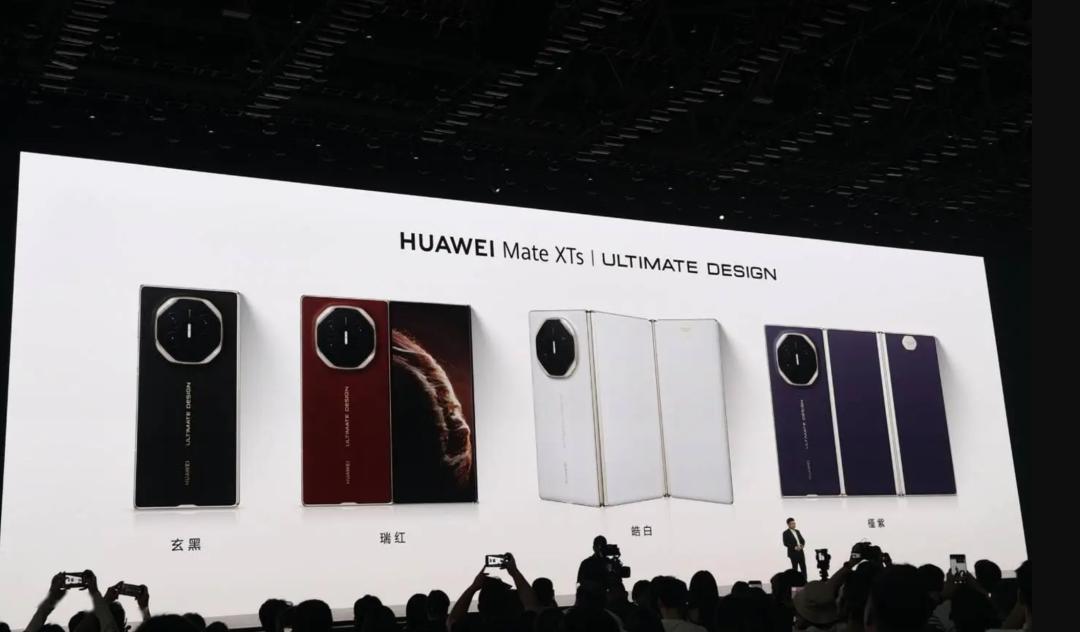
Core Points - Huawei held a product launch event on September 4, introducing five new products, including the Mate XTs, Mate TV/Pro, MatePad Mini, and FreeBuds 7i [1][6] - The highlight of the event was the return of the Kirin 9020 chip, which is integrated into the Mate XTs, marking Huawei's first new flagship SoC in four years [2][10] - The pricing strategy for the Mate XTs was adjusted, with a reduction of 2000 yuan compared to its predecessor, aiming to make the three-fold smartphone more accessible [7][9] Group 1: Mate XTs - The Mate XTs is Huawei's second mass-produced three-fold smartphone, featuring a price range from 17,999 yuan to 21,999 yuan depending on storage options [7][9] - The device includes a 10.2-inch flexible display, upgraded materials, and improved durability with aerospace-grade steel in the hinge, enhancing impact resistance by 35% [9][10] - The Kirin 9020 chip offers a 36% performance improvement over its predecessor, utilizing a 5nm enhanced process and running on HarmonyOS 5.1 [10][12] Group 2: MatePad Mini - The MatePad Mini blurs the line between tablets and smartphones, featuring a lightweight design at 255g and a thickness of 5.1mm, making it the lightest tablet over 8 inches globally [20][31] - It offers various configurations, with prices starting at 3,999 yuan, and supports SIM cards for calls and mobile data, enhancing its functionality [19][29] - The device is equipped with the Kirin 9010 processor, a 2.5K resolution OLED display, and advanced AI features for productivity [25][27] Group 3: Mate TV - The Mate TV was introduced with a focus on high performance, featuring a flagship mobile chip, 12GB RAM, and a Super MiniLED display with a peak brightness of 4000 nits [32][34] - The Mate TV includes innovative interaction features, such as a floating touch remote and the ability to connect a keyboard, transforming it into a temporary PC [36][38] - Pricing for the Mate TV starts at 8,999 yuan for the standard version, with the Pro version offering enhanced specifications at higher price points [36][38] Group 4: Overall Strategy - Huawei's product strategy emphasizes integration across devices, with smartphones resembling computers, tablets resembling smartphones, and TVs incorporating features of multiple devices [38][40] - The company reported a revenue of over 427 billion yuan in the first half of the year, with significant investment in R&D, indicating a strong commitment to innovation and market leadership [40]
三折叠屏是“炒股神器”?华为又撩到了一批中年男人
首席商业评论· 2025-09-06 05:08
Core Viewpoint - Huawei's recent product launch showcased its commitment to innovation and cross-industry integration, introducing five new products including the Mate XTs, Mate TV/Pro, MatePad Mini, and FreeBuds 7i, with a significant highlight being the return of the Kirin 9020 chip [2][4][44]. Group 1: Mate XTs - The Mate XTs is Huawei's second mass-produced foldable smartphone, featuring a price reduction of 2000 yuan compared to its predecessor, with new pricing set at 17,999 yuan for the 16GB+256GB version [9][11]. - The device includes a 10.2-inch flexible display, upgraded materials, and improved durability with a hinge made from aerospace-grade steel, enhancing impact resistance by 35% [13][14]. - The Kirin 9020 chip, announced at the event, utilizes a 5nm enhanced process, offering a 36% performance improvement over its predecessor [13][14]. - The Mate XTs is marketed as a "stock trading tool," pre-installed with financial software to enhance mobile office capabilities [14]. Group 2: MatePad Mini - The MatePad Mini blurs the lines between tablets and smartphones, featuring a lightweight design at 255g and a thickness of 5.1mm, making it the lightest tablet over 8 inches globally [20][24]. - It offers multiple configurations, with prices starting at 3,999 yuan, and includes a 8.8-inch OLED display with a 2.5K resolution and 120Hz refresh rate [22][26]. - The device supports SIM cards for calls and mobile data, and integrates AI features for enhanced productivity, such as voice-to-text capabilities [30][32]. - Despite its capabilities, the MatePad Mini's battery capacity of 6400mAh may not suffice for extensive phone-like usage [33]. Group 3: Mate TV - The Mate TV redefines home entertainment with high-end specifications, including a flagship mobile chip, 12GB RAM, and a Super MiniLED display with a peak brightness of 4000 nits [35][37]. - It features innovative interaction methods, such as a floating touch remote and the ability to connect a keyboard, transforming it into a temporary PC [39]. - The pricing for Mate TV starts at 8,999 yuan for the 65-inch version, making it the most expensive product launched at the event [40][41]. Group 4: Overall Strategy - Huawei's product strategy emphasizes integration across devices, with smartphones resembling computers, tablets resembling smartphones, and TVs incorporating features of both [42][44]. - The company reported a revenue of over 427 billion yuan in the first half of the year, with a significant investment in R&D, indicating a strong market position and commitment to innovation [44].