
麒麟9020芯片

Search documents
最高降价4000元,华为官宣!多款旗舰产品参与
券商中国· 2026-01-29 12:08
Core Viewpoint - Huawei has initiated a significant promotional campaign ahead of the Spring Festival, offering substantial discounts on various flagship products to stimulate consumer demand in a challenging market environment [1][6]. Group 1: Promotional Activities - Huawei's "New Spring Discount" campaign runs from January 29 to February 28, featuring discounts on multiple flagship products, with the Smart Screen S6 Pro offering the highest discount of 4000 yuan [1][5]. - Discounts on smartphones include up to 1500 yuan off the Pura 80 series, 1800 yuan off the Mate 70 series, and 2000 yuan off the Mate X6 series. Additionally, consumers can receive up to 1000 yuan in extra subsidies for trade-ins and enjoy interest-free installment plans for up to 12 months [2][5]. - The promotion extends beyond smartphones to include a wide range of Huawei's ecosystem products, such as smartwatches, headphones, tablets, PCs, and smart routers, providing consumers with a comprehensive selection for the Spring Festival [5]. Group 2: Market Context - The global smartphone industry is currently facing growth challenges, with IDC predicting a slight decline in China's smartphone market shipments in 2025, estimated at approximately 284 million units, down 0.6% year-on-year [7]. - Despite the overall market contraction, Huawei has managed to reclaim the top position in China's smartphone market with a shipment volume of 46.7 million units in 2025, achieving a market share of 16.4%, surpassing Apple and Vivo, which both hold 16.2% [6][7]. - The competitive landscape among the top five smartphone manufacturers remains intense, with market shares highly concentrated [7]. Group 3: Supply Chain and Technology - Huawei's ability to navigate the current market challenges is supported by its enhanced self-sufficiency in core component supply chains, particularly with the recent public unveiling of the Kirin 9020 chip, marking a significant development after a four-year hiatus [8].

特朗普最大的贡献,就是亲手摧毁了中国人对美国的幻想
Sou Hu Cai Jing· 2026-01-17 06:21
Core Insights - The article reflects on the evolution of China's response to the U.S.-China trade war over eight years, highlighting a shift from initial anger and anxiety to a more composed and resilient attitude as the realities of global trade dynamics became clearer [1][3][14]. Group 1: Historical Context - The period from the 1990s to the 2010s was marked by a high level of goodwill towards the U.S. among Chinese citizens, driven by the belief that integration into globalization would lead to a brighter future [3]. - The trade war initiated in 2018 marked a significant turning point, with tariffs and sanctions escalating, particularly against companies like Huawei, which faced severe restrictions from the U.S. government [5][10]. Group 2: Technological Developments - Huawei's proactive measures, including the establishment of its own chip design capabilities through HiSilicon, allowed it to mitigate the impact of U.S. sanctions, showcasing the importance of long-term planning in technology development [5][8]. - The launch of the Huawei Mate 60 Pro in 2023, featuring the domestically produced Kirin 9000S chip, symbolizes a significant achievement in China's semiconductor industry despite external pressures [8]. Group 3: Economic and Market Responses - By 2025, China's response to renewed tariffs under Trump's second term was markedly different, with a more assertive stance and a willingness to engage in negotiations without fear [10][12]. - The Chinese market demonstrated resilience, with significant advancements in domestic supply chains and a focus on diversifying international markets, reflecting a strategic shift in business operations [14]. Group 4: Shifts in Mindset - The most profound change over the eight years has been in the mindset of the Chinese populace and businesses, moving from fear of U.S. actions to a more confident approach in navigating global trade [14]. - The understanding that reliance on the U.S. market is not the only path forward has become a key realization, emphasizing the importance of self-sufficiency and innovation within China [14].

2025科技与资本报告|芯片国产替代
Bei Jing Shang Bao· 2025-12-14 07:40
Core Viewpoint - The Chinese semiconductor industry is experiencing a significant wave of domestic substitution driven by the AI boom and a focus on self-sufficiency, with strong revenue and profit growth expected through 2025 [1][2]. Industry Overview - The semiconductor sector in China showed robust recovery in the first three quarters of 2025, with revenue reaching 479.38 billion yuan, a year-on-year increase of 11.49%, and net profit of 41.35 billion yuan, up 52.98% [8]. - The chip design segment remains highly prosperous, while the storage sector benefits from strong demand for high-end products like HBM and DDR5 due to AI computing needs [1]. Company Performance - Cambrian Technology, a leading AI chip company, saw its stock price surge, reaching 1,525 yuan per share, with a market cap exceeding 643 billion yuan, reflecting a 121.42% increase from late July to late August [6]. - Cambrian's revenue for the first nine months of 2025 reached 4.607 billion yuan, a staggering increase of 2,386.38% year-on-year, and it turned a net loss of 724 million yuan into a profit of 1.605 billion yuan [7]. Technological Advancements - Domestic companies are making significant technological breakthroughs, with SMIC achieving mass production of 14nm FinFET technology, reducing reliance on foreign foundries [9]. - The collaboration between domestic chip design and equipment companies is enhancing the entire semiconductor supply chain, leading to a positive cycle of process breakthroughs and capacity expansion [10]. Capital Market Dynamics - The implementation of the "1+6" policy on the Sci-Tech Innovation Board has opened smoother financing channels for hard tech companies, with semiconductor firms being major beneficiaries [12]. - Recent IPOs and fundraising efforts in the semiconductor sector, such as those by Moer Technology and Muxi Co., indicate a strong market interest and a shift towards valuing domestic technology [12][14]. Product Launches and Market Impact - Huawei's launch of the Mate XTs smartphone featuring the Kirin 9020 chip marks a significant return to high-end chip production, showcasing the company's resilience and technological advancements [16]. - The introduction of the Kirin 9030 Pro chip in various Huawei products demonstrates substantial performance improvements, enhancing the competitiveness of domestic high-end chips in the market [18]. Future Outlook - The ongoing technological advancements and capital influx are expected to reshape the global semiconductor market, positioning Chinese companies favorably in the international landscape [19].
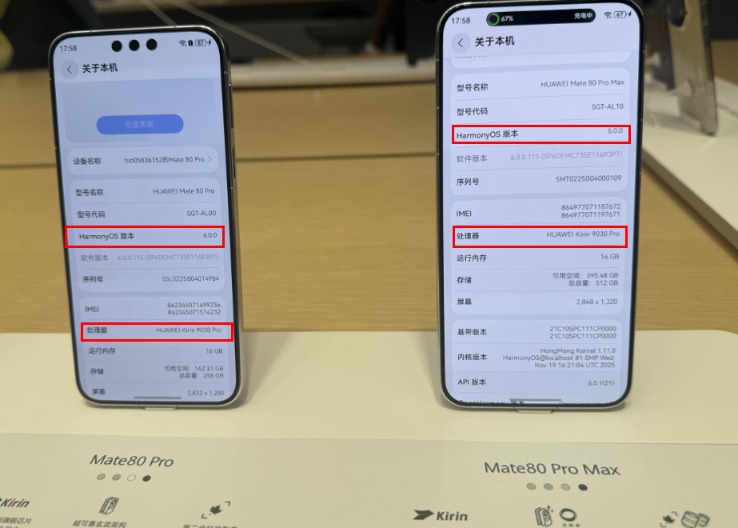
高端市场狙击苹果,华为Mate80系列打响“性价比”之战
Hua Xia Shi Bao· 2025-11-26 11:49
Core Insights - Huawei has launched its flagship Mate 80 series and Mate X7 foldable phone, aiming to strengthen its position in the high-end smartphone market as competition intensifies with Apple [1][5] - The Mate 80 series features significant performance improvements, with the Mate 80 Pro Max showing a 42% increase in overall performance compared to its predecessor [2][4] - Despite performance enhancements, the prices of the new models have decreased, with the Mate 80 starting at 4699 yuan, which is 800 yuan lower than the Mate 70 [3][4] Product Details - The Mate 80 series includes four models, all equipped with the HarmonyOS 6 operating system, and utilizes the Kirin 9020 and 9030 chips [2][3] - The pricing strategy reflects a focus on "cost-performance" in a market where memory prices are rising due to increased demand for AI technologies [4][5] Market Competition - Huawei aims to capture more market share in the high-end segment, where it faces strong competition from Apple, which has seen a 37% year-on-year increase in iPhone sales [5][6] - In Q3, Huawei held a 13% market share in China's smartphone market, experiencing a 19% decline in sales year-on-year, while it ranked first in the high-end market with a 33% share [6][7] Ecosystem Development - Huawei's HarmonyOS ecosystem has made significant strides, with over 30 million applications and services available, and a growing developer base of over 10 million [6][7] - The HarmonyOS currently holds a 4% share in the global smartphone market, indicating a stable but modest presence compared to Android and Apple [7]
麒麟芯片重磅迭代
Shang Hai Zheng Quan Bao· 2025-11-26 00:41
Core Insights - Huawei officially launched the Mate 80 series smartphones on November 25, with significant performance improvements, particularly the Mate 80 Pro Max showing a 42% increase in overall performance compared to its predecessor [1] - The Mate 80 series features the new HUAWEI Kirin 9030 series processors, while the Mate 80 continues to use the Kirin 9020 chip [1][5] - The new series is equipped with the HarmonyOS 6 operating system, introducing various innovative features such as air transmission and AI magic expressions [6] Product Specifications - The Mate 80 is powered by the HUAWEI Kirin 9020 processor, while the Mate 80 Pro 12G version uses the HUAWEI Kirin 9030 processor [5] - The Mate 80 Pro 16G version, Mate 80 Pro Max, and Mate 80 RS all utilize the HUAWEI Kirin 9030 Pro processor [5] - The series introduces the second-generation Red Maple imaging system, enhancing color reproduction in challenging lighting conditions [6] Market Reception - The Mate 80 series attracted significant consumer interest, with many customers eager to experience the new devices and inquire about features such as chip performance, imaging capabilities, and pricing [3][6] - The starting prices for the Mate 80 series are set at 4699 yuan for the Mate 80, 5999 yuan for the Mate 80 Pro, 7999 yuan for the Mate 80 Pro Max, and 11999 yuan for the Mate 80 RS [6]
双旗舰年终落定,华为“守江山”
Bei Jing Shang Bao· 2025-11-25 14:29
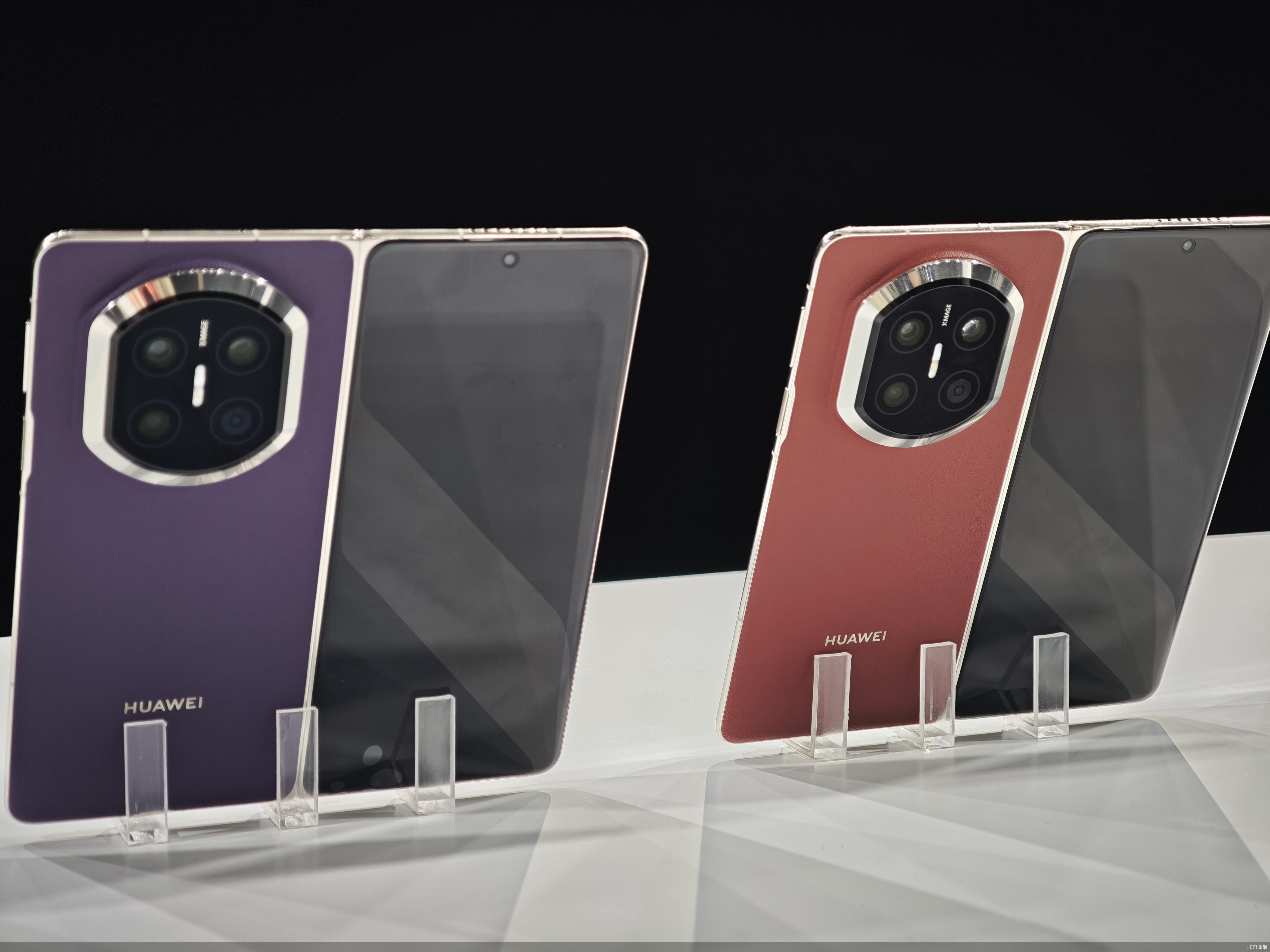
Core Insights - Huawei has officially launched the Mate 80 series and Mate X7 foldable series, marking the end of the flagship smartphone competition for the year 2025 [3][4] - The Mate 80 series includes four models with prices ranging from 4699 yuan to 11999 yuan, showcasing significant performance improvements and advanced features [4][5] Product Details - The Mate 80 series features the Kirin 9020 chip in the standard version and the Kirin 9030 Pro chip in the Pro versions, with enhanced capabilities such as 3D facial recognition and a peak brightness of 8000 nits in the Pro Max version [4][5] - The Mate X7 series focuses on user pain points, incorporating advanced materials and design to balance lightweight and durability, achieving a near-flagship camera performance [5] Market Performance - In 2025, Huawei's market performance showed fluctuations, with a peak market share of 18.1% in Q2, but a decline to 15.2% in Q3, indicating a shift to a defensive strategy in a competitive smartphone market [6] - The pricing strategy of the new flagship models reflects Huawei's approach to maintain its high-end user base and stimulate future sales amidst a challenging market environment [6]
【太平洋科技-每日观点&资讯】(2025-11-26)
远峰电子· 2025-11-25 11:20
Market Overview - The main board saw significant gains with notable stocks such as Dingxin Communication (+10.07%), Huanrui Century (+10.06%), and Shida Group (+10.04) [1] - The ChiNext board led with Jia Yuan Technology (+20.00%) and Guangku Technology (+20.00%) [1] - The Sci-Tech Innovation board also experienced gains with Dekeli (+20.00%) and Changguang Huaxin (+20.00%) [1] - Active sub-industries included SW Printed Circuit Boards (+5.82%) and SW Gaming III (+5.36%) [1] Domestic News - Huawei launched the new Mate 80 series, featuring the Kirin 9020 chip, which shows a 35% performance improvement over the Mate 70 [1] - TCL Huaxing signed a contract to build a printed OLED pilot verification platform, aiming to increase monthly production capacity from 3,000 to 9,000 large panels [1] - Shunluo Electronics announced that its TLVR inductor products have achieved mass supply, marking progress in high-performance magnetic devices for AI servers [1] - BOE's Jingdong project phase three has officially started, with expectations to achieve mass production by December 2026, adding over 10 million pieces of annual capacity [1] Company Announcements - Huashi Technology announced an investment of 22.5 million yuan to increase its stake in Hangzhou Yuchuang Robot Technology Co., Ltd. to 15% [2] - Liansheng Technology plans to terminate certain value-added telecommunications business licenses to align with its strategic transformation [2] - Allianz Ruishi announced an investment of 8 million yuan to establish Jiangsu Yuanqi Lian'an Robot Technology Co., Ltd., focusing on embodied intelligent robots [2] - Weijie Chuangxin received a government subsidy of 5 million yuan, accounting for 21.07% of its net profit for 2024 [2] International News - Enjet signed a business agreement with JWMT to develop glass substrate post-processing technology for next-generation high-density packaging [3] - The European Commission approved a 450 million euro subsidy for ON Semiconductor to build an 8-inch silicon carbide factory in the Czech Republic [3] - AIST announced the successful construction of Japan's first 12-inch wafer shared pilot line supporting advanced processes [3] - Microsoft launched a new open-source small language model, Fara-7B, designed for computer operations [3]
首发搭载麒麟9030芯片:华为Mate80系列正式发布
半导体行业观察· 2025-11-25 08:32
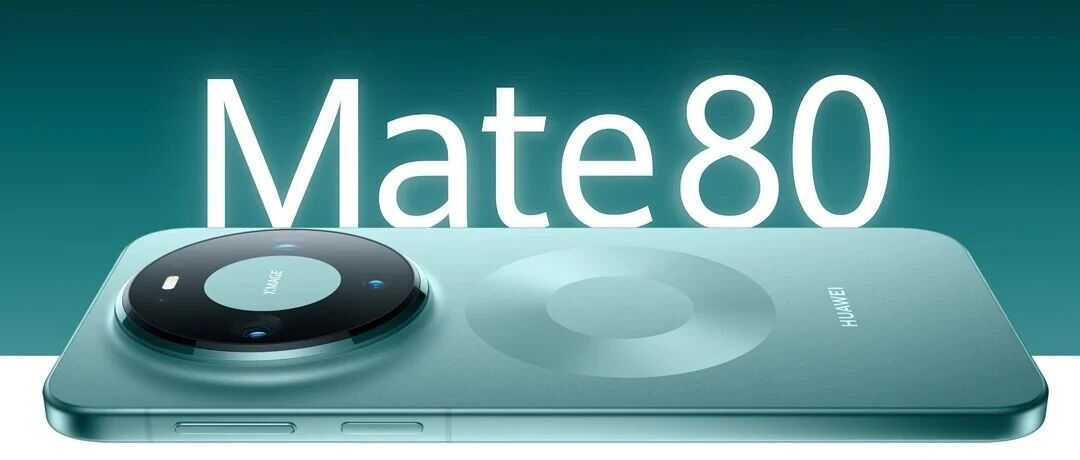
Core Viewpoint - Huawei officially launched the new Mate 80 series, which includes Mate 80, Mate 80 Pro, Mate 80 Pro Max, and Mate 80 RS, all equipped with HarmonyOS 6 and set to be available for sale on November 28 [1] Performance Enhancements - The Mate 80 series features significant performance improvements over the Mate 70 series, with the Mate 80 showing a 35% performance increase with the Kirin 9020 chip, while the Mate 80 Pro with 12GB RAM also shows a 35% increase with the Kirin 9030 chip, and the Mate 80 Pro with 16GB RAM shows a 42% increase with the Kirin 9030 Pro [14][15] - The software enhancements include a 45% improvement in operating smoothness and a 34% increase in loading speed compared to the Mate 70 series, along with support for 3DGS rendering acceleration and ray tracing hardware acceleration [15] Imaging System - The Mate 80 series introduces the second-generation Red Maple imaging system, which enhances light intake by 96% and dynamic range by 300% [50] - The camera specifications include a 50MP main camera with variable aperture, a 12MP periscope telephoto lens, and a 40MP ultra-wide camera for the Mate 80, while the Mate 80 Pro features a 50MP main camera, a 48MP macro telephoto lens, and a 40MP ultra-wide camera [50][51] Design and Display - The Mate 80 series adopts a dual-ring design with a full metal body and offers four color options. The devices are equipped with second-generation Kunlun glass, enhancing drop resistance by 20 times and scratch resistance by 2 times [34] - The display features a 6.75-inch OLED screen with a resolution of 2832×1280, supporting adaptive refresh rates from 1-120Hz and a peak brightness of 8000 nits for the Mate 80 Pro Max [35][38] Communication and Battery - The Mate 80 series supports various communication technologies, including satellite communication and emergency communication capabilities, with a maximum range of 13 kilometers [56] - The battery specifications include a 5750mAh capacity with fast charging options, supporting both wired and wireless charging [56] Pricing and Availability - The pricing for the Mate 80 series starts at ¥4699 for the base model and goes up to ¥12999 for the Mate 80 RS Ultimate Master version, with all models set to be available for purchase on November 28 [57]
行业洞察 | 集成电路设计行业国产化提速 “政策+资本”驱动产业自给率持续提升
Zhong Guo Jin Rong Xin Xi Wang· 2025-11-03 10:51
Core Insights - The Chinese integrated circuit design industry is experiencing rapid growth, with over 3,600 design companies and a significant increase in domestic chip applications driven by policy and capital support [1][2][3] Industry Overview - The semiconductor industry, particularly integrated circuits, plays a crucial role in modern manufacturing, accounting for over 80% of the semiconductor sector [2] - In 2024, China's chip import scale is projected to reach $385.6 billion, focusing on high-performance computing chips and storage chips [2] - The integrated circuit design segment holds about 30% of the value in the industry chain, with innovation in design helping to reduce manufacturing costs [2] Government Support and Investment - The Chinese government has implemented various policies to support the semiconductor industry, including the establishment of a national integrated circuit investment fund with a total scale of approximately 646.9 billion yuan [3] - The combined effect of policy and capital support is expected to strengthen China's position in the integrated circuit industry [7] Market Projections - The sales revenue of China's chip design companies is estimated to be around 339.3 billion yuan in 2024, with a projected compound annual growth rate (CAGR) of 28.58% from 2024 to 2029, reaching approximately 1.1926 trillion yuan by 2029 [7] - The global integrated circuit market is expected to grow to about $823.3 billion by 2029, with a CAGR of 9.8% from 2024 to 2029 [8] Regional Insights - The Yangtze River Delta is a key hub for the integrated circuit design industry, contributing 50.9% of the national supply, with Shanghai accounting for 26.8% of the market share in 2024 [14] - Shanghai's integrated circuit design industry is characterized by strong innovation capabilities, with a significant number of patent applications [14] Competitive Landscape - The top 15.97% of companies in the industry account for 49.07% of total revenue and 41.10% of market capitalization, indicating a pronounced "winner-takes-all" effect [15] - Leading companies like Haiguang Information are experiencing substantial revenue growth, with a 52.4% increase in 2024 [15] Financing Trends - In 2024, approximately 130 financing events occurred in the integrated circuit design sector, totaling 28.26 billion yuan, primarily in growth and mature stages [17] - State-owned capital is increasingly dominating large financing projects, with various investment strategies being employed to support the industry [17] Technology and Innovation - The logic chip market in China is projected to reach 515.2 billion yuan in 2024, with significant growth expected in GPU and ASIC segments [9] - The RISC-V open-source architecture is seen as a new opportunity for domestic logic chip manufacturers to overcome technological barriers [12]


实业兴国 实干兴邦(观象台)
Ren Min Ri Bao· 2025-09-23 22:33
Core Viewpoint - The article emphasizes the importance of industrial development and entrepreneurship in contributing to national prosperity and the well-being of the people, highlighting historical and contemporary examples of how entrepreneurs have played a crucial role in China's economic growth and resilience [1][2][3][4][5][10]. Group 1: Historical Context - During wartime, entrepreneurs contributed to national survival and industrial development, exemplified by figures like Ma Xiongguan and Fan Xudong, who made significant sacrifices for the country [2]. - The concept of "industrial patriotism" emerged, with entrepreneurs like Shen Hong leading efforts to support the war through industrial production [2]. Group 2: Modern Industrial Development - Since the founding of New China, the manufacturing sector has become increasingly vital, with China maintaining the world's largest manufacturing scale for 15 consecutive years [3]. - The focus has shifted from basic manufacturing to advanced technology and equipment, with notable achievements such as the successful launch of the Shenzhou 20 spacecraft and the development of the Kirin 9020 chip, which enhanced Huawei's phone performance by over 36% [5]. Group 3: Entrepreneurial Spirit - The article calls for a renewed emphasis on the entrepreneurial spirit, highlighting the need for more entrepreneurs to drive innovation and quality improvements in the context of high-quality development [8][9]. - It stresses the importance of creating a favorable business environment that protects entrepreneurs' rights and encourages their contributions to the economy [7].