GE世界模型

Search documents
瞭望 | 何时摆脱遥控器
Xin Hua She· 2025-11-18 03:06
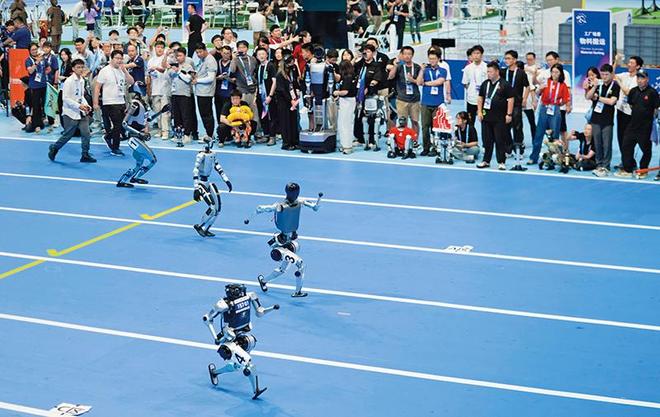
Core Insights - The development of embodied intelligence in China is rapidly advancing, showcasing impressive capabilities in various tasks, but there is a need to look beyond surface-level achievements to understand the actual limitations of current technology [1][5] - Achieving full autonomy in robots requires significant advancements in their cognitive abilities, particularly in understanding and interacting with the physical world [3][5] Group 1: Technological Challenges - The key to overcoming remote control limitations lies in developing a powerful cognitive framework that allows robots to perceive, decide, execute, and provide feedback autonomously [3][5] - Current advancements in embodied intelligence include the VLA large model, which integrates visual, language, and action modalities to enable robots to understand their environment and execute tasks without human intervention [3][4] - The development of world models, which simulate environmental dynamics, is crucial for enhancing robots' predictive capabilities and decision-making processes [4][5] Group 2: Limitations in General Intelligence - Despite breakthroughs in embodied intelligence, there remains a significant gap in achieving general intelligence, as robots can perform well in specific scenarios but struggle in diverse environments [5][6] - The integration of tactile feedback into robots is a complex challenge, as it requires multi-dimensional perception capabilities that go beyond visual data [5][6] - Current algorithms still lack the generalization ability needed for robots to perform effectively across various tasks and environments [6] Group 3: Standardization and Application - To accelerate the realization of general intelligence, there is a need for standardized frameworks that can facilitate technology alignment and product deployment in real-world scenarios [7][8] - Industry organizations are developing classification frameworks for embodied intelligence, similar to those in autonomous driving, to promote technological advancement and application in various fields [7][8] - The establishment of a four-dimensional, five-level evaluation system for humanoid robots will help define capability requirements and applicable scenarios, thereby enhancing their deployment in sectors like logistics, education, and healthcare [8]