GNSS芯片及模块

Search documents
华大北斗:国内领先的GNSS芯片及模块供应商,四年亏损近6亿元
Zhi Tong Cai Jing· 2025-12-25 01:45
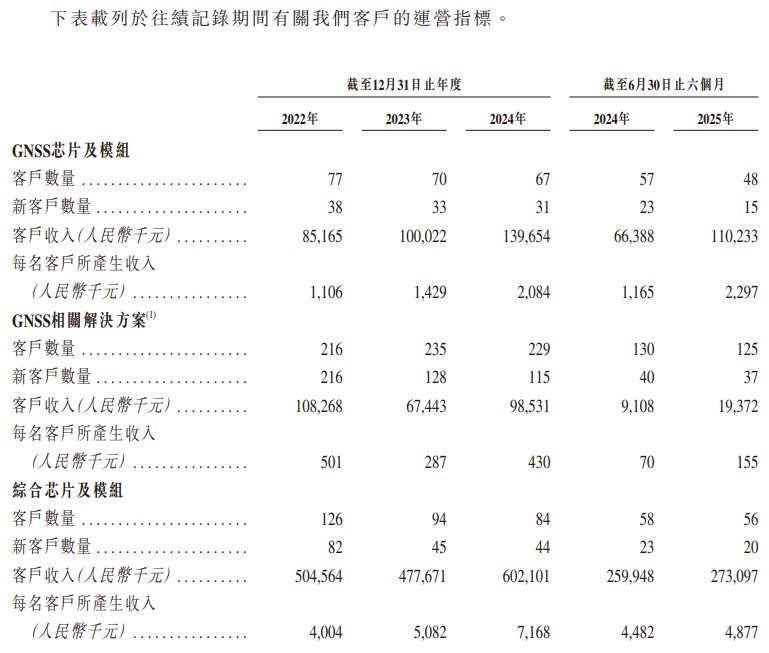
Core Viewpoint - Huada Beidou, a leading GNSS chip and module supplier in China, has submitted a second listing application to the Hong Kong Stock Exchange despite consecutive years of losses and negative operating cash flow. The company aims to raise funds to support its operations and provide an exit for early investors [1][11]. Financial Performance - The company reported a revenue of 403 million RMB in the first half of 2025, representing a year-on-year growth of 20.2%. However, it has incurred net losses of 588 million RMB from 2022 to the first half of 2025, with losses of 93 million RMB, 289 million RMB, 137 million RMB, and 69 million RMB in respective years [1][11]. - Cash and cash equivalents have decreased from 830 million RMB to 244 million RMB during the same period, indicating a continuous cash burn [1]. Business Model and Growth - Huada Beidou operates two main business lines: GNSS chips and modules, and comprehensive chips and modules. The GNSS segment has shown a revenue share increase from 27.7% in 2022 to 32.2% in the first half of 2025, with direct sales growing by 197.8% in the same period [2][4]. - The company has established a diverse product portfolio across various sectors, including transportation, consumer electronics, and environmental monitoring [7]. Customer Dynamics - The number of new customers has been declining, but revenue per customer has significantly increased, particularly in the GNSS chip and module segment, which rose from 1.106 million RMB to 2.297 million RMB from 2022 to the first half of 2025 [4][11]. - Customer concentration remains low, with the top five customers contributing 38.6% to 48.6% of total revenue over the years [4]. Profitability and Margins - The company's gross margin has been on a downward trend, recorded at 10.5% in the first half of 2025, a decrease of 1.5 percentage points compared to 2022. The comprehensive chips and modules segment has a low single-digit gross margin [5][11]. - Adjusted EBITDA losses have been reported at 58 million RMB, 249 million RMB, 91 million RMB, and 27 million RMB from 2022 to the first half of 2025 [5]. Market Position and Industry Outlook - Huada Beidou ranks sixth globally in GNSS chip and module shipments with a market share of 4.8% and eighth in terms of sales value with a 1.1% share [11]. - The global GNSS market is projected to grow from 22,863 billion RMB in 2024 to 33,447 billion RMB by 2029, with a compound annual growth rate of 7.9% [9][11].

新股前瞻|华大北斗:国内领先的GNSS芯片及模块供应商,四年亏损近6亿元
智通财经网· 2025-12-25 01:41
Core Viewpoint - The company, Huada Beidou, is a leading GNSS chip and module supplier in China, facing continuous losses and declining cash reserves, prompting a second attempt to list on the Hong Kong Stock Exchange to raise funds and attract new investors [1][9]. Financial Performance - Huada Beidou's revenue has shown volatility but maintained high growth, with a revenue of 403 million RMB in the first half of 2025, representing a year-on-year increase of 20.2%. However, the company has reported net losses of 93 million RMB, 289 million RMB, 137 million RMB, and 69 million RMB from 2022 to the first half of 2025, totaling 588 million RMB in losses [1][6]. - The company's cash and cash equivalents have decreased from 830 million RMB to 244 million RMB during the same period, indicating a significant cash burn [1][6]. Business Model and Revenue Streams - Huada Beidou operates two main business lines: GNSS chips and modules, and integrated chips and modules, with a focus on collaborative synergies. The GNSS segment has seen its revenue share increase from 27.7% in 2022 to 32.2% in the first half of 2025, with direct sales growing by 197.8% [2][5]. - The integrated chip and module business, which primarily uses a direct sales model, has shown stable growth with a 5% increase in revenue in the first half of 2025, although its revenue share has decreased to 67.8% [2][5]. Customer Dynamics - The number of new customers for Huada Beidou has been declining, but revenue per customer has significantly increased, particularly in the GNSS chip and module segment, which rose from 1.106 million RMB to 2.297 million RMB from 2022 to the first half of 2025, marking a growth of 107.7% [5][6]. - The company has a low customer concentration, with the top five customers contributing 45.0% to 48.6% of total revenue from 2022 to the first half of 2025 [5][6]. Gross Margin and Profitability - The company's gross margin has been on a downward trend, recorded at 10.5% in the first half of 2025, which is a decrease of 1.5 percentage points compared to 2022. The integrated chip and module segment has a particularly low gross margin [6][8]. - Adjusted EBITDA losses have been reported at 58 million RMB, 249 million RMB, 91 million RMB, and 27 million RMB from 2022 to the first half of 2025, indicating ongoing profitability challenges [6][8]. Market Position and Industry Outlook - Huada Beidou ranks sixth globally in GNSS chip and module shipments with a market share of 4.8% and eighth in sales value with a 1.1% share, indicating a competitive position within the domestic market but limited visibility on the global stage [1][11]. - The global GNSS market is projected to grow from 22,863 billion RMB in 2024 to 33,447 billion RMB by 2029, with a compound annual growth rate of 7.9%, suggesting potential growth opportunities in specific sectors such as AI and consumer electronics [9][11].
华大北斗冲刺港交所主板上市 中国头部GNSS芯片商加速全球布局
Ju Chao Zi Xun· 2025-12-19 15:00
Core Viewpoint - Huada Beidou Technology Co., Ltd. has submitted an application for listing on the Hong Kong Stock Exchange, aiming to enhance its research and development capabilities, expand production scale, and strengthen market promotion to seize opportunities in the global high-precision positioning and spatial information market [1][4] Group 1: Company Overview - Huada Beidou is a provider of chips, modules, and related solutions supporting Beidou and other major GNSS systems, ranking sixth globally in GNSS chip and module market share at 4.8% by shipment volume [1] - The company has evolved from core chip design to comprehensive service provision since acquiring the navigation chip business from Huada Electronics in 2017 [2] - Huada Beidou's product lineup includes milestone products such as the first multi-system multi-frequency SoC chip supporting Beidou III in 2017 and the HD814X series low-power dual-core chip established as a domestic benchmark in 2023 [2] Group 2: Financial Performance - The company's total revenue decreased slightly from RMB 698 million in 2022 to RMB 645 million in 2023, but is projected to rebound strongly to RMB 840 million in 2024, reflecting significant year-on-year growth [1] - Revenue from GNSS chips, modules, and related solutions is expected to grow by 42.2% to RMB 238 million in 2024, with a further increase of 71.7% in the first half of 2025 [4] - Revenue from comprehensive chips and modules is anticipated to rise by 26.0% to RMB 602 million in 2024, driven by increased sales of communication chips and a recovery in storage chip prices [4] Group 3: Sales Growth - Sales of standard precision products are projected to surge from 3.4 million units in 2022 to 10.9 million units in 2024, driven by demand in consumer electronics and traffic management [3] - High-precision product sales are expected to increase from 2 million units in 2022 to 5.1 million units in 2024, with shared bicycles, traffic management, and intelligent driving as key growth drivers [3] - The average selling price of standard precision chips decreased from RMB 7.4 in 2022 to RMB 4.8 in 2024, while high-precision products saw a drop from RMB 25.1 to RMB 15.2, enhancing price competitiveness and market penetration [3]
【IPO追踪】华大北斗冲刺港股:北斗芯片巨头的机遇与挑战
Sou Hu Cai Jing· 2025-06-13 12:50
Core Viewpoint - The IPO of Huada Beidou represents a significant trend in the domestic chip industry, highlighting the potential for growth despite challenges such as price wars and geopolitical factors [12] Company Overview - Huada Beidou is a space positioning service provider that offers navigation chips and modules supporting the BeiDou and major global GNSS systems, along with related solutions [3] - The company was established in December 2016, backed by notable investors including BYD, Gree, and TCL Technology, and has received multiple rounds of investment [3] - The chairman and CEO, Sun Zhongliang, is a prominent figure in the GNSS space positioning service industry [3] Product and Market Position - Huada Beidou's product portfolio includes GNSS chips and modules used in various sectors such as smart transportation, shared bicycles, smart driving, smartphones, wearable devices, and IoT [4] - The company dominates the shared bicycle navigation chip market, with sales expected to exceed 15 million units by the end of 2024, capturing over 90% of the high-precision shared bicycle market [6] - In terms of global market share, Huada Beidou ranks sixth among GNSS service providers and second among domestic companies, with a market share of 4.8% [6] Industry Growth Potential - The industry Huada Beidou operates in is projected to grow significantly, with the Chinese BeiDou space positioning service market expected to reach 954 billion yuan by 2028, reflecting a compound annual growth rate of 14.5% from 2023 to 2028 [7] - Despite being in a high-growth sector, Huada Beidou's revenue has fluctuated, with figures of 698 million yuan in 2022, 645 million yuan in 2023, and an expected 840 million yuan in 2024 [9] Financial Performance - The company has faced challenges, including a revenue decline in 2023 due to a downturn in the semiconductor industry and reduced government infrastructure projects [9] - Huada Beidou's GNSS chip and module sales have increased significantly, from 540,500 units in 2022 to an expected 1,606,700 units in 2024 [9] - The company has not yet achieved profitability, with cumulative losses exceeding 500 million yuan over the past three years [10] Profitability Challenges - Huada Beidou's gross margin has been declining, with rates of 12.0%, 10.5%, and 9.8% over the past three years, attributed to participation in price wars [11]