GPU智算卡MTTS5000

Search documents
股价跌超40%!“中国版英伟达”VS“中国版AMD”公布首份财报!你更看好哪个?
Xin Lang Cai Jing· 2026-03-04 11:53
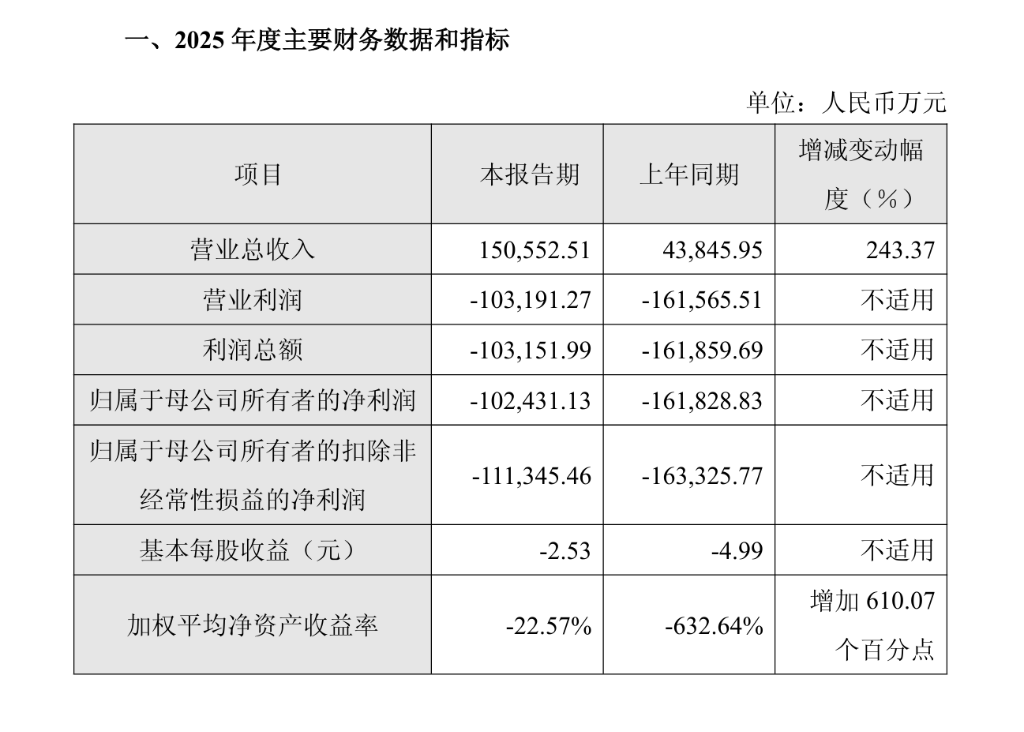
Core Viewpoint - Both Muxi Co., Ltd. (沐曦股份) and Moer Thread (摩尔线程) have reported significant revenue growth and reduced losses for the year 2025, highlighting their positions as leading players in the domestic GPU market and attracting investor interest [1][9]. Group 1: Financial Performance - Muxi Co., Ltd. achieved a total revenue of 1.644 billion yuan in 2025, representing a year-on-year increase of 121.26%, while Moer Thread reported revenue of 1.506 billion yuan, with a remarkable growth rate of 243.37%, double that of Muxi [3][13]. - In terms of loss reduction, Muxi Co., Ltd. reported a net loss of 781 million yuan, narrowing by 44.53%, whereas Moer Thread's net loss was 1.024 billion yuan, with a reduction of 36.70% [4][14]. - Muxi Co., Ltd. saw total assets grow by 251.56% and equity attributable to shareholders increase by 1018%, while Moer Thread's total assets and equity grew by 116.14% and 154.69%, respectively [4][14]. Group 2: Strategic Focus and Market Position - Muxi Co., Ltd. follows a "1+6+X" development strategy, focusing on high-performance GPU market expansion, which has led to a significant increase in GPU product shipments and revenue growth [5][15]. - Moer Thread emphasizes the development of all-functional GPUs, successfully launching the MTTS5000 model, which has achieved market-leading performance and large-scale production [6][15]. - Both companies acknowledge their ongoing high R&D investment phase, with Moer Thread specifically noting the need to enhance its R&D capabilities compared to international giants [6][16]. Group 3: Industry Outlook and Challenges - The performance growth of both companies reflects the potential of the domestic GPU market, driven by the dual benefits of AI computing demand and domestic substitution [7][17]. - Despite their growth, both companies face common challenges, including the high R&D costs inherent in the technology-intensive GPU industry and the need to bridge the gap in core technology and product ecosystem compared to international competitors [7][17]. - Muxi Co., Ltd. benefits from leading revenue scale and greater loss reduction, while Moer Thread stands out with its high revenue growth rate and advanced product capabilities [8][18].


摩尔线程2025年营收同比增长243.37%,旗舰GPU量产推动亏损大幅收窄 | 财报见闻
Hua Er Jie Jian Wen· 2026-02-27 11:03
Core Viewpoint - The domestic GPU manufacturer Moore Threads has reported significant growth in its annual performance, driven by the increasing demand for AI computing power and accelerated commercialization efforts [1] Financial Performance - The company achieved total revenue of approximately 1.506 billion RMB in 2025, representing a substantial year-on-year increase of 243.37% [2] - The net loss attributable to shareholders was approximately 1.024 billion RMB, a reduction of 36.70% compared to the previous year's loss of about 1.618 billion RMB [1][2] - Basic earnings per share were -2.53 RMB, improving from -4.99 RMB in the previous year [2] Asset Growth - As of the end of 2025, the company's total assets reached approximately 15.308 billion RMB, a growth of 116.14% from the beginning of the year [4] - Shareholders' equity attributable to the parent company was about 11.435 billion RMB, increasing by 154.69% [4] - The net asset value per share rose from 11.22 RMB to 24.33 RMB, reflecting an increase of approximately 116.84% [4] Product Development - The flagship product, the MTTS5000 GPU, has achieved mass production, marking a significant breakthrough in the high-end computing market [5] - The product's performance is now at a market-leading level, capable of efficiently supporting trillion-parameter model training [1][5] - The company acknowledges that while product performance is improving, building a robust software ecosystem remains a long-term challenge [5] R&D and Market Position - The company is still in a phase of high R&D investment and has not yet achieved profitability, with accumulated losses remaining a concern [3] - There is a noted gap in comprehensive R&D capabilities and core technology accumulation compared to international industry giants [3]