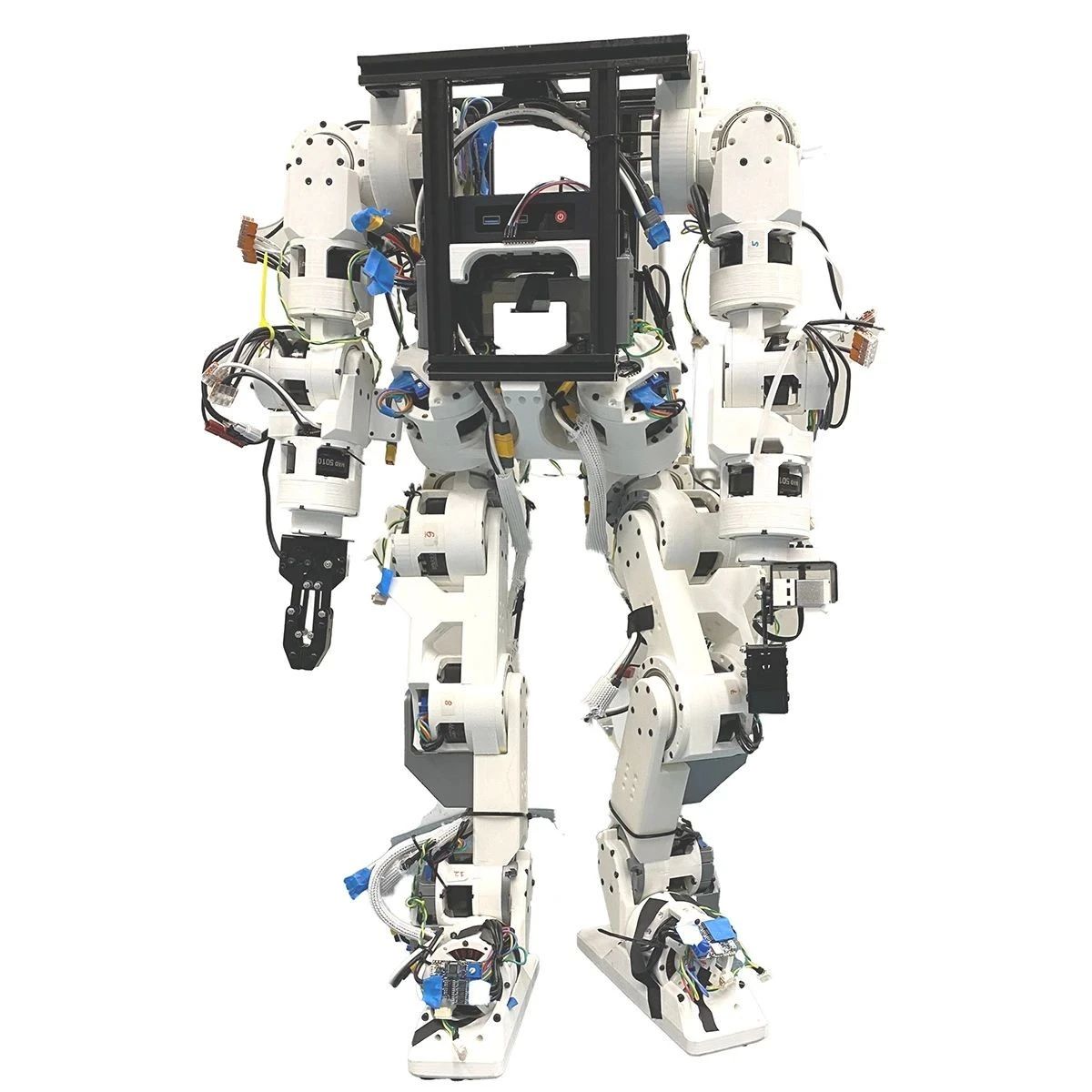
GR1

Search documents
SecureTech Directs AI UltraProd’s U.S. Expansion Through High-Growth ADU Market
Globenewswire· 2025-12-11 18:30
Core Insights - SecureTech Innovations, Inc. is launching its AI-driven construction subsidiary, AI UltraProd, in the U.S. market, focusing on the rapidly growing Accessory Dwelling Unit (ADU) sector [1][2] - The ADU market is projected to grow from approximately $19.6 billion in 2025 to over $43 billion by 2034, addressing a significant housing shortage in the U.S. [2] - AI UltraProd's technology, including proprietary materials and a multi-robot matrix, enables efficient construction, capable of printing vertical wall structures for a 2,000 sq. ft. home in days [3] Company Strategy - SecureTech's executive team identified the ADU sector as a scalable entry point for AI UltraProd's technology, allowing for early revenue generation and performance validation [4] - AI UltraProd generated over $3.7 million in revenue during the three months ending September 30, 2025, and is expected to approach eight-figure revenue by the end of 2025 [4] - The company plans to extend its roadmap beyond ADUs to include medical facilities, disaster relief housing, and smart infrastructure [5] Future Initiatives - SecureTech and AI UltraProd are planning a U.S. "Lighthouse Project" to showcase their AI-integrated construction platform in a live environment [5] - Further details on the Lighthouse Project, including deployment locations and strategic partnerships, will be announced [5] - The company encourages stakeholders interested in AI UltraProd's initiatives to reach out for updates [6]


SecureTech Directs AI UltraProd's U.S. Expansion Through High-Growth ADU Market
Globenewswire· 2025-12-11 18:30
SecureTech formalizes U.S. “beachhead” strategy for its AI-driven construction subsidiary, targeting the rapidly growing Accessory Dwelling Unit sector and future lighthouse projects Roseville, Minnesota, Dec. 11, 2025 (GLOBE NEWSWIRE) -- SecureTech Innovations, Inc. (OTC: SCTH), a pioneering technology company advancing artificial intelligence, industrial 3D printing and manufacturing technologies, cybersecurity, and digital infrastructure solutions, is excited to announce that its wholly owned subsidiary, ...

AI UltraProd Announces U.S. Market Entry with Strategic Focus on High-Growth ADU Sector
Globenewswire· 2025-12-08 23:00
Core Insights - AI UltraProd, a subsidiary of SecureTech, is entering the U.S. market with a focus on the Accessory Dwelling Unit (ADU) sector, which is projected to grow significantly by 2034 [1][2] - The U.S. ADU market is valued between $20–30 billion, with annual growth rates expected to range from 9% to 19%, presenting a scalable opportunity for AI UltraProd [2] - The company's technology combines AI, construction robotics, and patented materials to significantly reduce labor needs and material waste while accelerating project timelines [3] Market Entry Strategy - AI UltraProd's strategy is to establish a "beachhead" in the U.S. by leveraging its advanced construction technologies to address housing shortages and affordability issues [4][5] - The company aims to demonstrate its capabilities in states like California, Oregon, and Washington, where there is lower permitting friction and high demand for ADUs [4][5] - Management anticipates generating revenue of over $3.7 million in the three months ending September 30, with expectations to reach eight figures by the end of 2025 [5] Technological Advantages - The proprietary technologies of AI UltraProd enable the construction of vertical wall systems for a 2,000 sq. ft. home in just days, reducing labor needs by up to 70% and material waste by up to 80% [3] - The company is developing a "Lighthouse Project" to showcase its AI-integrated robotic construction system in a real-world environment, marking a significant milestone in its U.S. market entry [7] Future Expansion Plans - The initial focus on the ADU market is seen as a strategic foundation for future expansion into larger residential, commercial, and industrial applications [6] - The company is committed to addressing critical infrastructure needs, including emergency medical facilities and disaster relief housing, through its innovative construction solutions [5][6]

UC Berkeley池宇峰: 采用3D打印技术制造 人形机器人成本不超35000元!
机器人大讲堂· 2025-07-05 04:09
Group 1 - The main factors limiting the large-scale deployment of humanoid robots are their limited generalization capabilities and high manufacturing costs, with mainstream humanoid robots priced around 500,000 yuan, and some high-end models reaching over 1 million yuan [1] - High development costs, closed-source design architectures, and limited customization capabilities are major bottlenecks for rapid development in this field [2] - The Berkeley Humanoid Lite, developed by a team from the University of California, Berkeley, is a low-cost open-source humanoid robot that utilizes desktop 3D printing for manufacturing, with a BOM cost under $5,000, approximately 35,000 yuan [2][8] Group 2 - Current humanoid robot platforms are divided into commercial products and research prototypes, with commercial products like Agility Robotics' Digit and Fourier Intelligence's GR1 being too expensive for most research institutions and individuals [3] - Open-source hardware and software have significant potential in driving technological innovation and collaboration, allowing researchers to learn from each other and accelerate the iterative process [5] - The design of Berkeley Humanoid Lite emphasizes modularity and ease of manufacturing, with all structural components printable on standard desktop 3D printers, significantly reducing manufacturing complexity [9] Group 3 - Berkeley Humanoid Lite is designed as a medium-sized humanoid robot platform, standing at 0.8 meters tall and weighing 16 kilograms, featuring joint actuators and an integrated IMU for position sensing [10] - The robot's joint actuators utilize a 3D-printed cycloidal gearbox design, enhancing load capacity and lifespan through optimized gear parameters and manufacturing processes [12] - The robot's structure is built using aluminum extrusions for high rigidity and lightweight characteristics, with real-time monitoring of posture and motion state through the integrated IMU [14] Group 4 - The electronic system of Berkeley Humanoid Lite consists of a control computer, joint actuator controllers, an IMU, and a power management module, ensuring stable power supply and precise control [16] - Performance tests showed that the joint actuators maintained a mechanical efficiency of around 90%, indicating effective energy conversion and reduced energy loss [17] - The robot demonstrated excellent walking capabilities across various terrains, maintaining balance and adapting to slopes and steps, showcasing its dynamic balance control [20] Group 5 - Remote operation experiments validated the robot's precision and responsiveness in performing tasks like writing and object manipulation, indicating its suitability for various practical applications [21][24] - Berkeley Humanoid Lite represents an open-source, customizable, and cost-effective humanoid robot platform, significantly lowering development costs and simplifying manufacturing processes [25] - Future optimizations will focus on enhancing system stability and adaptability, further exploring the platform's potential application value [25]