
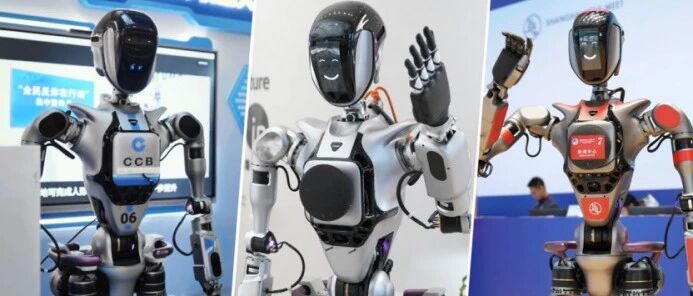
GRx系列通用人形机器人

Search documents
576起!总融资金额超500亿!融资爆发的背后,中国机器人行业呈现哪些机遇与趋势?
机器人大讲堂· 2026-01-05 15:00
2025年,是全球机器人投资继续爆发的一年。 AI 技术与机器人产业的深度融合,更让整个机器人赛道迎来了融资与创新的双重爆发期。 从实验室的技术突破到商业化的规模化落地,从核心零部件的攻坚到全 产业链的协同升级,机器人产业正以肉眼可见的速度重塑全球制造业格局、拓展服务经济边界,成为新质生产力的重要增长极。 那么,在这一年中,有 哪些领域的机器人融资最为迅速?哪些区域正在大力推动机器人产业集群发展?哪些新产品成为焦点?哪些新技术趋势正在出现?哪些企业 脱颖而出? 值新旧交替之际, 机器人大讲堂 聚焦 202 5 年 机器人行业 融资全景,勾勒融资画像,探寻潜藏其中的新发展趋势。 一、 融资整体态势:逆势爆发,规模与数量双突破 2025年,全球宏观经济环境仍存不确定性,一级市场投资态度整体趋于审慎,但机器人产业凭借"硬科技"属性与数字经济融合的核心价值,成为资本逆势布局的热 门领域。这一年,中国机器人行业投融资市场呈现出"量价齐升"的爆发式增长态势,创下多项历史新高。 先看几个扎扎实实的数字 。 据机器人大讲堂& 立德智库 不完全统计 , 2025年中国机器人行业公开披露的投融资事件达576起,总融资规模突破50 ...

成立十周年,傅利叶要把人形机器人带进康养场景 | 最前线
3 6 Ke· 2025-05-11 11:53
Core Insights - The focus of the current embodied intelligence companies is on commercialization across various industries, including industrial production, reception, and high-risk operations [1] - Fourier, an embodied intelligence unicorn, announced a comprehensive collaboration with Shanghai International Medical Center to establish the first domestic demonstration base for rehabilitation using embodied intelligent robots [1] - The CEO of Fourier, Gu Jie, emphasized a core strategy for the next decade centered on "human-centered embodied intelligence," aiming to integrate this technology into hospitals, community homes, and broader scenarios [1] Company Developments - Fourier was founded in 2015, initially focusing on medical rehabilitation robots, and has recently shifted towards building a general-purpose robotics technology platform, launching its first general-purpose humanoid robot, GR-1 [1] - As of now, Fourier has released two self-developed GRx series humanoid robots, with hundreds of units shipped to various applications, including AI research, manufacturing, reception, and hazardous material protection [1] Industry Trends - The CEO of SenseTime Medical highlighted that while pure medical scenarios are limited, there are broader commercial opportunities in health, rehabilitation, and elderly care due to a shortage of professional caregivers [2] - The importance of interactivity in rehabilitation scenarios was noted, with the potential for humanoid robots equipped with general models to provide emotional value [2] Challenges and Considerations - The deployment of embodied intelligence in healthcare faces challenges such as technology, clinical application, and regulatory issues, including the need for medical licenses [3] - The transition from traditional rehabilitation robots to humanoid robots is at a critical stage, with potential limitations in clinical use despite the robots being operational [3] Future Directions - The unique requirements of rehabilitation, such as cognitive training and interaction, necessitate robots with sensory capabilities to understand human needs and emotions [4] - Fourier's long-standing experience in human-machine interaction positions it well to address the core challenge of how humans and machines coexist [4] - The company has initiated the "Embodied Intelligent Rehabilitation Technology Development Initiative" to further promote the application of this technology in healthcare [4] Key Requirements for Implementation - For rehabilitation robots to be effective, they must demonstrate clinical efficacy and ensure safety, meeting medical-grade quality standards [5] - The demand for rehabilitation robots often originates from community and hospital needs, requiring collaboration among doctors, engineers, and research institutions to innovate and build an embodied intelligence ecosystem [5]
