GXR

Search documents
文远知行-W(00800):2025年年报点评:Robotaxi车队规模翻倍,海外市场多点开花
Soochow Securities· 2026-03-31 12:47
Investment Rating - The report maintains a "Buy" rating for the company [7] Core Insights - The company achieved a total revenue of 684.59 million yuan in 2025, representing a year-on-year growth of 89.57%. The fourth quarter revenue reached 310 million yuan, up 123% year-on-year [7] - The Robotaxi business has rapidly expanded, with revenue from autonomous taxi services growing by 209.6% year-on-year, becoming a core growth driver. The gross margin for 2025 was 30.2%, relatively stable compared to 30.7% in 2024 [7] - The company’s cash reserves stood at 6.67 billion yuan at the end of 2025, providing a solid foundation for future expansion. The global fleet of autonomous vehicles doubled from 1,089 units at the end of 2024 to 2,113 units by December 31, 2025 [7] - The report highlights the establishment of a commercial turning point and the construction of a multi-dimensional capability moat, with the introduction of the WeRide GENESIS platform to accelerate AI-driven development [7] Financial Summary - The company forecasts total revenue of 9.45 billion yuan for 2026 and 19.87 billion yuan for 2027, with an expected revenue of 36.76 billion yuan in 2028, reflecting year-on-year growth rates of 38%, 110%, and 85% respectively [7] - The projected net profit for 2026 and 2027 is estimated at -1.31 billion yuan and -1.06 billion yuan, respectively, with an expected net profit of -528.83 million yuan in 2028 [7] - The report indicates a stable gross margin trend, with projections of 38.46% for 2026 and 46.90% for 2027 [8]
WeRide Inc.(WRD) - 2025 Q4 - Earnings Call Transcript
2026-03-23 13:02
Financial Data and Key Metrics Changes - In Q4 2025, total revenue reached RMB 314 million, a 123% increase year-over-year, while full year revenue was RMB 685 million, growing 90% year-over-year [16][17] - Product revenue surged 309% to RMB 211 million in Q4 2025, and for the full year, it reached RMB 360 million, reflecting a 310% increase [17] - Service revenue increased by 15% to RMB 103 million in Q4 2025, and for the full year, it was RMB 325 million, a 19% increase [17] - Gross profit for Q4 2025 was RMB 89 million, a 74% increase, with a gross margin of 28%, while for the full year, gross profit was RMB 207 million, an 87% increase, with a gross margin of 30% [20] - Operating expenses for Q4 2025 increased slightly by 2% to RMB 655 million, while for the full year, they decreased by 11% to RMB 2.04 billion [20][21] Business Line Data and Key Metrics Changes - Robotaxi revenue in Q4 2025 increased by 66% to RMB 51 million, and for the full year, it reached RMB 148 million, a 210% growth year-over-year [17][18] - The Robobus business grew by 190% year-over-year in 2025, contributing significantly to the overall revenue [12] - The international business contributed approximately 29% of total revenue for the full year 2025, indicating its growing importance [19] Market Data and Key Metrics Changes - The global Robotaxi fleet size reached 1,125 vehicles, with plans to expand to 2,600 by the end of 2026 [4][11] - The overseas revenue grew by 305% year-over-year for the full year 2025, accounting for roughly 29% of total revenue [68] - In the Middle East, the company operates the largest Robotaxi fleet at the city level in Abu Dhabi and has launched services in Dubai and Riyadh [40][43] Company Strategy and Development Direction - The company aims to diversify its portfolio beyond Robotaxi services, including Robobuses and Robovans, to generate additional revenue streams [11][12] - The strategy focuses on markets with supportive regulatory environments and favorable economic conditions for sustainable operations [11] - The company plans to enhance its technological capabilities through continuous R&D investment, particularly in L2+ and L4 autonomous driving technologies [21][14] Management's Comments on Operating Environment and Future Outlook - Management expressed confidence in the long-term growth potential of the autonomous driving market, emphasizing the competitive moat established by their technology and operational experience [8][11] - The company is closely monitoring geopolitical tensions in the Middle East but has not seen any material impact on operations [43] - Future plans include scaling operations in China and expanding into new international markets, with a focus on regulatory approvals and partnerships [40][41] Other Important Information - The company authorized a share repurchase program of up to $100 million to reflect its commitment to shareholders and confidence in long-term value [23][24] - The total capital reserves as of December 31, 2025, were RMB 7.13 billion, providing a solid operating buffer for continued growth [23] Q&A Session Summary Question: Competitors in L4 Robotaxi space - Management welcomed competition, emphasizing the significant technological barriers between L2++ and L4 systems, and highlighted their unique capabilities in both ADAS and driverless operations [28][32] Question: Robotaxi expansion plans - The company plans to gradually scale operations in China and expand into major tier one cities, with a goal of reaching 2,600 Robotaxis globally by the end of 2026 [39][40] Question: Future plans for the Middle East - The company aims to deploy 1,200 vehicles with Uber by 2027, maintaining a strong operational presence in the region despite geopolitical tensions [42][43] Question: Addressing Robotaxi homogenization - Management highlighted their advanced computational platform and unique simulation capabilities as key differentiators in the competitive landscape [45][48] Question: Ensuring long-term share of ride-hailing orders - The company emphasized its role as a key operator and infrastructure partner, not just a supplier to Uber, with plans to enhance brand recognition and operational scale [56][58]

WeRide Inc.(WRD) - 2025 Q4 - Earnings Call Transcript
2026-03-23 13:00
Financial Data and Key Metrics Changes - In Q4 2025, total revenue reached RMB 314 million, a 123% increase year-over-year, while full year revenue was RMB 685 million, growing 90% [17][18] - Product revenue surged 309% to RMB 211 million in Q4 2025, and for the full year, it reached RMB 360 million, reflecting a 310% increase [18] - Service revenue increased by 15% to RMB 103 million in Q4 2025, and for the full year, it was RMB 325 million, a 19% increase [18] - Gross profit for Q4 2025 was RMB 89 million, a 74% increase, with a gross margin of 28%, while for the full year, gross profit was RMB 207 million, an 87% increase, with a gross margin of 30% [20] - The net loss narrowed by 6% to RMB 5,565 million in Q4 2025 and by 34% to RMB 1.65 billion for the full year [23] Business Line Data and Key Metrics Changes - Robotaxi revenue in Q4 2025 increased by 66% to RMB 51 million, and for the full year, it reached RMB 148 million, a 210% growth [18][19] - The Robobus business grew by 190% year-over-year in 2025, contributing significantly to the overall revenue [12] - The L2++ advanced driver assistance system, WePilot 3.0, is being adopted by leading OEMs, indicating strong demand for this technology [12] Market Data and Key Metrics Changes - International markets contributed approximately 29% of total revenue for the full year 2025, with significant growth in the Middle East, Europe, and Asia Pacific [19][20] - Overseas revenue grew by 305% year-over-year, accounting for 31% of total revenue in Q4 2025 [69] - The company has deployed autonomous vehicles in 12 countries, with permits granted in 8 markets, showcasing its global expansion efforts [8][9] Company Strategy and Development Direction - The company aims to scale its global robotaxi fleet to 2,600 vehicles by the end of 2026, with a long-term vision of deploying tens of thousands of robotaxis worldwide by 2030 [11][25] - The strategy focuses on markets with supportive regulatory environments and favorable economic conditions, emphasizing sustainable operations [11] - The company is diversifying its portfolio beyond robotaxis to include Robobuses, Robovans, and Robosweepers, enhancing revenue streams [12] Management's Comments on Operating Environment and Future Outlook - Management expressed confidence in the company's technological leadership and operational efficiency, which are expected to drive future growth [20][25] - The company is closely monitoring geopolitical tensions in the Middle East but has not seen material impacts on its business [44] - Management highlighted the importance of maintaining a strong capital position to support continued growth and expansion [24][25] Other Important Information - The company authorized a share repurchase program of up to $100 million, reflecting its commitment to shareholders and confidence in long-term value [24][25] - The total capital reserves as of December 31, 2025, were RMB 7.13 billion, providing a solid operating buffer [24] Q&A Session Summary Question: Competitors in L4 Robotaxi - Management welcomed competition in the autonomous driving space, emphasizing the significant technological barriers between L2++ and L4 systems [28][33] - The company highlighted its unique capabilities and achievements in competitions, reinforcing its leadership position [31][35] Question: Robotaxi Expansion Plans - Management detailed plans for expanding Robotaxi operations in both China and international markets, with a focus on tier one cities [40][41] - The timeline for deploying 1,200 vehicles with Uber was discussed, with expectations to reach this scale by 2027 [43] Question: Addressing Robotaxi Homogenization - Management emphasized the challenges of creating reliable autonomous systems and the unique technological advancements of the company [46][50] - The collaboration with NVIDIA was highlighted as a key factor in maintaining a competitive edge [48][50] Question: Future Cash Deployment Plans - Management outlined a disciplined approach to cash deployment, with a focus on maintaining liquidity while investing in growth [82]
文远知行20260226
2026-03-01 17:23
Summary of the Conference Call for 文远知行 Company Overview - **Company**: 文远知行 (Wenyan Zhixing) - **Industry**: Autonomous Driving, specifically focusing on Robotaxi services - **Current Fleet Size**: Over 1,000 Robotaxi vehicles in operation, with a target of several tens of thousands by 2030 [2][5] Key Points and Arguments Fleet Expansion and Operations - The Robotaxi fleet has surpassed 1,000 vehicles, with operations concentrated in cities like Beijing, Guangzhou, and Abu Dhabi [2][5] - The company aims to deploy 1,200 vehicles in the Middle East by 2027, representing a sixfold expansion [2][18] - Currently, operations are in 11 countries and over 40 cities, holding licenses in 8 countries [3] Revenue Model and Financial Projections - Revenue is generated from vehicle sales and operational income. For example, selling 10,000 Robotaxis could yield $1.5 billion in revenue, with a net profit of approximately $450 million at a 30% profit margin [6][31] - The gross margin is maintained at over 30%, with net losses controlled at reasonable levels [4][17] - Cash reserves post-Hong Kong IPO are approximately 7 billion RMB, indicating strong financial health [4][17] Cost Structure and Profitability - The main model, GXR, has a cost of about $40,000 per vehicle, with a target to reduce costs by approximately 25% through scale effects and procurement strategies [2][13][22] - Profitability is heavily reliant on vehicle utilization rates, with domestic profit margins expected to be slightly above 30%, while margins in the UAE exceed 50% [9][19] Market Challenges and Regulatory Environment - Domestic commercialization is primarily constrained by policy factors, with gradual openings expected rather than sudden full-scale releases [4][19] - The company is focusing on expanding operations in Guangzhou, with expectations for clearer progress by 2026 [4][20] Technological Aspects - The L4 Robotaxi requires high-definition maps, with city coverage taking about two weeks to establish [2][16] - The vehicle's lifecycle is estimated at 600,000 kilometers, with a depreciation model based on a five-year span [7] International Collaboration - A partnership with Uber is crucial for rapid expansion in overseas markets, particularly in the Middle East [4][17] - The company has signed agreements to deploy at least 1,200 vehicles in the Middle East by 2027, focusing on Abu Dhabi, Dubai, and Riyadh [4][10] Future Outlook - The company anticipates reaching a fleet size of 2,000 to 3,000 vehicles by 2026, with a balanced focus on domestic and international growth [19][20] - The overall market for Robotaxi services is expected to grow significantly, with projections of several million vehicles by 2030 [28] Additional Important Insights - The company is exploring various international markets, including Europe and Asia, with plans for commercial operations in Switzerland by 2026 [12][21] - The competitive landscape in the U.S. features major players like Waymo and Tesla, with differing operational scales and strategies [23] - The company’s strategy emphasizes leveraging local partnerships and operational data to maintain a competitive edge in international markets [27][28] This summary encapsulates the key points discussed in the conference call, highlighting the company's strategic direction, financial health, and market challenges.
AI应用重要阵地,Robotaxi还看中国
GUOTAI HAITONG SECURITIES· 2026-02-04 08:11
Investment Rating - The report provides a positive investment rating for the taxi and ride-hailing industry, particularly highlighting the growth potential of the Robotaxi segment. Core Insights - The urban passenger transport volume in China has been on the rise, projected to reach nearly 9 billion trips by November 2025, with the share of taxi services increasing from 15% in January 2019 to 33% by November 2025 [6][11]. - The ride-hailing market has shown consistent growth, with the number of ride-hailing vehicles expected to reach 3.21 million by 2024, reflecting a compound annual growth rate (CAGR) of 30% from 2020 to 2024 [11]. - The estimated market size for the domestic taxi industry is projected to be 405 billion yuan by 2025, increasing to 515 billion yuan by 2030, with Robotaxi expected to capture a 10% market penetration by that time [16]. Summary by Sections Urban Passenger Transport - The report indicates that urban passenger transport in China includes taxis (both traditional and ride-hailing), rail transit, public buses, and shipping, with a steady increase in passenger volume since January 2019 [6][11]. Ride-Hailing Market - The ride-hailing segment has seen a significant increase in monthly orders, with approximately 80,000 orders per month currently [11]. - The number of ride-hailing drivers is also on the rise, while traditional taxi services are experiencing a decline in order share, dropping below 60% in 2022 [11]. Robotaxi Market Potential - The report estimates that the Robotaxi market could reach 515 million yuan by 2030, assuming a 10% penetration rate [16]. - The economic model for Robotaxi shows higher profitability in overseas markets compared to China, with annual profits per vehicle significantly higher in regions like the UAE and the UK [18]. Technological Advancements - The report highlights advancements in autonomous driving technology, with companies like Xiaoma and WeRide launching new models that significantly reduce costs and improve operational efficiency [37][42]. - The introduction of the seventh-generation Robotaxi by Xiaoma, which utilizes advanced sensors and AI technology, is expected to enhance the user experience and operational capabilities [37][42]. Regulatory Environment - The report outlines the evolving regulatory landscape in China, with new policies being introduced to facilitate the testing and commercialization of autonomous vehicles, including Robotaxi services [29][30][32].

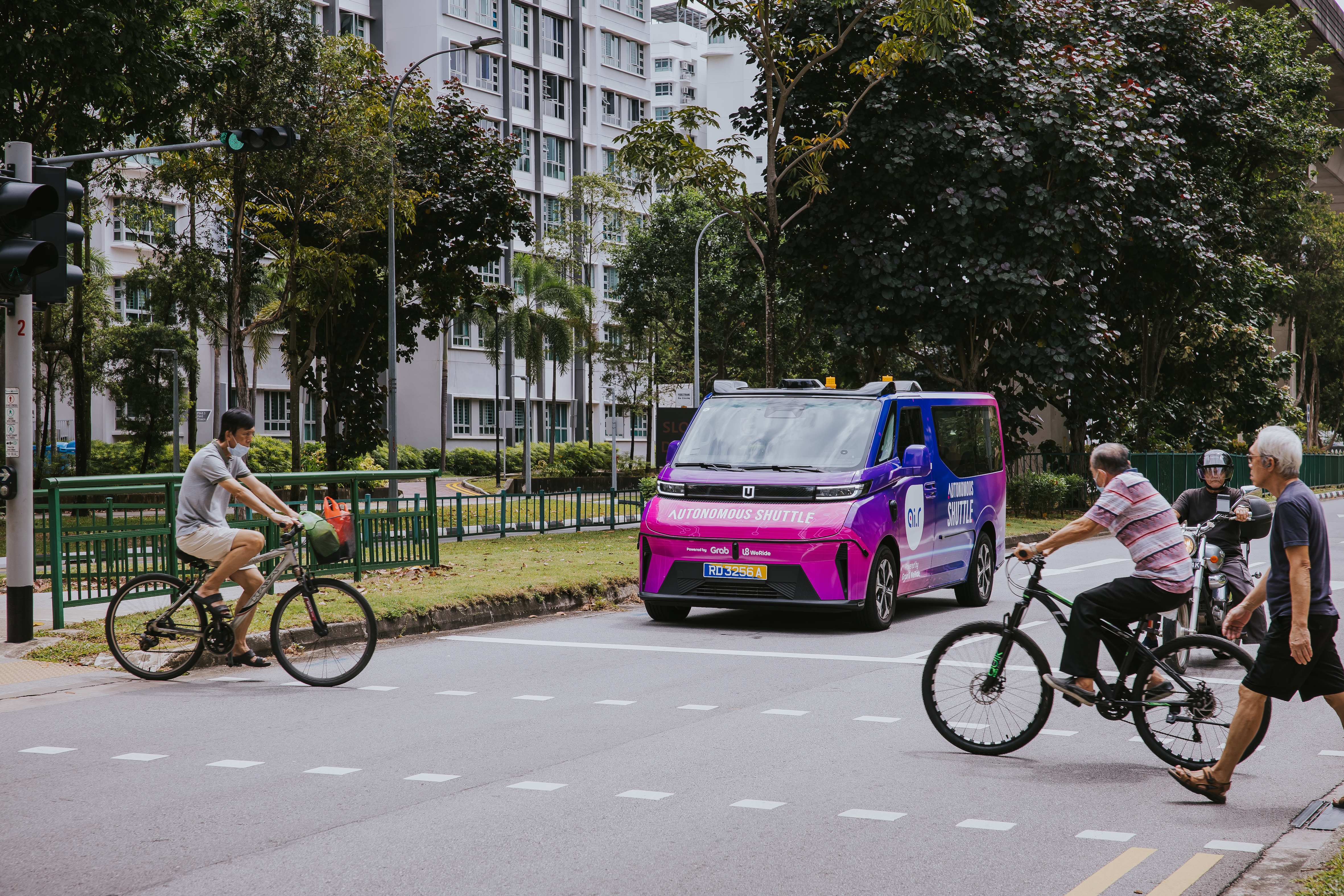
WeRide and Grab Achieve First Autonomous Vehicle Testing in Singapore’s Punggol District
Globenewswire· 2025-11-13 07:50
Core Insights - WeRide and Grab have received approval from Singapore's Land Transport Authority (LTA) to conduct autonomous vehicle (AV) testing with the Ai.R fleet in the Punggol district [1][7] - The AV testing program commenced in mid-October 2025 and aims to increase the number of test runs by up to four times by the end of the year [2][7] - The Ai.R service will be Singapore's first residential autonomous shuttle service, expected to begin public operations in early 2026 [3][6] Company Overview - WeRide is a global leader in autonomous driving technology, having tested or operated vehicles in over 30 cities across 11 countries, and is the first publicly traded Robotaxi company [11] - Grab operates as a superapp in Southeast Asia, providing services across deliveries, mobility, and digital financial sectors, serving over 800 cities in eight countries [12][15] Testing and Operations - The Ai.R fleet consists of 11 AVs, including 10 GXRs and one Robobus, designed to serve two dedicated shuttle routes in Punggol [3][6] - During testing, AVs gather real-world data to enhance AI driving models, focusing on local road conditions and user behaviors [8] - The AVs are equipped with a sensor suite for 360-degree vision, capable of detecting objects up to 200 meters away, even in adverse weather [9] Safety and Training - Safety Operators will be present on all AVs during testing and initial public rides to ensure real-time supervision [5][10] - GrabAcademy and WeRide are training over 10 experienced Grab driver-partners as Safety Operators, with the first cohort now in on-road training [10][11] Service Connectivity - The autonomous shuttle service will connect residents to key amenities, including the Punggol Coast MRT station and local malls [6]


UBER vs. WRD: Which Stock Is Better Placed in the Promising AV Space?
ZACKS· 2025-10-28 13:46
Market Overview - The global robotaxi market is projected to reach $45.7 billion by 2030, with a CAGR of 91.8% from 2023 to 2030, indicating significant growth potential in this sector [1] Uber's Strategy - Uber is focusing on strategic partnerships to establish a strong presence in the robotaxi market, avoiding heavy R&D costs associated with developing autonomous driving systems independently [2][6] - In July, Uber partnered with Baidu to expand in the autonomous delivery and ride-hailing market, planning to deploy Baidu's driverless vehicles on its platform in Asia and the Middle East [3][4] - Uber also entered an agreement with Lucid Group and Nuro to add at least 20,000 self-driving Lucid vehicles equipped with Nuro's technology to its network over the next six years, with Uber investing $300 million into Lucid [5][6] WeRide's Expansion - WeRide is aggressively expanding internationally, with a notable investment from Grab to accelerate the rollout of Level 4 autonomous robotaxis and shuttles in Southeast Asia, expected to be completed by mid-2026 [7] - WeRide plans to introduce its GXR and Robobus autonomous vehicles in Singapore through a collaboration with Grab, marking the first autonomous shuttle deployment in a residential area [8] - WeRide is also expanding in the Middle East through a partnership with Uber, launching autonomous robotaxi services in Riyadh and operating in Abu Dhabi [9][11] Competitive Landscape - Uber's shares have gained over 59% this year, while WeRide's shares have declined in double digits, indicating a disparity in market performance [13] - WeRide appears to be pricier than Uber, with a Value Score of F compared to Uber's D, suggesting a less favorable valuation [16] - Uber's dominant market position and extensive user base provide it with a distinct advantage in scaling autonomous services once technology receives regulatory approval [20][22] Future Outlook - Uber's focus on scalable autonomous deployments in suburban and low-density areas signals strong long-term potential for growth in the transportation sector [21] - While WeRide is recognized as a strong innovator in autonomous technology, Uber's platform-driven strategy and larger scale position it favorably in the robotaxi race [22]


美股异动丨文远知行盘前续涨超4.3%,此前携手优步在利雅得开放Robotaxi公众运营服务
Ge Long Hui· 2025-10-27 08:12
Core Viewpoint - The stock of WeRide (WRD.US) has seen a pre-market increase of over 4.3%, reaching $11.1, following a more than 5% rise last Friday. This surge is attributed to the announcement of the launch of Robotaxi public operations in Riyadh, Saudi Arabia, in collaboration with Uber and the Saudi Traffic Authority (TGA) [1]. Group 1 - WeRide and Uber have launched Robotaxi public operations in Riyadh, marking the first time autonomous vehicles are available on the Uber app in Saudi Arabia [1]. - This collaboration represents a significant milestone in the deployment of autonomous driving technology in the region [1]. - WeRide's mass-produced Robotaxi model, GXR, has been recognized as the only Level 4 autonomous driving product on the 2025 Fortune China "Best Design" list [1].
China's AV Push: BIDU, PONY & WRD Lead the Robotaxi Revolution
ZACKS· 2025-09-26 13:46
Core Insights - China is emerging as a global leader in autonomous driving, with companies testing self-driving cars in diverse environments and launching robotaxi fleets internationally [1][18] Group 1: Pony.ai - Pony.ai is the only company in China offering fully autonomous robotaxis in all four tier-one cities: Beijing, Shanghai, Guangzhou, and Shenzhen, covering over 2,000 square kilometers and logging over 50 million kilometers globally [3][7] - The company has extended its operating hours for robotaxis to 24/7 in Guangzhou and Shenzhen, with round-the-clock testing in Beijing, and its "virtual driver" system has accumulated over 500,000 hours of autonomous operation [4][6] - Pony.ai is mass-producing its seventh-generation robotaxi in partnership with GAC and BAIC, with over 200 vehicles deployed and a target of 1,000 by year-end [5] - The company is expanding globally, entering the Singapore market and conducting road tests in Europe and South Korea, with plans for commercial services in Dubai by 2026 [6][7] Group 2: Baidu - Baidu's Apollo Go ride-hailing service provided over 2.2 million fully driverless rides in Q2 2025, a 148% increase year-over-year, totaling over 14 million rides by August [8][10] - The company has partnered with Uber and Lyft to deploy thousands of autonomous vehicles across Asia, the Middle East, and Europe, starting with Germany and the U.K. [9][12] - Baidu received the first autonomous driving trial permit in Dubai, allowing a fleet of 50 vehicles to operate, with plans to expand to over 1,000 vehicles by 2028 [10][11] Group 3: WeRide - WeRide is rapidly expanding globally, with an investment from Southeast Asia's Grab to accelerate the deployment of Level 4 robotaxis and shuttles [13][14] - The company is launching its GXR and Robobus vehicles in Singapore, marking the city's first autonomous shuttle service in a residential area [14] - WeRide has received robotaxi permits in Saudi Arabia and is piloting services in Dubai, with plans for full-scale operations in 2026 [15][16] - The company is also deploying autonomous shuttle services in various locations worldwide, including Singapore, France, and the U.S., and has approvals in six countries [16][17]
Robotaxi营收同比增长836.7% | 文远知行发布Q2财报
Jin Rong Jie· 2025-07-31 11:02
Core Viewpoint - WeRide, a leading autonomous driving technology company, reported strong financial performance for Q2 2025, highlighting significant growth in its Robotaxi business and overall revenue [1][27]. Financial Performance - The company's Q2 revenue reached 127 million yuan, representing a year-on-year increase of 60.8% [4]. - Robotaxi business revenue for Q2 was 45.9 million yuan, showing a substantial year-on-year growth of 836.7% [4]. - The proportion of Robotaxi revenue in total Q2 revenue increased significantly to 36.1%, marking the highest level since 2021 [4]. - Gross profit grew by 40.6% year-on-year, indicating a steady improvement in profitability [4]. Business Expansion - The Robotaxi fleet in Abu Dhabi has tripled in size since 2024, demonstrating significant scalability [8]. - New operational areas include Al Reem Island and Al Maryah Island, covering nearly half of Abu Dhabi's core urban areas, with expected order volume to double [8]. - The Robotaxi fleet is projected to expand to hundreds of vehicles, with plans to extend operations to Khalifa City, Masdar City, and more areas by 2025 [8]. - WeRide has initiated the first pure unmanned Robotaxi road tests in the Middle East [9]. Strategic Partnerships - WeRide signed a cooperation agreement with Uber and the Dubai Roads and Transport Authority to deploy commercial Robotaxi services in Dubai [9]. - The company plans to start trial operations within the year and aims for pure unmanned Robotaxi commercial operations by 2026 [9]. Technological Advancements - WeRide's Robotaxi has received the first autonomous driving license in Saudi Arabia, making it the only technology company with autonomous driving licenses in six countries [12]. - The company launched the first Robotaxi trial operation service in Saudi Arabia, which is currently the only such service in the country [12]. - WeRide partnered with Chery and Jinjiang Taxi to conduct public road passenger-carrying autonomous driving demonstrations in Shanghai [13]. - The company introduced the HPC 3.0 high-performance computing platform, featuring NVIDIA's latest DRIVE AGX Thor X chip, enhancing the performance and cost-effectiveness of its autonomous driving technology [26]. Leadership Insights - The CEO emphasized that the strong Q2 performance marks a critical moment in WeRide's global journey, with rapid growth in the Robotaxi business validating the company's strategic vision [27]. - The CFO highlighted that the robust revenue performance reflects effective execution of growth strategies and the ongoing expansion of operational scale, with the Robotaxi business becoming a key component of the company's financial strength [28].