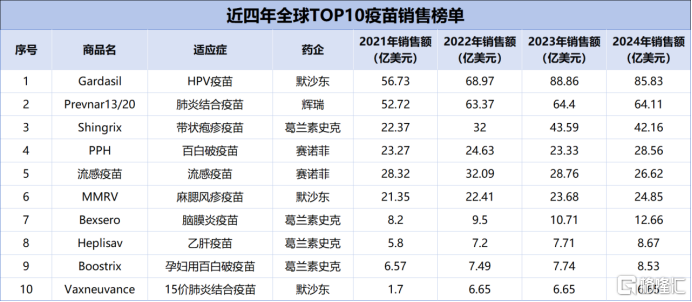
Gardasil(HPV疫苗)

Search documents
默沙东2026年战略布局:并购、新药与业绩挑战并存
Jing Ji Guan Cha Wang· 2026-02-12 15:03
Core Insights - Merck (MRK.US) is actively pursuing acquisitions, product innovation, and new drug pipelines, which may significantly impact its future strategy and performance [1] Recent Events - Merck is in talks to acquire cancer drug developer Revolution Medicines for an estimated $28 billion to $32 billion, which would introduce the experimental drug Daraxonrasib targeting RAS gene mutation cancers, marking one of the largest deals in the pharmaceutical industry since Pfizer's acquisition of Seagen at the end of 2023 [2] - The company has also completed the acquisition of Cidara Therapeutics to strengthen its product pipeline [2] Business Progress - The subcutaneous formulation of Keytruda (Qlex) has been submitted for approval in the U.S., EU, and China, addressing challenges from the intravenous version's key patent expiration in 2028. Wolfe Research estimates that by 2029, approximately 41% of Keytruda's intravenous revenue may transition to the subcutaneous version [3] - New indications for Keytruda, including combination therapy with Moderna's mRNA vaccine and perioperative treatment for bladder cancer, are in progress [3] Performance Overview - The pulmonary arterial hypertension drug Winrevair (sotatercept) is projected to achieve sales of $1.443 billion by 2025 and is expected to receive FDA approval for new indications in 2026 [4] - The oral PCSK9 inhibitor Enlicitide has successfully completed Phase III clinical trials, potentially offering new options for cardiovascular disease patients [4] - The animal health business is expected to generate $6.4 billion in sales by 2025, reflecting an 8% year-over-year growth, while the diabetes drug sitagliptin is projected to generate $2.544 billion in revenue [4] Company Status - Merck's 2025 financial report anticipates 2026 sales between $65.5 billion and $67 billion, with adjusted EPS ranging from $5 to $5.15, which is below market expectations [5] - The company faces challenges including a decline in sales of the HPV vaccine Gardasil (projected at $5.2 billion for 2025, down 39% year-over-year), a slow recovery in the Chinese market, and a 12% decrease in R&D investment [5] Institutional Views - In January 2026, Wolfe Research upgraded Merck's rating to "Outperform" with a target price of $135, citing the company's position in a catalyst-rich phase through acquisitions and product innovation [6] - As of February 2, 2026, Merck's stock was priced at $113.37, reflecting a 14.72% increase over the past 52 weeks [6]

默沙东疫苗销量集体下滑,HPV疫苗暴跌25%!
Xin Lang Cai Jing· 2025-10-31 01:48
Core Viewpoint - Merck's Q3 2025 financial report shows a mixed performance with overall revenue growth of 4%, but a significant decline in its core vaccine business, indicating broader challenges in the global vaccine market [1][3]. Company Performance - Merck's total revenue reached $17.3 billion in Q3 2025, marking a 4% year-over-year increase, reversing a 2% decline in Q2 2025 [3]. - The strong performance was driven by two key products: Winrevair, which saw a 141% increase in sales, rising from $149 million in 2024 to $360 million, and Keytruda, which grew 8% to $8.1 billion [3]. Vaccine Business Challenges - Merck's vaccine sales faced significant declines, particularly with Gardasil, which experienced a 25% drop in global sales due to weak demand in both China and the U.S. [1][2]. - Other vaccines, including Proquad, M-M-R II, and Varivax, collectively saw a 3% decrease in sales, primarily attributed to reduced demand in the U.S. market [2]. - The pneumococcal vaccine Vaxneuvance also declined by 6%, despite some offset from CDC inventory purchases [2]. Industry Trends - The decline in vaccine sales is not isolated to Merck; other major pharmaceutical companies like Sanofi and GlaxoSmithKline reported similar downturns, indicating a broader trend in the vaccine industry [3]. - Factors contributing to this trend include a return to normal vaccine demand post-pandemic, changes in national healthcare policies, fluctuating vaccination willingness, and increased competition [4]. Future Outlook - Merck's vaccine business, once a key growth driver, is now a liability, necessitating strategies to address U.S. policy uncertainties, boost demand in emerging markets like China, and optimize its vaccine product pipeline [4]. - The collective downturn in vaccine sales may prompt pharmaceutical companies to accelerate business restructuring, reallocating resources towards oncology, chronic diseases, and rare diseases, which present greater growth potential [4].
从PCV13i的“中国方案”进阶,来看康希诺生物(6185.HK/688185.SH)技术突围与价值重估
Ge Long Hui· 2025-06-22 12:23
Core Viewpoint - The Chinese vaccine industry is transitioning from scale expansion to value creation, driven by national immunization strategies and WHO vaccine prioritization policies, with local companies leveraging technological innovation to enhance multi-valent vaccines and lifecycle protection strategies [1] Group 1: Product Development and Innovation - CanSino Biologics' 13-valent pneumonia vaccine PCV13i has been approved for market launch, representing a significant step in the globalization of domestic vaccines [2] - The core value of PCV13i is based on three pillars: technological breakthroughs, clinical validation, and application optimization [2] - The vaccine employs a unique dual carrier technology using a non-toxic mutant of diphtheria toxin (CRM197) and tetanus toxin (TT), enhancing immunogenicity and reducing interference with other vaccines [3] Group 2: Clinical Data and Efficacy - Clinical data shows that PCV13i significantly outperforms control groups in inducing high levels of specific antibodies against key serotypes that are prevalent in China, confirming its regional adaptability [4] - The safety profile of PCV13i is comparable to that of control vaccines, with adverse reactions primarily being mild, facilitating its commercial application [4] Group 3: Market Demand and Commercialization - The urgency for pneumonia vaccines is underscored by the high mortality rates associated with pneumonia in children under five, particularly in China, where vaccination rates are below 18% [6][8] - The global market for pneumonia vaccines is robust, with the 13-valent pneumonia vaccine consistently ranking among the top-selling vaccines, indicating significant market potential [9] Group 4: Strategic Market Positioning - PCV13i is positioned to leverage existing distribution networks and cold chain logistics established by CanSino's previous vaccine, enhancing market penetration efficiency [10] - The vaccine's production process meets EU GMP standards and is suitable for halal certification, providing a competitive edge in Southeast Asian markets [10] Group 5: Long-term Value Creation - CanSino's vaccine matrix, including products for polio and DTP, is establishing a comprehensive defense against bacterial diseases in children, aligning with international quality standards [11] - The launch of PCV13i is expected to catalyze short-term performance while the ongoing innovation in the product matrix builds long-term value, suggesting potential for re-evaluation in market valuation [12]