Gemini three

Search documents
Ed Yardeni Discusses Shift From Magnificent Seven Tech Stocks
Youtube· 2025-12-08 04:08
Core Viewpoint - The recommendation has shifted to underweight mega-cap tech stocks compared to the rest of the S&P 500 due to increasing competition and high market capitalization of these stocks [1][4]. Group 1: Market Dynamics - The "Magnificent Seven" tech stocks now account for 45% of the S&P 500 market cap, while their earnings share has not increased proportionately [3]. - The U.S. market represents 65% of the global stock market cap, making it challenging to recommend an overweight position in the U.S. [4]. - There is a growing competitive landscape among the Magnificent Seven, with new entrants and innovations challenging their dominance [6][7]. Group 2: Competitive Landscape - Recent advancements, such as Google's Gemini 3 and DeepSeek's new model, have intensified competition in the AI sector, prompting a reevaluation of the positions held by established players like OpenAI [6][7]. - High profit margins in the tech sector are attracting more competition, indicating a shift in market dynamics [8]. Group 3: Investment Strategy - A broader investment strategy that includes the "impressive 493" companies outside the Magnificent Seven is suggested, as these companies are leveraging technology to enhance productivity and profit margins [9].


Constellation's Wang on Google-Nvidia Chips Rivalry
Youtube· 2025-11-26 07:17
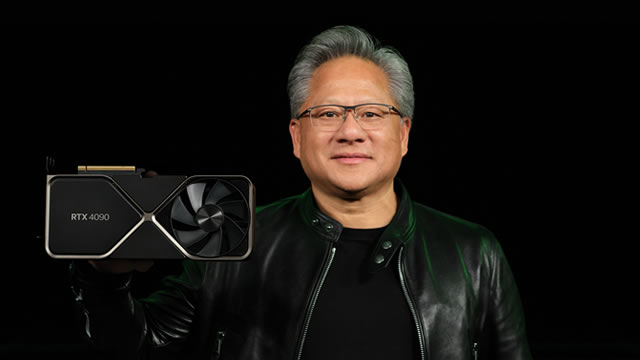
Core Insights - The discussion highlights the growing importance of Tensor Processing Units (TPUs) in AI and deep learning, emphasizing their efficiency and lower costs compared to GPUs [1][5][6] - Google is recognized for its advancements in AI and chip development, positioning itself as a strong competitor in the market [4][5][6] - The market for AI-related chips is projected to reach a demand of $7 trillion by 2030, indicating significant growth opportunities for companies involved in this sector [8][22][24] Group 1: Technology and Market Dynamics - TPUs are purpose-built for AI applications, offering advantages in training and inference, which makes them more power-efficient than traditional GPUs [1][5] - Google has been developing its chips for five years, leading to a fully vertically integrated system that enhances efficiency and reduces reliance on external suppliers [5][6] - The diversification of chip sources is becoming crucial as companies seek alternatives to Nvidia, with Google and AMD positioned to provide competitive options [10][14] Group 2: Competitive Landscape - Companies like Oracle and Microsoft are expected to explore Google's CPUs as they look to diversify their chipsets [13] - The competition in large language models is intensifying, with Google's Gemini 3 showing strong performance against rivals like ChatGPT [15][16] - Despite Nvidia's current dominance, the demand for various chip types suggests that the market is not a zero-sum game, allowing for multiple players to thrive [8][9][10] Group 3: Future Projections - The anticipated market cap for Nvidia is projected to peak at around $7 trillion, driven by the demand for sovereign AI and physical AI applications [22][23][24] - The ongoing evolution in AI technology and chip development is expected to shape market dynamics significantly over the next few years [20][24]



What's Behind the Selloff in Nvidia Stock?
Youtube· 2025-11-21 17:56
Market Overview - The market is experiencing ongoing pressure despite strong earnings reports from major companies like Nvidia, indicating a risk-off mentality among investors [2][4] - Macro pressures are significantly impacting major indexes, leading to a sell-off in stocks [2][6] Company Performance - Nvidia reported a blowout earnings report, but the positive impact was short-lived as the stock faced two down days immediately after [1][2] - Apple and Google are outperforming in the current market, with Apple showing resilience and Google benefiting from optimism surrounding its Gemini 3 product [3][4] Debt Concerns - There is growing anxiety regarding debt levels among major players, particularly Oracle, as indicated by the rise in credit default swaps (CDS) [7][8] - Investors are concerned about the potential for over-leverage in companies heavily investing in AI, which could pose risks in the future [8][9]