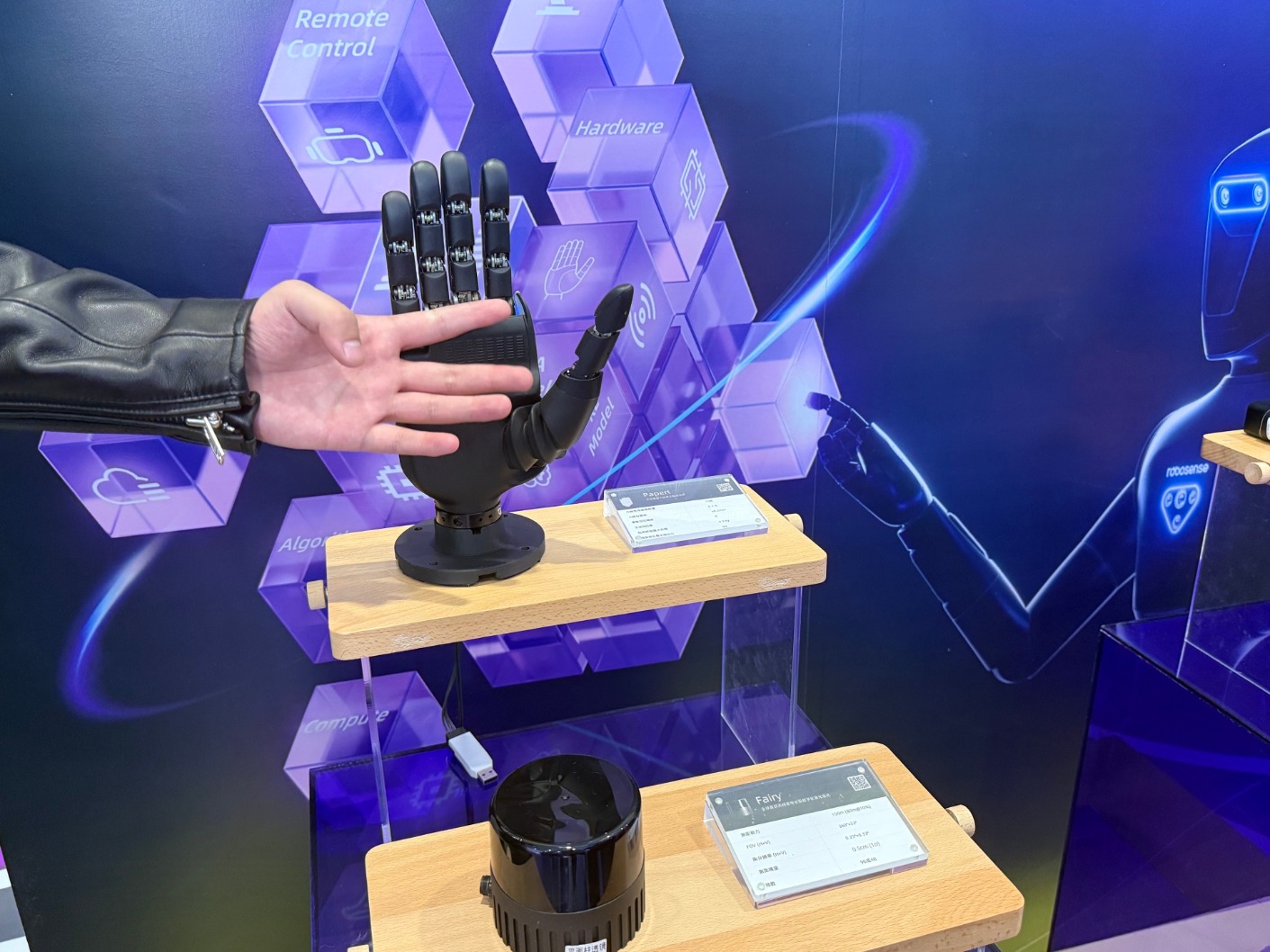
GeneoX智能巡机器狗

Search documents
“数字龙华”浪潮涌动 未来产业加速成型
Shen Zhen Shang Bao· 2025-11-17 06:01
Core Viewpoint - The 27th China International High-tech Achievements Fair showcases the technological advancements and innovation capabilities of Longhua District, highlighting its role as a key player in Shenzhen's digital transformation and industrial development [1][6]. Group 1: Exhibition Highlights - Longhua District features 30 representative enterprises and institutions at the fair, focusing on areas such as artificial intelligence, low-altitude economy, and healthcare [1]. - The exhibition includes advanced technologies like the Kuavo humanoid robot, GeneoX intelligent patrol robot dog, and Meituan's fourth-generation drone, demonstrating the district's leadership in embodied intelligence and logistics [2][3]. - The "Hongmeng System" coffee machine, a commercial retail terminal, showcases the integration of technology and user experience, attracting significant attention from visitors [3]. Group 2: Innovation and Integration - Longhua's innovation is characterized by the "new, integrated, and practical" framework, emphasizing technological depth and real-world applications [4][5]. - The integration of technology with culture is evident through various exhibits, such as 3D printing of historical sites and the use of traditional designs in modern robotics [5]. - The fair serves as a platform for project implementation and investment opportunities, facilitating connections between enterprises and investors [5]. Group 3: Industrial Strength and Growth - Longhua boasts 1,938 industrial enterprises and over 4,200 national high-tech companies, indicating a robust industrial base [6]. - The district is recognized as a provincial core area for artificial intelligence and a demonstration base for industrial internet, reflecting its commitment to smart manufacturing [6][7]. - Longhua's R&D investment is approximately 12.5 billion yuan, accounting for 4.15% of its GDP, aligning with developed countries' standards and supporting sustainable innovation [7]. Group 4: Future Prospects - Longhua is positioned as a leading technology innovation hub in Shenzhen, with a growing industrial ecosystem and a focus on digital transformation [8]. - The district's continuous technological demonstrations and collaborative efforts signal its momentum towards achieving a peak in the digital era [8].
硬核科技实力让龙华区成功C位出圈
Nan Fang Du Shi Bao· 2025-11-16 23:05
Core Insights - The 27th High-Tech Fair showcased advanced technologies and innovations from Longhua District, including humanoid robots, drones, and health rehabilitation systems, emphasizing the district's commitment to digital and intelligent manufacturing [3][4][6] Group 1: Technological Innovations - Longhua District presented a variety of cutting-edge technologies, such as the Kuavo intelligent robot and the GeneoX smart patrol robot, highlighting advancements in artificial intelligence and robotics [6][7] - The low-altitude economy was represented by innovative drone systems, including the V4 system with near-perfect reliability and Meituan's fourth-generation drone, which has completed over 670,000 orders [6][7] - A mobile real-time motion capture rehabilitation system was introduced, enabling high-precision home rehabilitation training, showcasing the integration of technology in healthcare [7] Group 2: Economic Development - Longhua District's GDP reached 156.7 billion yuan in the first half of 2025, marking a 6.2% year-on-year growth, surpassing national and provincial averages [9][10] - The district has over 4,000 national high-tech enterprises and 138 specialized "little giant" companies, indicating a robust innovation ecosystem [9] - Longhua's focus on digital economy and modern industrial systems is evident in its strategic initiatives, including the establishment of new innovation carriers and the promotion of technology-driven economic growth [8][9][10] Group 3: Exhibition and Collaboration - The High-Tech Fair served as a platform for industry collaboration and project implementation, with dedicated areas for roadshows and investment discussions to facilitate technology transfer [5] - Longhua's exhibition emphasized a blend of technology and culture, utilizing 3D printing to recreate historical architecture and integrating traditional art into modern displays [4][5]

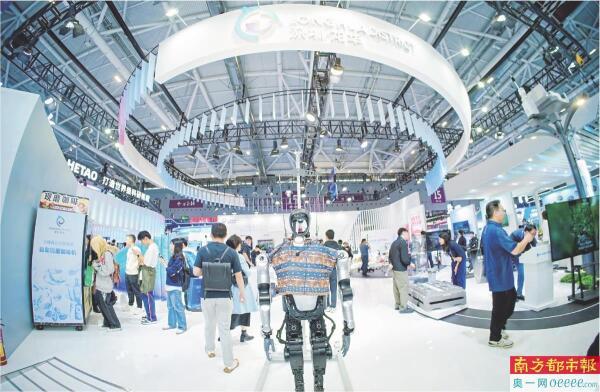
从后空翻炫技到上岗巡检!高交会五年蝶变:机器人集体“务实”,全产业链瞄准量产落地
Mei Ri Jing Ji Xin Wen· 2025-11-15 11:45
Core Insights - The robotics industry showcased at the 27th China International High-Tech Achievements Fair (CIHTAF) has evolved from novelty displays to practical applications, with a focus on real-world usability and integration into various sectors [1][2][4] Industry Evolution - Five years ago, robots were primarily viewed as visual spectacles, with products like the AlienGo robot dog capturing attention through impressive stunts [2][4] - By 2025, the focus has shifted to diverse forms of robots, including quadrupedal, wheeled, bionic robots, digital humans, and robotic arms, emphasizing their functional capabilities [2][4] Application and Functionality - Exhibitors at the fair are now prioritizing the practical applications of robots, demonstrating their abilities in tasks such as autonomous navigation, obstacle avoidance, and interactive communication [4][6] - The integration of advanced technologies like AI voice recognition and computer vision has enhanced the functionality of robots, allowing for real-time interaction and improved operational efficiency [4][6] Market Expansion - The number of exhibitors has doubled, with 22 dedicated exhibition areas for robotics, indicating a significant growth in the industry and its applications [6] - Companies are increasingly exploring new application boundaries, with humanoid robots being utilized in various sectors, including industrial and healthcare environments [6][9] Product Development and Challenges - The maturity of robotic products, particularly robot dogs, has improved significantly, with ongoing iterations based on real-world feedback [8] - Despite advancements, humanoid robots still face challenges in achieving efficiency comparable to human workers, necessitating ongoing development and customization for specific tasks [11]