GoPro Karma无人机

Search documents
GoPro的“英雄末路”
2 1 Shi Ji Jing Ji Bao Dao· 2025-12-22 06:11
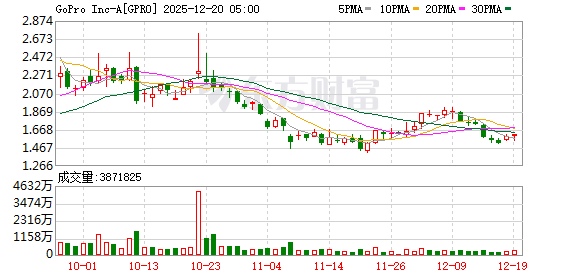
Core Insights - GoPro, once a dominant player in the action camera market, has seen its market value plummet by 98% from its peak, now valued at only $254 million, with its global market share dropping from over 75% to less than 20% [7][16] - The handheld smart imaging device market continues to grow rapidly, with a compound annual growth rate (CAGR) of 15.9%, projected to reach $79.93 billion by 2030 [9] - Competitors like Insta360 and DJI have emerged as strong players, effectively pushing GoPro out of the main competitive landscape [9][18] Company Background - GoPro was founded by Nick Woodman in 2004, initially targeting extreme sports enthusiasts with a compact, durable, and waterproof camera [4][11] - The company experienced explosive growth, with revenues soaring from $64 million in 2010 to $986 million in 2013, and reaching a market cap of $13 billion in 2014 [12][13] Market Dynamics - The rise of smartphones and the popularity of short videos and vlogs shifted consumer demand from professional athletes to everyday users, who now seek features like stabilization and ease of editing [14] - Competitors like Insta360 and DJI have capitalized on these trends, introducing innovative products that meet the evolving needs of consumers [14][18] Strategic Missteps - GoPro's failure to innovate and adapt to market changes, including a disastrous entry into the consumer drone market with the Karma drone, led to significant financial losses and damage to its reputation [15][16] - The company's focus on minor updates to existing products rather than groundbreaking innovations allowed competitors to gain a foothold and surpass GoPro in market share [15][16] Current Status - As of Q3 2025, GoPro has reported consecutive quarterly losses, with its stock price significantly detached from its historical highs, trading at $1.59 per share [18][20] - The company has lost its competitive edge, with its market share in the action camera segment dropping from 84% in 2022 to 18% in 2025 [16][20] Lessons Learned - The decline of GoPro serves as a cautionary tale about the importance of continuous innovation and market awareness, highlighting that even market leaders can fall from grace if they become complacent [20][21]


900亿巨头英雄末路,市值蒸发98%
21世纪经济报道· 2025-12-19 10:36
Core Viewpoint - GoPro, once a dominant player in the action camera market, has seen its market value plummet by 98% from its peak, losing its competitive edge to emerging rivals in the handheld imaging device market [1][3][12]. Group 1: Company Background and Rise - GoPro was founded in 2004 by Nick Woodman, who created a camera solution for surfers, leading to the establishment of a new market for action cameras [6]. - The company capitalized on the gap in the market for compact, durable, and waterproof cameras, particularly appealing to extreme sports enthusiasts [6][7]. - GoPro's revenue skyrocketed from $64 million in 2010 to $986 million in 2013, with a market share exceeding 75% by the time of its IPO in 2014 [7][8]. Group 2: Market Dynamics and Competition - The global handheld imaging device market is projected to grow at a CAGR of 15.9%, reaching a size of 79.93 billion yuan by 2030, while GoPro's market share has drastically declined [3][12]. - Competitors like Insta360 and DJI have emerged, focusing on consumer needs for enhanced image quality and ease of use, effectively capturing market share from GoPro [10][11]. Group 3: Strategic Missteps and Decline - GoPro's failure to innovate and adapt to changing consumer demands, particularly the shift from professional athletes to everyday users, has led to its decline [15]. - The company faced significant setbacks with its drone product, Karma, which was recalled shortly after launch due to design flaws, damaging its reputation and diverting resources from core product innovation [11]. - By 2025, GoPro's market share in the action camera segment fell from 84% in 2022 to 18%, while its share in the consumer-grade panoramic camera market dropped from 21.5% in 2021 to 9.2% in 2023 [11][12]. Group 4: Lessons and Future Outlook - The decline of GoPro serves as a cautionary tale about the importance of continuous innovation and market awareness, as even established leaders can be overtaken by more agile competitors [15][16]. - Companies like DJI and Insta360 are now leading the market, emphasizing the need for a robust ecosystem that integrates hardware, software, and community engagement [15][16].

深度|SemiAnalysis万字长文:中国机器人已经遥遥领先,美国若错失机器人革命恐全盘皆输,制造业回流再无可能
Z Finance· 2025-03-12 10:21
Core Viewpoint - The article emphasizes the critical juncture the U.S. and the Western world face in the ongoing robotics technology revolution, highlighting the potential for China to dominate this field if the U.S. fails to keep pace with advancements in automation and robotics [1][2]. Group 1: China's Manufacturing Leadership - China has established itself as a global leader in manufacturing, demonstrating competitive advantages in scale economies and engineering quality across key industries, including batteries, solar energy, and electric vehicles [2]. - The impact of robotics technology is expected to grow exponentially, with the production of robots leading to continuous cost reductions and quality improvements, making it increasingly difficult for other countries to compete [2][3]. - Currently, Chinese companies hold nearly 50% of the global robotics market share, up from 30% in 2020, indicating a significant shift towards domestic manufacturers taking over high-end markets [3]. Group 2: Cost Disparities in Robotics - The cost of manufacturing a robotic arm similar to the Universal Robots UR5e model in the U.S. is approximately 2.2 times higher than in China, highlighting the significant cost advantage China holds in this sector [4][5]. - A detailed cost comparison shows that the total cost of a full light payload robot arm in the U.S. is $24,420, compared to $11,155 in China, representing a 118.9% cost increase for U.S. manufacturers [5]. Group 3: Supply Chain and Component Dependency - The U.S. manufacturing sector heavily relies on components sourced from China, even for products labeled as "Made in America," which complicates the narrative of domestic manufacturing independence [4][43]. - The supply chain for industrial robots is complex and often disrupted, as seen during the COVID-19 pandemic, which highlighted the vulnerabilities of Western economies compared to China's rapid adjustments and increases in robot installations [44]. Group 4: Robotics Technology Development - The article discusses the challenges in developing general-purpose robots capable of operating in unstructured environments, emphasizing the need for significant advancements in both hardware and software to achieve this goal [18][20]. - China has made remarkable progress in creating fully automated factories, exemplified by the operation of "unmanned factories" that can produce smartphones without human intervention, showcasing the potential for future advancements in automation [21][23]. Group 5: Types of Robots and Their Applications - The article categorizes various types of industrial robots, including articulated arms, SCARA robots, and collaborative robots (cobots), each designed for specific tasks and environments [24][28]. - Collaborative robots are increasingly being adopted in industrial settings due to their ability to work alongside humans and perform tasks that require flexibility and precision [30]. Group 6: Future of Robotics and AI Integration - The integration of AI and robotics is expected to revolutionize industries by enabling robots to perform complex tasks autonomously, thereby addressing labor shortages and enhancing operational efficiency in various sectors [20][21]. - The article concludes with a vision of a future where general-purpose robots can seamlessly operate in diverse environments, significantly transforming labor dynamics and productivity across industries [18][20].