用户生成内容(UGC)

Search documents
Omdia:YouTube视频总量达290亿,音乐与Shorts短视频主导观看时长
Canalys· 2026-02-09 01:05
Core Insights - YouTube is projected to reach a total of 29 billion videos by December 2025, driven by the growth of YouTube Shorts, AI-generated content, and expansion in markets like India [1] - The platform is expected to surpass 30 billion videos by early 2026, with 99% of videos contributing only 9% of total viewing time, highlighting a unique aspect of its strategy [1] - YouTube is evolving into a highly diversified platform by 2026, with professional content, music, news, and podcasts shaping the overall viewing structure and user behavior [1] Video Growth Dynamics - YouTube's growth is accelerating, with 25% of new videos for 2025 expected to be uploaded in the first 10 months, primarily driven by short video content [2] - Shorts now account for over 90% of all newly uploaded content, indicating a significant shift in user engagement [2] - The top 1% of videos contribute 91% of total viewing time, while the remaining 99% account for only 9%, yet they play a crucial role in the platform's ecosystem [2] Content Consumption Trends - Music videos dominate YouTube's total viewing time, accounting for 33%, while professionally produced content makes up 46% [2] - Video podcasts are rapidly growing, representing 5% of total viewing time, indicating a notable trend in content consumption [2] - News content remains significant, comprising 10% of viewing time, ranking as the third most popular content category [2]


影石大疆后浪奔涌,GoPro英雄末路
Xin Lang Cai Jing· 2025-12-23 23:14
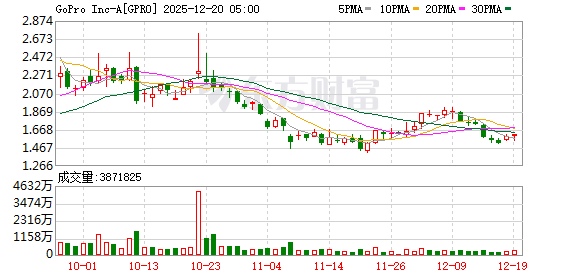
Core Insights - GoPro, once a dominant player in the action camera market, has seen its market value plummet by 98% from its peak, now standing at $256 million as of December 2025 [3][13] - The company’s market share has drastically decreased from over 75% to below 20%, while the handheld imaging device market continues to grow at a CAGR of 15.9% [3][11] - Competitors like Insta360 and DJI have emerged as strong players, capturing significant market share and redefining consumer expectations in the imaging sector [3][12] Company History and Evolution - GoPro was founded by Nick Woodman in 2004, inspired by a need to capture surfing experiences, leading to the creation of a new market for action cameras [1][6] - The company’s slogan "Be a Hero" became synonymous with its brand, appealing to extreme sports enthusiasts [2][6] - GoPro's revenue skyrocketed from $64 million in 2010 to $986 million in 2013, and it reached a market cap of $13 billion in 2014 [8] Market Dynamics and Competition - The rise of smartphones and the demand for user-friendly content creation tools shifted the market landscape, allowing competitors to capitalize on GoPro's stagnation [9][10] - Insta360 and DJI have introduced innovative products that cater to the evolving needs of consumers, such as 360-degree cameras and advanced stabilization technology [9][12] - GoPro's failure to innovate and adapt to changing consumer preferences has led to its decline, as it focused on minor updates rather than significant advancements [10][14] Financial Performance and Market Position - GoPro's market share in the action camera segment fell from 84% in 2022 to 18% in the first three quarters of 2025, while its share in the consumer-grade 360 camera market dropped from 21.5% in 2021 to 9.2% in 2023 [11][13] - The company has reported consecutive quarterly losses, with its stock price falling to $1.59 per share, reflecting a significant disconnect from its previous valuation [13][15] - Competitors like DJI and Insta360 have established themselves as market leaders, with DJI holding over 70% of the consumer drone market and Insta360 dominating the 360 camera space [12][15] Lessons and Future Outlook - The decline of GoPro serves as a cautionary tale about the importance of continuous innovation and market awareness [15][16] - Both DJI and Insta360 are investing heavily in research and development, with DJI allocating approximately 15% of its revenue to R&D, while Insta360 dedicates over 12% [15] - The competitive landscape in the imaging market is shifting, emphasizing the need for companies to remain agile and responsive to consumer demands [15][16]
GoPro的“英雄末路”
2 1 Shi Ji Jing Ji Bao Dao· 2025-12-22 06:11
Core Insights - GoPro, once a dominant player in the action camera market, has seen its market value plummet by 98% from its peak, now valued at only $254 million, with its global market share dropping from over 75% to less than 20% [7][16] - The handheld smart imaging device market continues to grow rapidly, with a compound annual growth rate (CAGR) of 15.9%, projected to reach $79.93 billion by 2030 [9] - Competitors like Insta360 and DJI have emerged as strong players, effectively pushing GoPro out of the main competitive landscape [9][18] Company Background - GoPro was founded by Nick Woodman in 2004, initially targeting extreme sports enthusiasts with a compact, durable, and waterproof camera [4][11] - The company experienced explosive growth, with revenues soaring from $64 million in 2010 to $986 million in 2013, and reaching a market cap of $13 billion in 2014 [12][13] Market Dynamics - The rise of smartphones and the popularity of short videos and vlogs shifted consumer demand from professional athletes to everyday users, who now seek features like stabilization and ease of editing [14] - Competitors like Insta360 and DJI have capitalized on these trends, introducing innovative products that meet the evolving needs of consumers [14][18] Strategic Missteps - GoPro's failure to innovate and adapt to market changes, including a disastrous entry into the consumer drone market with the Karma drone, led to significant financial losses and damage to its reputation [15][16] - The company's focus on minor updates to existing products rather than groundbreaking innovations allowed competitors to gain a foothold and surpass GoPro in market share [15][16] Current Status - As of Q3 2025, GoPro has reported consecutive quarterly losses, with its stock price significantly detached from its historical highs, trading at $1.59 per share [18][20] - The company has lost its competitive edge, with its market share in the action camera segment dropping from 84% in 2022 to 18% in 2025 [16][20] Lessons Learned - The decline of GoPro serves as a cautionary tale about the importance of continuous innovation and market awareness, highlighting that even market leaders can fall from grace if they become complacent [20][21]

900亿巨头英雄末路,市值蒸发98%
2 1 Shi Ji Jing Ji Bao Dao· 2025-12-19 10:41
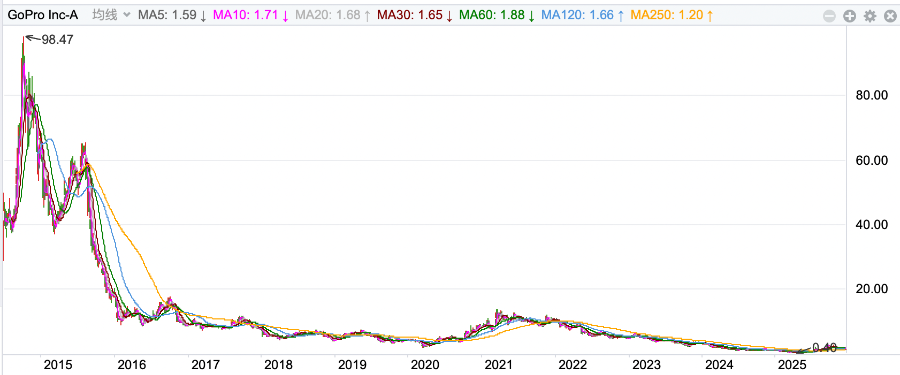
Core Insights - GoPro, once a leader in the action camera market, has seen its market value plummet by 98% from its peak, now valued at only $254 million [4][15] - The company has lost significant market share, dropping from over 75% to less than 20% in the action camera segment, while competitors like DJI and Insta360 are thriving [4][14] Company Overview - GoPro was founded by Nick Woodman in 2004, initially targeting extreme sports enthusiasts with a compact, durable camera that captured first-person perspectives [9][10] - The brand's slogan "Be a Hero" became synonymous with adventure and extreme sports, contributing to its early success [3][11] Market Dynamics - The global handheld imaging device market is growing rapidly, with a compound annual growth rate (CAGR) of 15.9%, projected to reach 79.93 billion yuan by 2030 [6] - Competitors DJI and Insta360 have emerged as strong players, capturing market share and innovating in ways that GoPro has struggled to match [6][15] Competitive Landscape - GoPro's market dominance was challenged by the rise of smartphones and the demand for more versatile imaging solutions, leading to a shift in consumer preferences [12][16] - DJI and Insta360 have successfully introduced innovative products that cater to the evolving needs of consumers, such as 360-degree cameras and advanced stabilization technology [12][14] Strategic Missteps - GoPro's failure to innovate and adapt to changing market demands has led to a decline in its competitive position, as it focused on less relevant areas like media and consumer drones [13][16] - The company's slow product iteration and reliance on its established Hero series have resulted in a loss of market relevance [13][14] Financial Performance - GoPro's revenue skyrocketed from $64 million in 2010 to $986 million in 2013, but has since declined significantly, with recent reports indicating ongoing losses [10][15] - As of December 19, GoPro's stock price was $1.59 per share, a stark contrast to its historical high of $93.85, reflecting its diminished market presence [15][18] Lessons Learned - The decline of GoPro serves as a cautionary tale about the importance of continuous innovation and market awareness in the tech industry [18] - The rise of DJI and Insta360 highlights the need for companies to remain vigilant and adaptable to avoid becoming obsolete [18]
900亿巨头英雄末路,市值蒸发98%
21世纪经济报道· 2025-12-19 10:36
Core Viewpoint - GoPro, once a dominant player in the action camera market, has seen its market value plummet by 98% from its peak, losing its competitive edge to emerging rivals in the handheld imaging device market [1][3][12]. Group 1: Company Background and Rise - GoPro was founded in 2004 by Nick Woodman, who created a camera solution for surfers, leading to the establishment of a new market for action cameras [6]. - The company capitalized on the gap in the market for compact, durable, and waterproof cameras, particularly appealing to extreme sports enthusiasts [6][7]. - GoPro's revenue skyrocketed from $64 million in 2010 to $986 million in 2013, with a market share exceeding 75% by the time of its IPO in 2014 [7][8]. Group 2: Market Dynamics and Competition - The global handheld imaging device market is projected to grow at a CAGR of 15.9%, reaching a size of 79.93 billion yuan by 2030, while GoPro's market share has drastically declined [3][12]. - Competitors like Insta360 and DJI have emerged, focusing on consumer needs for enhanced image quality and ease of use, effectively capturing market share from GoPro [10][11]. Group 3: Strategic Missteps and Decline - GoPro's failure to innovate and adapt to changing consumer demands, particularly the shift from professional athletes to everyday users, has led to its decline [15]. - The company faced significant setbacks with its drone product, Karma, which was recalled shortly after launch due to design flaws, damaging its reputation and diverting resources from core product innovation [11]. - By 2025, GoPro's market share in the action camera segment fell from 84% in 2022 to 18%, while its share in the consumer-grade panoramic camera market dropped from 21.5% in 2021 to 9.2% in 2023 [11][12]. Group 4: Lessons and Future Outlook - The decline of GoPro serves as a cautionary tale about the importance of continuous innovation and market awareness, as even established leaders can be overtaken by more agile competitors [15][16]. - Companies like DJI and Insta360 are now leading the market, emphasizing the need for a robust ecosystem that integrates hardware, software, and community engagement [15][16].

不靠起诉靠投资,迪士尼10亿美元入股OpenAI,那爱优腾呢?
创业邦· 2025-12-17 03:18
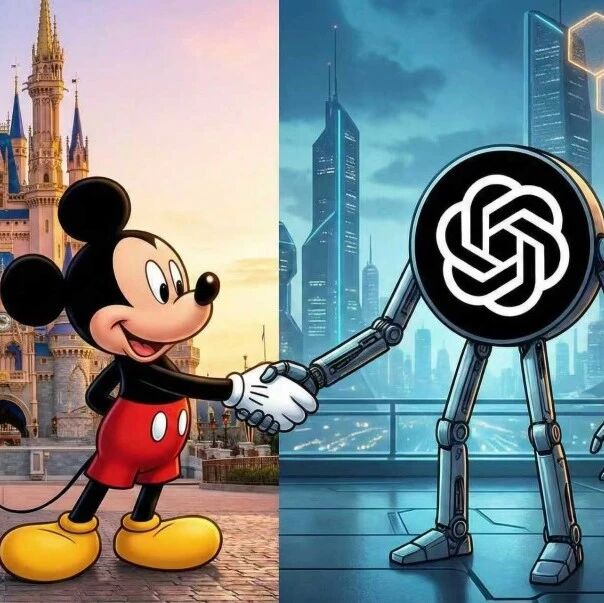
Core Insights - Disney invested $1 billion in OpenAI and signed a three-year licensing agreement to allow users to create AI-generated short videos using over 200 classic IP characters, including Mickey Mouse and Marvel [6][17] - Disney's CEO Bob Iger stated that the deal would not threaten creators, as the works would not include names, likenesses, or character voices, and Disney would maintain significant oversight over IP usage [6][10] - The collaboration comes amid strong opposition from the Writers Guild of America, which claims the deal legitimizes AI companies' appropriation of their works [6][19] Group 1: Disney's Strategic Moves - Disney is accelerating its internal AI applications, launching DisneyGPT for IT and financial analysis, and developing an intelligent assistant system codenamed Jarvis [7] - The partnership with OpenAI aims to enhance user engagement on Disney+, allowing user-generated content (UGC) to be integrated into the platform [16][27] - Disney's proactive approach reflects an understanding that AI's influence is inevitable, prompting the company to define what constitutes "legitimate AI" usage of its characters [17][24] Group 2: OpenAI's Position and Challenges - OpenAI's Sora app initially saw high user engagement but experienced a significant drop in daily active users, highlighting challenges in maintaining user interest [8][16] - The collaboration with Disney is seen as a way for OpenAI to regain traction and credibility in the market after a decline in Sora's popularity [7][16] - OpenAI's ambition includes creating a social network centered around AI-generated videos, but it faces scrutiny regarding content quality and user retention [16][27] Group 3: Industry Implications - The partnership signifies a shift in how traditional IP holders are approaching AI, moving from legal opposition to collaborative strategies [24][25] - The evolving landscape raises questions about the future of creative roles in the industry, with predictions that AI could significantly reduce labor costs and reshape animation production [27][28] - The potential for AI-generated content to disrupt existing business models in the film industry is significant, as it may lead to a new era of personalized content creation [28]

不靠起诉靠投资,迪士尼10亿美元入股OpenAI,那爱优腾呢?
3 6 Ke· 2025-12-16 00:20
Core Insights - Disney has invested $1 billion in OpenAI and signed a three-year licensing agreement, allowing users of Sora and ChatGPT to create AI-generated short videos using over 200 classic IP characters, with selected content to be featured on Disney+ [1] - Disney's CEO Bob Iger stated that the deal would not threaten creators, as the works will not include names, likenesses, or character voices, and Disney will maintain significant oversight over its intellectual property [1] - Despite opposition from the Writers Guild of America, which claims the deal legitimizes AI companies' appropriation of their works, the collaboration is expected to proceed smoothly due to Disney's strong market position [1] Disney's AI Strategy - Disney is accelerating its internal AI applications, launching DisneyGPT for IT and financial analysis, and developing an intelligent assistant system codenamed Jarvis, while also providing employees access to Microsoft Copilot and other AI tools [3] - The collaboration with OpenAI is seen as a strategic move to leverage AI technology in content creation, especially as user-generated content (UGC) becomes increasingly important [3][9] OpenAI's Challenges - OpenAI's Sora app initially saw high user engagement but has since experienced a significant drop in daily active users, highlighting challenges in maintaining user interest in a platform focused on AI-generated content [9] - Sensor Tower reports that Sora's daily usage averages only 13 minutes compared to TikTok's 90 minutes, indicating a lack of deep social engagement [9] Industry Implications - The partnership signifies a shift in how traditional media companies are approaching AI, moving from legal opposition to a model of collaboration and control over content creation [17] - The deal raises questions about the future of traditional roles in the film industry, as AI technology evolves to potentially replace certain creative processes [20][21] Copyright and Legal Concerns - Disney's actions against Google for copyright infringement reflect a broader concern among IP holders regarding the potential misuse of AI-generated content [10] - The ongoing legal battles in the industry highlight the complexities of copyright in the age of AI, with various stakeholders advocating for stricter regulations on AI training and content generation [15][11] Future Outlook - The collaboration between Disney and OpenAI may pave the way for AI-generated feature films, with predictions suggesting that fully AI-generated movies could be realized within the next few years [20][21] - As AI continues to advance, the traditional film industry may need to adapt to new business models that prioritize human creativity alongside AI capabilities [22]
迪士尼和OpenAI达成新投资和授权协议
Sou Hu Cai Jing· 2025-12-12 12:39
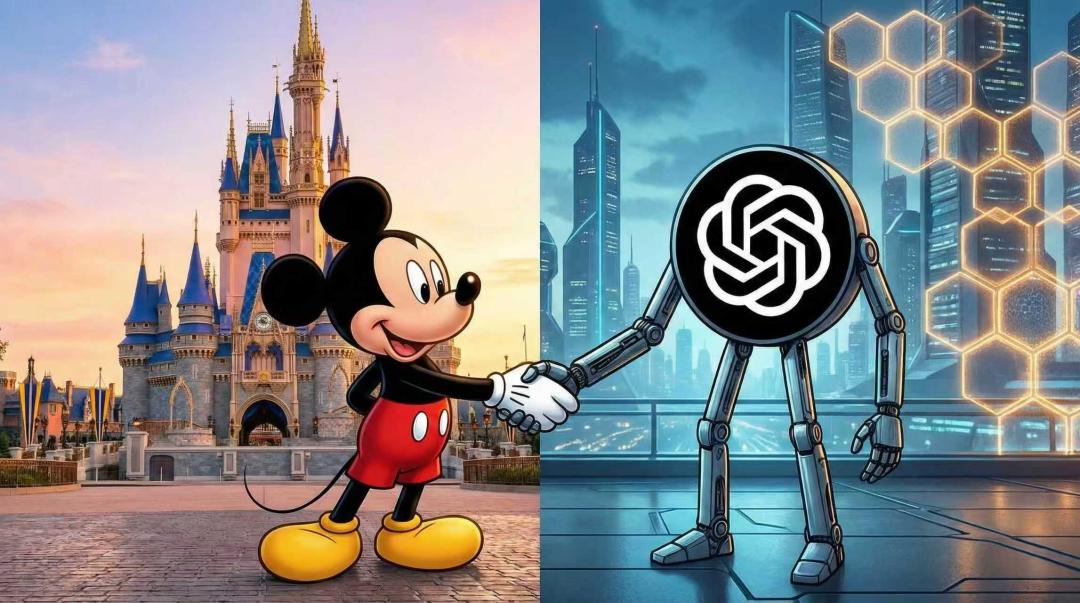
Core Viewpoint - Disney and OpenAI have reached a significant investment and licensing agreement, with Disney investing $1 billion in OpenAI and licensing over 200 characters from its franchises to OpenAI's video platform Sora, which has led to a 2.4% increase in Disney's stock price following the announcement [1][2]. Group 1: Agreement Details - The licensing agreement is set for three years, allowing users to create short video content using characters from Disney, Marvel, Pixar, and Star Wars, although it does not include the use of character likenesses or voiceovers [2]. - Disney will also become a major customer of OpenAI and will receive warrants to purchase additional shares of OpenAI [2]. Group 2: Industry Implications - The collaboration reflects a strategic shift for Disney, as it explores user-generated content (UGC) and new ways for audiences, especially younger viewers, to interact with its characters [3]. - OpenAI's CEO indicated that the partnership aims to lower the barriers to creativity, allowing users to quickly turn ideas into reality, which could lead to a variety of innovative creations [3]. - Analysts view this partnership as a forward-looking decision for Disney, potentially opening up new market opportunities in the UGC space [3]. Group 3: Strategic Focus - OpenAI is reportedly shifting its focus from consumer products to enterprise-level business applications, with plans to prioritize this area by 2026 [4].
腾讯新老游戏一齐增长,AI加速融入微信
36氪未来消费· 2025-11-14 12:06
Core Viewpoint - Tencent aims to integrate AI capabilities into its ecosystem, with a vision for WeChat to eventually launch an AI agent that understands user needs and can perform various tasks within its ecosystem [15]. Financial Performance - In Q3 2025, Tencent reported a total revenue growth of 15% year-on-year, with gross profit increasing by 22% and operating profit rising by 18% according to non-IFRS standards [4]. - All three main business segments showed double-digit growth: Value-added services grew by 16% to RMB 95.9 billion; Marketing services increased by 21% to RMB 36.2 billion; and FinTech and Business Services rose by 10% to RMB 58.2 billion [4]. Gaming Sector - Tencent's gaming revenue experienced a high growth rate of 23%, with domestic market growth at 15% and international market growth at 43% [5]. - The success of new games like "Delta Action" and the sustained performance of long-standing titles such as "Honor of Kings" contributed to this growth [5][11]. - "Delta Action" is positioned to become a leading title in the Chinese gaming market, with plans for platformization to enhance user-generated content and expand gameplay [9][10]. Advertising and AI Integration - The advertising business saw a 21% revenue growth, driven by increased ad loading rates and AI-driven ad targeting [13]. - Tencent launched AIMarketingPlus, an automated advertising solution that enhances marketing ROI for advertisers [13]. - AI services are also boosting enterprise service revenue, with significant growth attributed to increased demand for AI solutions [13][14]. Future Outlook and Capital Expenditure - Tencent's ideal blueprint includes the development of an AI agent within WeChat, leveraging its extensive ecosystem to serve as an ideal assistant for users [15]. - Capital expenditures are expected to decrease in 2025 compared to previous guidance but will remain higher than in 2024 [16].


APP 上线 40 天后,Sora 核心团队分享了他们对于 AI 社交的关键思考
Founder Park· 2025-11-11 10:19
Core Insights - Sora APP achieved 1 million downloads in less than 5 days, surpassing the speed of ChatGPT [1][2] - Among nearly 2 million weekly active users, 70% are content creators, a remarkable figure compared to the traditional 90-9-1 rule of internet engagement [3][22] - The essence of Sora lies in fostering genuine human relationships, emphasizing social interaction over solitary experiences [4][6] Product Features - Sora incorporates two core social features: Cameo and Remix, designed to enhance user interaction and creativity [13][14] - The Cameo feature allows users to create personalized videos by integrating their likeness and voice into generated scenes, promoting social engagement [14][16] - The Remix feature enables users to build upon others' works, creating a traceable signal of inspiration and fostering a culture of collaborative creativity [18][19] User Engagement - Sora's design encourages a high level of user-generated content, with a focus on real human connections rather than mere consumption [22][23] - The platform's recommendation algorithm is tailored to stimulate creativity, avoiding a "mindless scrolling" experience and instead promoting content that inspires users to create [26][27] - Sora aims to lower the barriers to content creation, making it accessible to a broad audience beyond just AI enthusiasts [28][30] Market Positioning - Sora is positioned as a social platform that prioritizes user interaction, contrasting with competitors that focus on consumption [20][21] - The team believes that the core of social products in the AI era should revolve around authentic human relationships, which is a key differentiator for Sora [24][22] - Sora's approach to commercialization includes a flexible points system, allowing for adjustments based on user and market feedback [36][38]