
HBCplus机载高速互联系统

Search documents
全球航空服务市场东移,空客掘金中国民航数字化互联业务
Hua Xia Shi Bao· 2026-02-02 03:40
Core Insights - The global aviation aftermarket services market is expected to grow significantly, with China's market projected to increase from $24.8 billion in 2025 to $63.8 billion by 2044, indicating a strong demand for various services throughout the aircraft lifecycle [2][3]. Market Growth and Trends - Airbus predicts a shift in the aviation aftermarket services market towards China, which is expected to become the largest market globally due to ongoing investments in airport infrastructure and air traffic management [3]. - China is anticipated to receive approximately 9,570 new aircraft over the next 20 years, further driving the demand for aftermarket services [3][4]. - The domestic passenger transport volume in China is projected to grow by 17% compared to pre-pandemic levels in 2019, with international routes recovering to over 90% of 2019 levels [4]. Key Segments of Aftermarket Services - The Off-Wing Maintenance market is expected to grow from $17 billion in 2025 to $44.8 billion by 2044, becoming the largest segment of the aftermarket services market [4][5]. - The On-Wing Maintenance market is projected to increase from $3 billion in 2025 to $6.8 billion by 2044, reflecting the growing demand for routine maintenance [5]. - The market for fleet modifications and upgrades is expected to rise from $1.8 billion in 2025 to $3.1 billion by 2044, driven by the need for enhanced passenger experience and extended aircraft lifespan [5]. Talent and Training Needs - By 2044, the Chinese aviation industry will require over 485,000 new technical personnel, including 131,000 pilots, 143,000 maintenance technicians, and 211,000 cabin crew members [5]. - The professional training market is projected to grow from $1.6 billion in 2025 to $3.9 billion by 2044 to meet the increasing demand for skilled personnel [5]. Digital Transformation and Connectivity - The digital and connected aircraft market in China is expected to grow from $1.4 billion in 2025 to $5.1 billion by 2044, as airlines accelerate their digital transformation efforts [6]. - Airlines are expected to save over $2.2 billion in operational costs and an additional $5.7 billion through reduced fuel costs by adopting digital technologies [6]. - The introduction of in-flight internet services is becoming more prevalent, with airlines like KLM and Air China offering free connectivity to enhance customer loyalty and competitiveness [7][8]. Strategic Partnerships and Innovations - Airbus has signed agreements to install advanced in-flight connectivity systems on aircraft, enhancing the passenger experience and operational efficiency [8][9]. - Collaborations with technology firms aim to build a robust in-flight connectivity ecosystem, ensuring stable network connections across various regions [9].


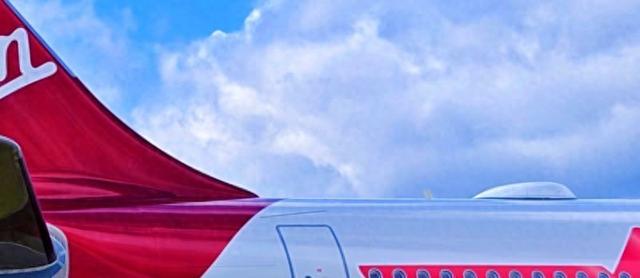
(第八届进博会)空中客车为南航30架A350飞机安装机载互联系统
Zhong Guo Xin Wen Wang· 2025-11-07 06:18
Core Points - The eighth China International Import Expo was held in Shanghai, where Airbus signed an agreement with China Southern Airlines to install the next-generation in-flight high-speed connectivity system HBCplus on 30 A350 aircraft [1][3] - China Southern Airlines becomes the first airline in China to adopt the HBCplus system, with the first equipped aircraft expected to enter service in 2026 [1][3] Group 1: HBCplus System Overview - HBCplus stands for High Bandwidth Connectivity Plus, developed and integrated by Safran Passenger Innovation, supporting multi-orbit satellite connections including GEO, MEO, and LEO [3] - The system utilizes Ka-band spectrum (26.5 to 40 GHz) and employs a dual-dish antenna design named "Thinkom KA2517," which uses VICTS technology for optimal signal direction [3] Group 2: Benefits of HBCplus - Equipped aircraft will provide passengers with high-speed in-flight internet and enable real-time data connectivity between the cockpit and cabin, ensuring pilots receive updated flight plans and information [4] - The system allows airline operations to monitor flight status in real-time, enhancing operational efficiency [4] Group 3: Industry Adoption - Over 16 airlines globally have chosen HBCplus, with two already operating the system on their A350 aircraft [5]


南航A350飞机将可空中上网
Di Yi Cai Jing· 2025-11-07 02:52
Core Insights - Airbus and China Southern Airlines (CSA) signed an agreement during the China International Import Expo to equip 30 A350 aircraft with the next-generation in-flight connectivity system HBCplus, marking CSA as the first airline in China to adopt this system [1] Group 1: Agreement Details - The agreement includes retrofitting 20 existing aircraft and installing the system on 10 new aircraft [1] - The first aircraft equipped with the HBCplus system is expected to enter service in 2026 [1]