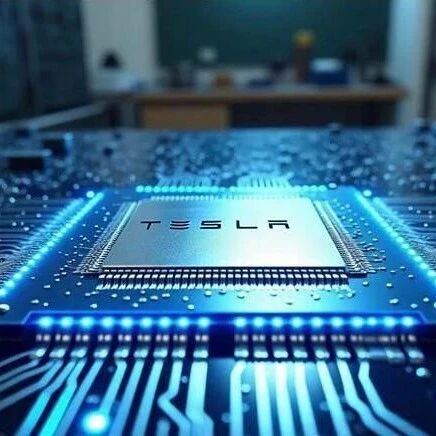
HW3(AI3)

Search documents
特斯拉芯片,突发延期
半导体行业观察· 2026-03-10 02:04
Core Viewpoint - The production of DeepX's next-generation neural processing unit (NPU) is delayed due to changes in the production schedule at Samsung's foundry, which also affects Tesla's AI chip production [2][3]. Group 1: Production Delays - DeepX's second-generation NPU, DX-M2, was initially scheduled for multi-project wafer (MPW) production in April but has been postponed by approximately six months [2]. - The delay in MPW production is attributed to Tesla's production schedule, impacting DeepX's timeline for mass production and quality testing [2][3]. - Full-scale sales of the DX-M2 are now expected to begin in Q4 of next year, making revenue from the already mass-produced DX-M1 crucial to bridge the gap [2]. Group 2: Technical Specifications - The DX-M2 is designed as a generative AI accelerator, capable of handling models with up to 100 billion parameters, with a maximum power consumption of 5 watts and a computing performance of 80 TOPS [3]. - The chip supports low-power DRAM standard LPDDR5X memory, enhancing its efficiency for AI data center workloads [3]. Group 3: Customer and Revenue Insights - DeepX's clients include major companies like Samsung, Hyundai, and Intel, with recent shipments of 40,000 DX-M1 chips and modules to Baidu [4]. - The unit price for DX-M1 chips ranges from $20 to $50, while modules are priced between $50 and $100, potentially generating revenue of $800,000 to $4 million, which constitutes 5% to 24% of DeepX's projected revenue of $17 million for the year [4]. Group 4: Tesla's AI Chip Production - Tesla is negotiating with Samsung to increase the production capacity of its next-generation AI chip, AI6, from an initial agreement of 16,000 wafers per month to an additional 24,000 wafers [5]. - If the new agreement is finalized, the total production capacity could reach approximately 40,000 wafers per month, significantly enhancing Samsung's production utilization [5]. Group 5: Strategic Implications - The collaboration between Tesla and Samsung reflects a strategic move to avoid sourcing critical components from China and Taiwan amid geopolitical tensions [7]. - The partnership has expanded beyond chip manufacturing, with Samsung's system LSI department developing 5G modems for Tesla, indicating a growing collaboration scope [7].