AI6芯片

Search documents
新力量NewForce总第4988期
First Shanghai Securities· 2026-03-26 05:42
Group 1: Tesla's Developments - Tesla's Robotaxi fleet is expanding to new cities, including Henderson, Las Vegas, and is in the final validation phase for Cybercab vehicles in California[5] - Elon Musk confirmed the upcoming release of FSD v14.3, which enhances proactive reasoning capabilities compared to v14.2, and includes new features like automated parking and an upgraded smart summon[7] - The Terafab project aims to produce over 1 TW of AI computing power annually, addressing the current 20 GW output that meets only 2% of global demand[8] Group 2: Financial Metrics - Tesla's stock price is currently at $383.03, with a market capitalization of $1.44 trillion and a total share count of 3.752 billion[6] - The 52-week high and low for Tesla's stock are $498.83 and $214.25, respectively[6] - The book value per share is $21.90, indicating a strong asset base relative to its stock price[6] Group 3: Product Innovations - Tesla's new patent for an "electric vehicle range extender integration" could solve range issues for heavy-duty trucks by allowing dynamic power balancing between the main battery and auxiliary batteries[9] - The launch of the Roadster has been postponed to late April 2026, promising advanced technology integration[10] - Tesla has introduced the Model YL Premium six-seater in Thailand, priced at 1,999,000 Thai Baht, with plans for U.S. production[10] Group 4: Strategic Initiatives - Tesla is planning to launch Megapack operations in India, supported by government incentives for energy storage investments[11] - The company is investing $2.9 billion in advanced solar manufacturing equipment from Chinese suppliers to meet its goal of producing 100 GW of solar cells by 2028[12]

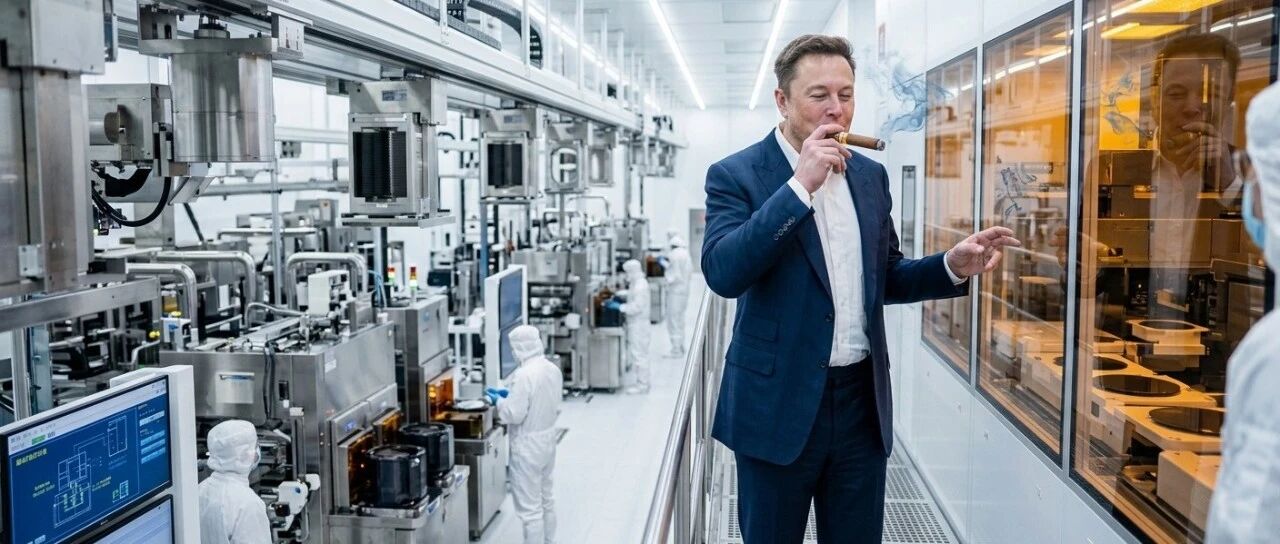
马斯克造芯片,黄仁勋“反对”
汽车商业评论· 2026-03-25 23:07
Core Viewpoint - Elon Musk announced the establishment of a chip factory named "Terafab" with a budget of $20-25 billion, aiming to achieve full control over Tesla's computing power and integrate the semiconductor supply chain under one roof [10][12][15]. Group 1: Project Overview - Terafab is described as the largest chip manufacturing project in history, utilizing 2nm process technology, which is currently only produced by TSMC [13]. - The factory will have two production lines: one for Tesla's automotive and robotics chips, and another for aerospace-grade D3 chips [13]. - The initial monthly wafer output target is set at 100,000, with a long-term goal of reaching 1 million wafers per month, equating to approximately 70% of TSMC's current global output [18][22]. Group 2: Strategic Importance - Terafab aims to produce 1 terawatt of computing power annually, requiring the production of 100-200 billion custom AI and storage chips for various Tesla projects [22]. - Approximately 80% of the computing power will be dedicated to space-based AI satellites, leveraging the advantages of the space environment for heat dissipation [22]. - The project is seen as a response to the limitations of external chip suppliers like TSMC and Samsung, which Musk predicts will reach capacity limits within three to four years [15][18]. Group 3: Challenges - The project faces significant challenges, including the need to procure high-NA EUV lithography machines from ASML, which are in high demand and costly [24][26]. - Tesla has a $16.5 billion multi-year contract with Samsung to produce next-generation AI chips, which is crucial for knowledge transfer before Tesla operates its own foundry [26][28]. - Recruiting a specialized team of engineers with expertise in semiconductor manufacturing processes is essential, as Tesla has no prior experience in this field [28][29]. - Musk's unconventional cleanroom theory, which suggests that traditional cleanroom standards are outdated, has raised skepticism within the semiconductor industry [29][31]. Group 4: Industry Reactions - The semiconductor industry has expressed skepticism regarding Terafab, with industry leaders like NVIDIA's CEO warning about the complexities of building advanced chip manufacturing facilities [31][33]. - Analysts believe that achieving the production capacity of TSMC will be extremely challenging for Tesla, given its lack of experience in semiconductor manufacturing [33][37]. - Despite the challenges, the announcement of Terafab has prompted the semiconductor industry to take Musk's supply chain ambitions seriously, reflecting a broader trend of companies seeking to secure their supply chains amid geopolitical tensions [38].

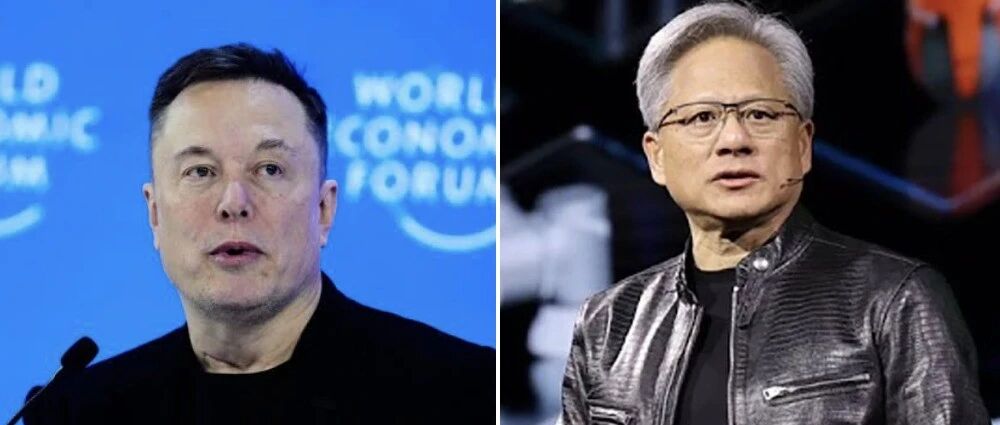
三星2nm良率突破 60%!
国芯网· 2026-03-24 12:43
Group 1 - Samsung has achieved a significant breakthrough in semiconductor manufacturing, with its advanced 2nm process yield recently surpassing 60%, doubling its yield in just two quarters from approximately 20% [2][3] - The improved yield allows Samsung to produce more high-performance chips at lower costs and attract new customers, bringing its yield levels in line with industry leader TSMC, which has a yield range of 60% to 70% for its 2nm process [2][3] - Samsung is producing 2nm chips for its Exynos 2600 smartphone processor, which will be featured in some Galaxy S26 and S26+ models, although the yield for the Exynos 2600 is still below 50% compared to previous generations [2][3] Group 2 - The increase in yield for the 2nm process is crucial as it not only reduces production costs but also helps Samsung secure more global customer orders, including a $16.5 billion contract with Tesla for the production of next-generation AI6 chips at its Taylor chip manufacturing plant [3] - The application of advanced chips smaller than 5nm is becoming increasingly widespread in information technology devices, and a stable and significant yield at 2nm could attract more customers seeking cutting-edge semiconductor solutions, potentially narrowing the market share gap with TSMC in the coming years [3]
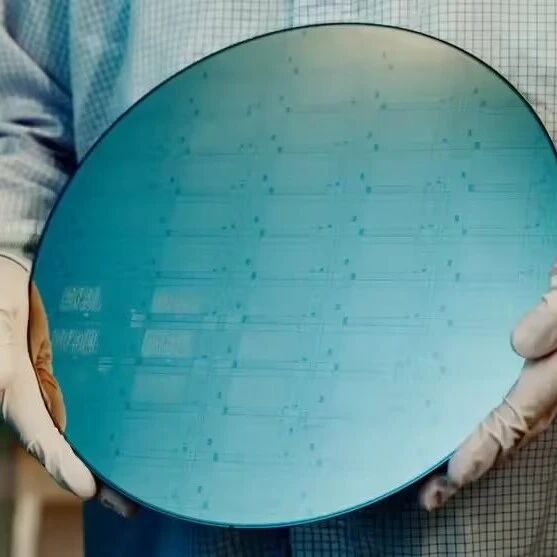
特斯拉AI6芯片,曝光
半导体芯闻· 2026-03-23 10:24
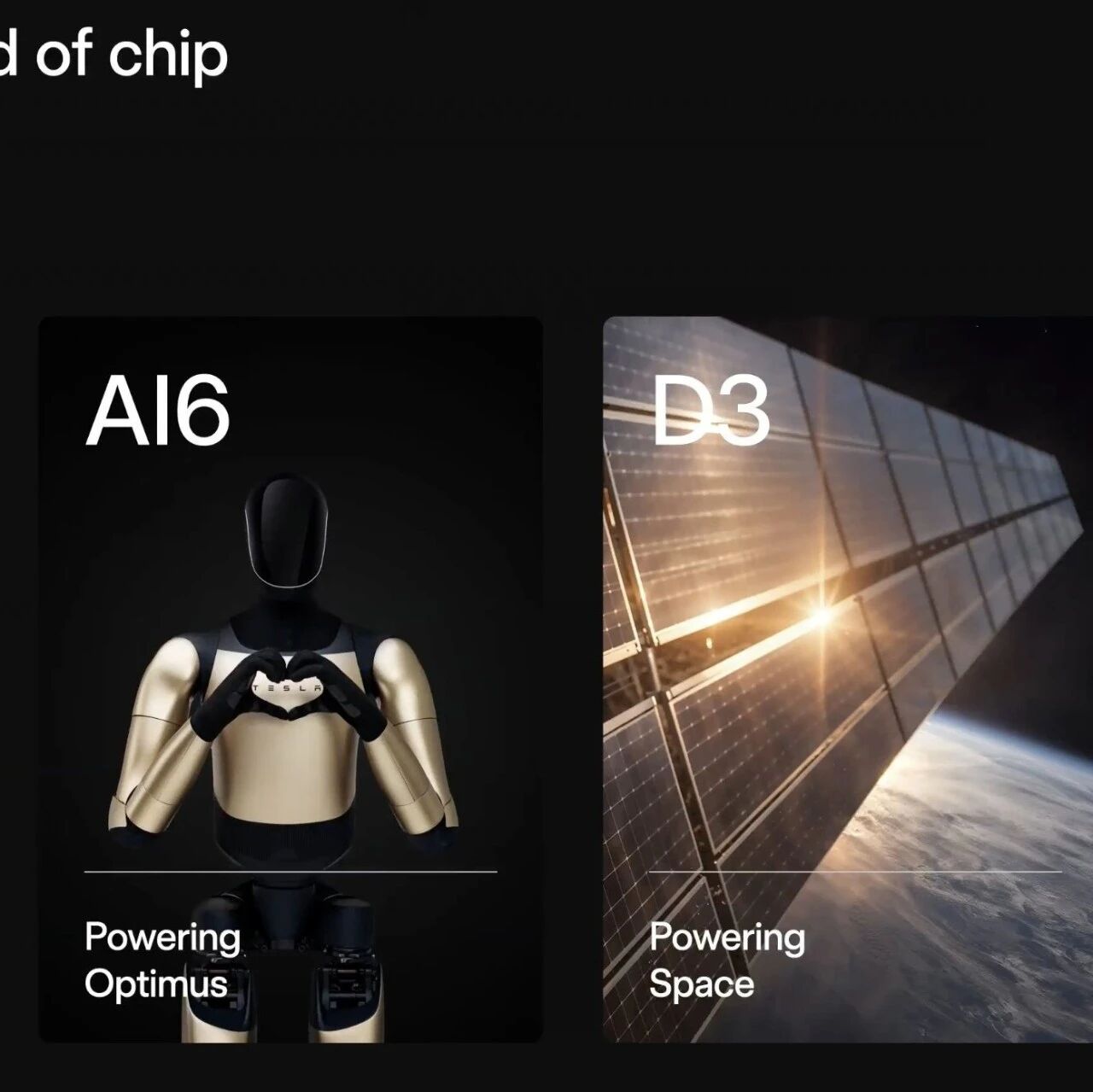
Core Insights - Tesla is optimistic about its chip tape-out timeline, indicating efforts to rapidly enhance its silicon chip manufacturing capabilities [1][3] - CEO Elon Musk is looking forward to the future of the AI6 autonomous driving chip, which is still two generations away from official release, but is already part of the company's ambitious AI hardware roadmap [1][3] - The AI6 chip aims to significantly improve Tesla's autonomous driving technology, humanoid robots, and data center operations [1][3] Group 1 - The AI5 chip has made progress, with Musk stating its design is "on track" and "nearly complete," describing it as a "critical" project requiring his personal involvement [3] - The performance of AI5 is comparable to Nvidia's Hopper level in a single system-on-chip (SoC) configuration and Blackwell level in a dual configuration, but with lower cost and power consumption [3] - AI5 is optimized for edge computing for Optimus robots and Robotaxi vehicles, while also capable of handling data center training tasks [3] Group 2 - The company plans to shorten future chip development cycles to nine months, enabling rapid iterations for AI7, AI8, and higher technologies [4] - Samsung is expected to produce the AI6 chip under a multi-billion dollar agreement, while AI5 will be jointly produced by TSMC and Samsung [4] - These chips will be central to Tesla's full self-driving system, enhancing safety and performance, while also providing efficient reasoning capabilities for expanding data centers [4] Group 3 - The advancement of the AI5 project has led Musk to restart the Dojo 3 supercomputer project, with long-term plans for internal production through the Terafab factory [4] - Tesla aims to accelerate chip development using AI tools to reduce reliance on third-party GPUs and provide high-performance, energy-efficient solutions tailored for its ecosystem [4] - The success of AI6 could mark a significant step for Tesla towards leadership in fully autonomous driving and robotics, although the timeline remains dependent on actual production circumstances [4]
商业航天行业跟踪:马斯克官宣Terafab项目,太空算力商业模式有望闭环
GF SECURITIES· 2026-03-22 14:45
Investment Rating - The industry investment rating is "Buy" [2] Core Insights - The Terafab project, announced by SpaceX and Tesla, aims to produce 1 trillion watts of computing power annually through the manufacturing of 100 billion to 200 billion advanced 2nm chips, with an investment of $20 billion to $25 billion [6] - The chips produced will serve both ground and space applications, with 80% allocated for space computing and 20% for ground computing [6] - The project is part of a broader strategy by Musk to create a commercial ecosystem integrating solar power, computing, and rocket technology, potentially completing a business loop in space computing [6] - Investment recommendations include focusing on semiconductor equipment companies like Changchuan Technology, and companies involved in photovoltaic equipment and materials [6] Summary by Sections Industry Overview - The report highlights the significant advancements in the commercial aerospace sector, particularly through the Terafab project, which is expected to revolutionize space computing capabilities [6] Financial Analysis - Key companies in the semiconductor and photovoltaic sectors are recommended for investment, with specific focus on their growth potential and market positioning [7]


刚刚,马斯克晶圆厂,正式发布
半导体行业观察· 2026-03-22 02:42
Core Viewpoint - The article discusses Elon Musk's announcement regarding the "TERAFAB" project, which aims to produce over 1 terawatt of computing power annually, with 80% allocated for space applications and 20% for terrestrial uses [2][10]. Group 1: Project Overview - The TERAFAB project will establish a vertically integrated semiconductor manufacturing facility in the U.S., covering logic chips, memory chips, and advanced packaging [3]. - The project is expected to require an investment of approximately $25 billion, surpassing existing super factory scales [4]. Group 2: Chip Development Roadmap - Tesla's chip evolution includes the AI5, AI6, and D3, targeting cutting-edge 2nm process technology with a production goal of 100 to 200 billion custom AI chips annually [4]. - The AI5 chip is designed for Full Self-Driving (FSD) and Optimus, with performance improvements of 40-50 times over the previous generation [7][8]. Group 3: Strategic Goals - The distribution of computing power from TERAFAB reflects ambitious goals, with a focus on creating a distributed interstellar computing network through AI satellites [12]. - Musk emphasizes the need for internal chip production to mitigate geopolitical risks and supply chain vulnerabilities, as existing suppliers like TSMC and Samsung cannot meet Tesla's demands [16][21]. Group 4: Challenges and Considerations - Building the TERAFAB facility presents significant challenges, including high capital costs and the complexity of advanced chip manufacturing processes [19][21]. - The timeline and location for the factory remain uncertain, with Tesla planning to utilize its substantial cash reserves for funding [18].
国元证券每日观察-20260320
Guoyuan Securities2· 2026-03-20 05:12
Economic Indicators - The total U.S. national debt has surpassed a historical high of $39 trillion[4] - Qatar's annual LNG export volume has decreased by 17%[4] - China's general public budget expenditure from January to February increased by 3.6% year-on-year[4] U.S. Treasury Yields - The 2-year U.S. Treasury yield rose by 2.16 basis points to 3.792%[4] - The 5-year U.S. Treasury yield increased by 0.72 basis points to 3.878%[4] - The 10-year U.S. Treasury yield fell by 1.57 basis points to 4.249%[4] Stock Market Performance - The Nasdaq index closed at 22,090.69, down by 0.28%[5] - The Dow Jones Industrial Average closed at 46,021.43, down by 0.44%[5] - The S&P 500 index closed at 6,606.49, down by 0.27%[5] Commodity Prices - The price of ICE Brent crude oil was $107.59, up by 0.20%[5] - The spot price of gold in London was $4,650.50, down by 3.39%[5] - The CME Bitcoin futures price was $70,580.00, down by 0.75%[5]

员工曝宇树对外标榜弹性双休,内部却是另一套规则,非常卷;永辉喊话山姆不要让供应商二选一,业内人士称他们在躲永辉;傅盛开撕周鸿祎
雷峰网· 2026-03-20 00:38
Group 1 - Yushun Technology, a leading player in the robotics sector, is facing internal criticism for promoting a flexible work schedule while enforcing long working hours, with employees reporting an average of 12 hours a day and frequent all-nighters during project periods [4][5] - Yonghui Supermarket has publicly urged Sam's Club not to force suppliers into exclusive agreements, claiming that suppliers are avoiding Yonghui due to its declining performance and ongoing losses, with a projected net loss of 2.14 billion yuan for 2025, a 45.6% increase year-on-year [7] - A woman lost 300,000 yuan after pre-ordering a Ferrari from a dealer that went bankrupt, with the new dealer refusing to honor the previous agreement and selling the car to someone else [9][10] Group 2 - Lei Jun announced the launch of the new Xiaomi SU7, which has seen a cost increase of approximately 20,000 yuan compared to the first generation, but the price for consumers has only risen by 4,000 yuan, with the new model featuring over 100 upgrades [14][15] - The Coconut Group is seeking to procure 50 humanoid robots capable of processing over 360 coconuts per hour for its automated production line, emphasizing efficiency and quality in the coconut processing industry [17] - Xia Zhongpu, the former head of end-to-end driving at Li Auto, is set to join a prominent startup in the embodied intelligence sector, marking a significant shift in the autonomous driving landscape [19][20] Group 3 - Alibaba reported a revenue of 284.84 billion yuan for Q3 of the 2026 fiscal year, with a 9% year-on-year growth, driven by strong performance in its cloud services and AI-related products [22] - Meituan clarified that a rider claiming to be a Peking University graduate had only completed five deliveries, highlighting the ease of registration for riders without mandatory educational verification [23][24] - NIO's self-developed chips have surpassed 550,000 units in production, with the company addressing challenges in the automotive semiconductor industry through self-research and standardization efforts [32] Group 4 - Tesla's CEO Elon Musk stated that the AI6 chip is expected to complete its tape-out by December, aiming to match the performance of dual AI5 chips, with significant advancements anticipated in AI applications [45][46] - Nikon is facing a projected loss of 85 billion yen for the 2025 fiscal year, primarily due to its failing lithography business, which has seen a drastic decline in market share and competitiveness [51][52] - Lantu Automotive has officially listed on the Hong Kong Stock Exchange, becoming the first high-end new energy vehicle stock from a central state-owned enterprise, with its stock price experiencing a significant drop on debut [54][55]



马斯克:对黄仁勋深感钦佩 SpaceX AI与特斯拉(TSLA.US)将持续大规模采购英伟达(NVDA.US)芯片
智通财经网· 2026-03-19 06:23
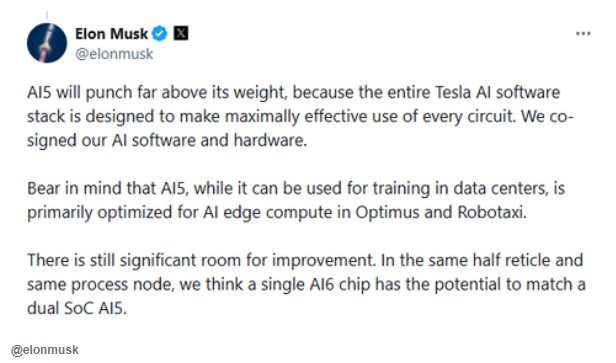
Group 1 - Elon Musk announced that SpaceX AI and Tesla (TSLA.US) will continue to make large-scale purchases of NVIDIA (NVDA.US) chips [1] - Tesla is developing its fifth-generation AI chip aimed at achieving full autonomous driving, which will power its autonomous driving system [1] - The AI5 chip is primarily optimized for AI edge computing support for the Optimus humanoid robot and Robotaxi autonomous vehicles, despite its capability for data center model training [1] Group 2 - Musk indicated that there is significant optimization potential for the AI5 chip, with expectations that the performance of a single AI6 chip could reach the level of a dual-core AI5 system under the same design and manufacturing process [1] - Tesla plans to widely roll out an updated version of its full self-driving (supervised version) software in the coming weeks [1] - SpaceX acquired xAI through an all-stock transaction, occurring ahead of a potential large-scale IPO later this year, marking the first time Musk referred to the merged entity as "SpaceX AI" [2]

马斯克的巨型晶圆厂,靠谱吗?
半导体行业观察· 2026-03-19 01:32
Core Viewpoint - The article discusses Elon Musk's ambitious Terafab project, which aims to build a massive semiconductor manufacturing facility capable of producing hundreds of billions of chips annually. The feasibility and challenges of this project are examined from the perspective of semiconductor engineering [2][5][6]. Group 1: Project Overview - Terafab is designed to be larger than traditional gigafactories, integrating logic circuits, memory, and packaging under one roof, with a production target of 100 billion to 200 billion chips per year [2][6]. - Musk's vision includes a 2nm process node, with an estimated cost of $25 billion, although Tesla has not disclosed detailed cost data [6][19]. - The project aims to address Tesla's chip supply needs, which Musk has indicated will become critical in the next three to four years [5][6]. Group 2: Challenges in Semiconductor Manufacturing - Building a semiconductor fab is a complex task requiring significant resources, including 30-40 million man-hours, 83,000 tons of steel, and 60,000 cubic meters of concrete [15]. - The construction timeline in the U.S. is approximately twice as long as in Taiwan due to regulatory and labor challenges [15][16]. - The transition to a 2nm process involves significant technological changes, including the shift from FinFET to Gate-All-Around (GAA) transistor architecture, which requires new materials and processes [19][22]. Group 3: Yield and Equipment Issues - Achieving high yield rates in semiconductor manufacturing is critical, with any defect in the process potentially leading to significant yield loss [22]. - The global supply of advanced lithography equipment is limited, with ASML being the sole supplier of extreme ultraviolet (EUV) lithography machines, which have long lead times for delivery [24]. - The lack of a robust design ecosystem and process design kits (PDK) poses additional challenges for Tesla, as developing a new PDK can take one to two years [26]. Group 4: Strategic Partnerships and Future Directions - Tesla's collaboration with Samsung in Taylor, Texas, is seen as a foundational step for Terafab, allowing Tesla to gain insights into manufacturing processes and efficiency improvements [40]. - The establishment of a packaging line for AI chips at SpaceX's facility is viewed as a critical move to alleviate bottlenecks in the AI chip market [42]. - Potential partnerships with Intel for wafer fabrication and packaging services could provide Tesla with the necessary infrastructure to support its semiconductor ambitions [44]. Group 5: Elon Musk's Problem-Solving Framework - Musk's five-step problem-solving framework, which includes questioning existing norms, eliminating unnecessary steps, simplifying processes, accelerating timelines, and gradually automating, may be applied to the construction and operation of Terafab [31][34]. - While skepticism exists regarding the applicability of this framework to semiconductor manufacturing, it may help identify inefficiencies in the fab construction process [35].