LPU (Language Processing Unit)

Search documents
2 Reasons NVIDIA's Secret Weapon Has Staying Power
247Wallst· 2026-03-17 14:33
Core Insights - Nvidia's competitive advantages are primarily derived from its ecosystem, particularly through its CUDA platform and partnership with Groq, which enhance its staying power in the market [1][5][10] Group 1: Ecosystem and Innovation - Nvidia is expanding its ecosystem into agentic AI, quantum computing (CUDA-Q), and Omniverse platforms, which are significant for its long-term strategy [2][5] - The company's ecosystem, including software innovations like CUDA-X Agentic Libraries and NemoClaw, creates a strong economic moat, making it difficult for customers to switch to competitors [10][11] Group 2: Financial Performance and Market Position - Nvidia's gross margins are approximately 75%, comparable to those of software companies, indicating strong profitability [4] - The recent partnership with Groq is seen as a strategic move to enhance Nvidia's capabilities in the AI inference market, positioning the company favorably against competitors [7][9] Group 3: Future Outlook - There is optimism regarding sustained AI demand, which could positively impact Nvidia's profitability and market position in the coming years [8][12] - While competition in the semiconductor industry is increasing, Nvidia's comprehensive approach to AI and quantum solutions may help it maintain its leadership [9][12]


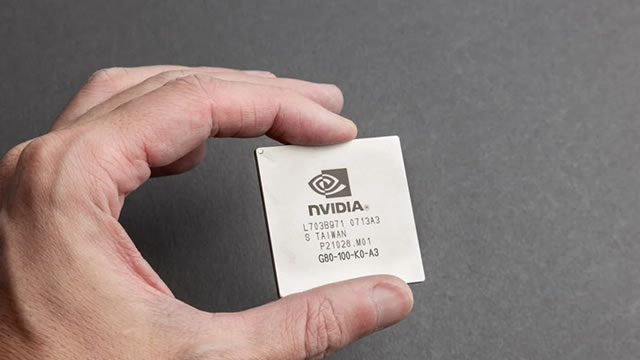
Bank of America has stark message for Nvidia investors ahead of GTC
Yahoo Finance· 2026-03-11 21:47
Core Viewpoint - Bank of America maintains a buy rating on Nvidia with a price target of $300, highlighting the upcoming GTC keynote as a potential catalyst for closing the current valuation gap [1][2]. Group 1: Current Valuation and Market Position - Nvidia shares are trading at a historically low forward price-to-earnings multiple of 17x, which is considered a trough following significant sales growth from the Blackwell architecture, totaling $500 billion [2]. - The GTC keynote is anticipated to be a key event that could initiate a recovery in Nvidia's stock valuation [2]. Group 2: Key Areas of Focus for GTC - Bank of America identifies three critical areas for investors to monitor during the GTC keynote, which extend beyond mere product announcements to indicate Nvidia's competitive advantage [3]. - The focus includes Nvidia's strategic shift towards inference, which is the process of running AI models at scale, marking a new battleground in AI infrastructure [5]. Group 3: Product Roadmap and Innovations - Nvidia is expected to outline its product roadmap from the current Vera Rubin platform to the Feynman GPUs by 2028, providing a three-generation visibility that secures commitments from developers and enterprises ahead of competitors [7]. - Anticipated announcements include a new range of customized products such as CPX chips for inference prefill workloads and a Language Processing Unit (LPU) for low-latency decoding, potentially integrated into next-generation rack systems [7]. - Bank of America is also looking for details on Nvidia's next-generation 102.4T Spectrum-6 switch and the 115T Quantum-X with co-packaged optics, which could be crucial for large-scale AI cluster deployments [7].
科技动态:SRAM- 一种全新的 AI 推理范式-Tech Bytes-SRAM – A New AI Inference Paradigm
2026-03-06 02:02
Summary of Key Points from the Conference Call Industry Overview - The memory market for AI inference is transitioning towards a hybrid approach, with SRAM gaining traction for latency-sensitive workloads, while HBM remains dominant for capacity-heavy tasks [1][3][4]. Core Insights - **SRAM and LPU Architecture**: NVIDIA is expected to introduce an inference chip based on LPU architecture that utilizes on-chip SRAM, enhancing speed for AI inference applications. This architecture is designed for sequential speed rather than massive parallel processing [2][12]. - **Performance Comparison**: SRAM provides ultra-low latency and immediate data availability, making it suitable for speed-critical applications, while DRAM offers higher capacity and lower cost per bit, serving as the backbone for high-capacity external memory [11][21]. - **Cost Efficiency**: The cost per token generated is a critical metric for inference, with LPUs capable of generating tokens efficiently at full compute capacity, thus lowering energy costs compared to GPUs [10][12]. Implications for the Market - **Partnership of SRAM and HBM**: The relationship between SRAM and HBM is characterized as a division of labor, where SRAM is used for speed-sensitive applications and HBM for scalable memory capacity. This partnership is crucial for the evolving landscape of AI applications [3][4]. - **Supply Chain Advantages**: The LPU architecture can bypass supply chain bottlenecks associated with HBM, allowing for effective designs even on older foundry process nodes [4]. Investment Insights - **Stock Recommendations**: Samsung Electronics is highlighted as a top pick due to its HBM4 qualification, SRAM capabilities, and foundry optionality. SK hynix is also recommended as an overweight investment [5]. - **Market Corrections**: Recent stock price corrections (20% WTD vs. KOSPI -17%) present buying opportunities, as historical trends indicate that stock prices often recover beyond fundamental growth trajectories [5]. Risks and Considerations - **Potential Risks**: Investors should be aware of risks such as demand fluctuations, rising competition, and elevated inventories among cloud and smartphone customers, which could impact stock performance [32][30]. - **Technological Developments**: Emerging technologies like MRAM, ReRAM, and eDRAM may recalibrate the memory landscape, but SRAM and DRAM are expected to remain foundational in high-performance computing systems [25]. Additional Insights - **LPU Workload Suitability**: LPUs are ideal for low-latency applications such as financial transactions and conversational AI, while they are less suited for ultra-large models and batch processing tasks that benefit from GPU clusters [27][12]. - **Future Outlook**: The memory market is expected to evolve with advancements in technology, and the integration of SRAM and HBM will play a significant role in shaping future AI systems [25][4].
Top Stock Market Highlights: Alpha Integrated REIT, Manulife REIT, NVIDIA’s US$20 Billion Move
The Smart Investor· 2025-12-26 23:30
Group 1: Volare Group and Alpha Integrated REIT - Volare Group has entered into a sales and purchase agreement to acquire 241.6 million units in Alpha Integrated REIT (AIR), representing 21.5% of AIR, at S$0.40 per unit [2] - Post-acquisition, Volare will control approximately 41.3% of the total issued units, surpassing the 30% threshold stipulated by Rule 14 of the Singapore Code on Take-overs and Mergers [2] - This acquisition has triggered a mandatory cash offer at S$0.48 per unit for all remaining units, representing a premium over recent trading prices, including a 2% premium over the last transacted price and up to a 14.3% premium over the 12-month volume-weighted average price [3] Group 2: Manulife US REIT - Manulife US REIT announced that lenders have executed concessions under its Master Restructuring Agreement (MRA), providing crucial relief for the US office REIT [4] - The concessions include an extension of the disposal deadline from 31 December 2025 to 30 June 2026 and a relaxation of financial covenants, with the unencumbered gearing threshold relaxed to 80% and the Bank ICR relaxed to no less than 1.5 times [7] - Manulife US REIT must keep half-yearly distributions to Unitholders suspended until the achievement of the Reinstatement Conditions, amid a challenging US office market [5] Group 3: NVIDIA and Groq Acquisition - NVIDIA is acquiring assets from Groq for about US$20 billion, marking its largest purchase ever [6] - Groq specializes in inference within the AI arena and has developed a chip called LPU that can run LLMs at 10 times faster and using one-tenth the energy [6][8] - NVIDIA plans to integrate Groq's low-latency processors into its AI factory architecture, aiming to extend the platform for a broader range of AI inference and real-time workloads [8]