
MaaS(模型即服务)平台

Search documents
当Token成为“北极星指标”,AI云市场可能忽略了什么?
3 6 Ke· 2026-01-07 11:15
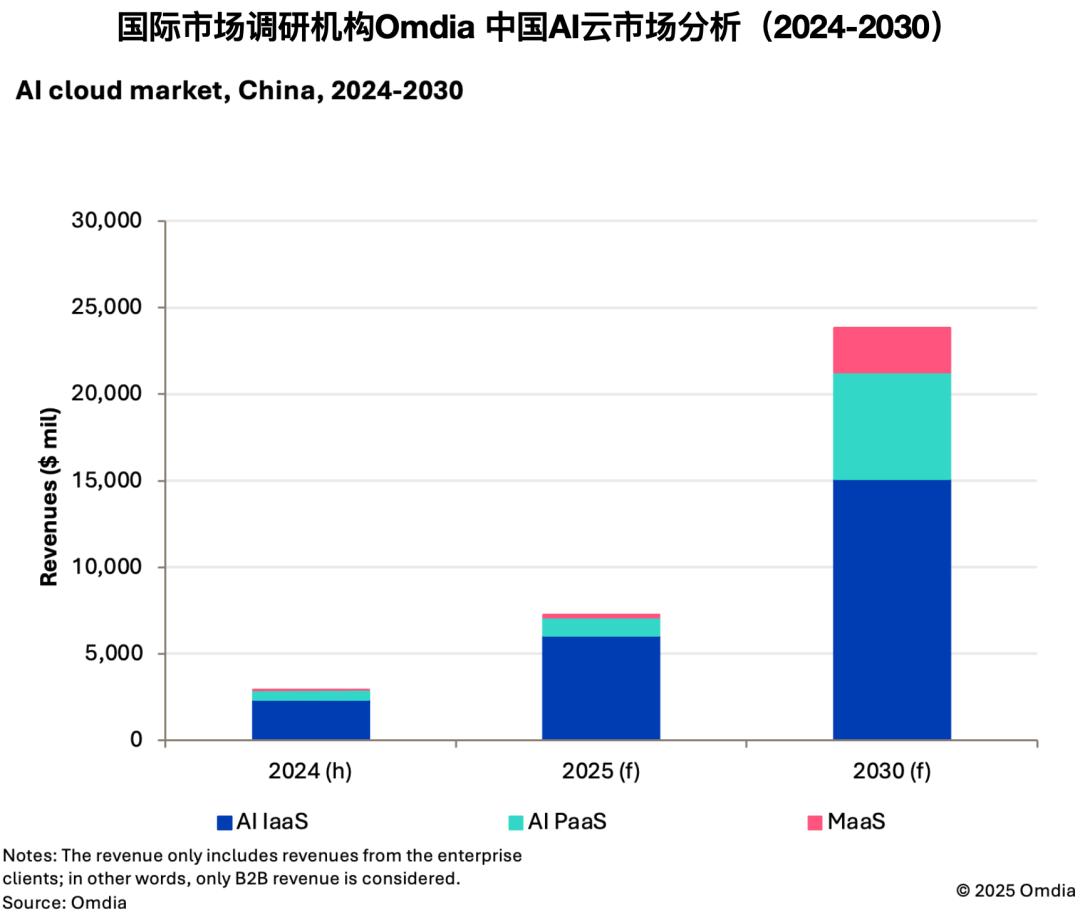
Core Insights - The AI cloud market is increasingly recognizing the importance of Token consumption as a key performance indicator, often referred to as the "North Star metric" for guiding strategic direction [2][3][4] - The rapid growth of Token consumption in China reflects the swift expansion of AI applications, with daily Token consumption projected to reach 30 trillion by mid-2025, up from 1 trillion at the beginning of 2024 [1][7] Token Consumption and Market Dynamics - Token is becoming a crucial metric for cloud service providers, with major companies like Amazon AWS and Alibaba Cloud actively expanding their MaaS (Model as a Service) offerings [6][10] - Despite the rapid growth in Token consumption, it currently represents a small fraction of overall cloud revenue, indicating that the Token market alone cannot sustain the growth of the broader cloud market [4][10] - The AI cloud market is projected to grow significantly, with estimates suggesting it will reach $72 billion by 2025 and $268 billion by 2030, although the MaaS segment will still only account for about 9% of the total by 2030 [7][11] Challenges and Limitations - There are significant blind spots in current Token consumption statistics, as they primarily rely on public cloud API data and do not fully capture private deployments or other AI computing scenarios [4][14] - The decision-making process for enterprises regarding AI cloud services often does not prioritize Token consumption as a core metric, focusing instead on business value and cost reduction [26][27] Future Outlook - The potential for Token revenue growth varies among cloud providers, with some optimistic forecasts suggesting that certain companies could see Token income rise to between 4 billion and 7 billion in the next 1-2 years [11][12] - The complexity of AI cloud services means that a singular focus on Token consumption may obscure other critical factors influencing market dynamics and enterprise adoption [19][22][29] - The long-term success of AI cloud services will depend on their ability to integrate seamlessly into business processes and deliver measurable value, rather than merely focusing on Token consumption metrics [30][31]


“5G+工业互联网”迈向深度融合
Jing Ji Ri Bao· 2025-12-06 21:54
Core Insights - The "5G + Industrial Internet" initiative in China has surpassed 20,000 construction projects, entering a new phase of large-scale application [1] - The next steps include implementing "chain-network collaboration" actions in key industrial chains and enhancing research on the integration of 6G with industrial applications [1] Infrastructure Layout - China has proactively laid out infrastructure for "5G + Industrial Internet," with over 300 influential industrial internet platforms and more than 100 million industrial devices connected [2] - The establishment of a self-controlled industrial internet identification resolution system has been completed, and over 1,200 5G factories have been built, with an investment exceeding 50 billion [2] - The average capacity of leading 5G factories has increased by 25%, product quality by 21%, and operational costs have decreased by 19% [2] Application Expansion - The application of "5G + Industrial Internet" has expanded from isolated breakthroughs to deep integration across all 41 industrial categories [2] - More than 45,000 5G virtual/mixed private networks have been established nationwide, with over 80% of global 5G industrial modules originating from China [2] Standardization and Policy - China has taken the lead in formulating the world's first industrial 5G international standards, with over 100 national and industry standards established [3] - The Ministry of Industry and Information Technology aims to optimize the layout of new infrastructure and promote the integrated development of five major systems: network, identification, platform, data, and security [3] AI Integration - Artificial intelligence is reshaping the development landscape of the industrial internet, with companies integrating 5G connectivity with AI capabilities for production line optimization and supply chain collaboration [4] - China Telecom has developed a comprehensive intelligent cloud capability system, serving over 20,000 enterprise clients [4] Technological Support - The evolution of 5G—A (5G network enhancement) is expected to significantly support industrial upgrades, enhancing capabilities in key areas such as visual inspection and motion control [7] - The Ministry of Industry and Information Technology has initiated commercial trials for satellite IoT services, which will enhance industry service capabilities and support emerging sectors [7] Future Outlook - The continuous integration of IT, CT, OT, and DT technologies, along with advancements in 5G—A, 6G, and AI, will further empower China's industrial system and accelerate the development of new productive forces [8]