MagicHand S01

Search documents
告别“偏科竞赛”,魔法原子百亿基金改写行业规则
创业邦· 2026-03-17 00:09
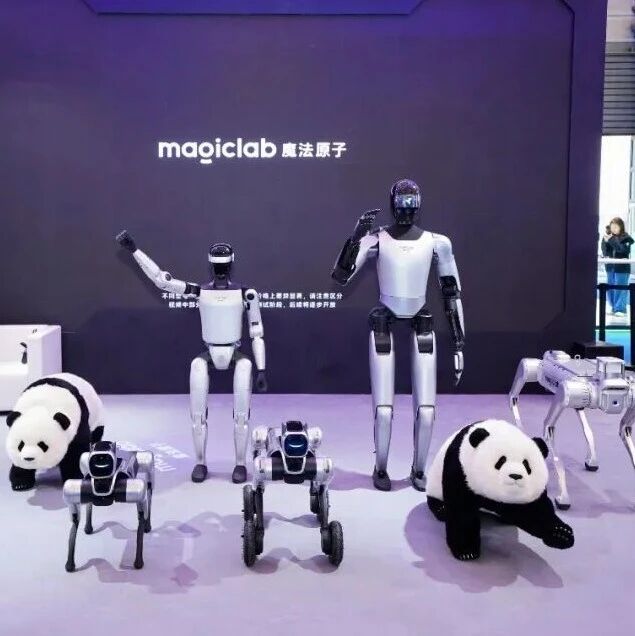
Core Viewpoint - The article discusses the evolving landscape of the embodied intelligence sector, highlighting a shift from single-point breakthroughs to a focus on comprehensive system capabilities that integrate hardware, software, data, and real-world applications [3][5][20]. Group 1: Investment and Financing - Magic Atom has completed a new round of financing amounting to 500 million yuan, with notable investors including Top Group, Jiechuan Intelligent, and Aishida, indicating strong interest from industry capital [3]. - A significant industry ecological fund, with a scale exceeding 10 billion yuan, is focusing on key links in the industrial chain, reflecting a broader trend of capital mobilization in the sector [3]. - The investment landscape is shifting towards companies that can demonstrate comprehensive capabilities rather than just single-point technological advancements [20][21]. Group 2: Industry Trends and Competition - The embodied intelligence sector is moving away from "specialized competition" towards a model where software and hardware must form a closed-loop system to succeed [4][5]. - Companies are now differentiating themselves by their approaches: some focus on models and AI capabilities, while others prioritize hardware and physical performance [5]. - The consensus is emerging that true competition will hinge on the ability to integrate software and hardware effectively, rather than excelling in isolated areas [5][20]. Group 3: Strategic Development - Magic Atom's strategy, termed "embodied intelligence + X," includes a foundational capability base, two core product lines (humanoid and quadruped), and multiple ecological touchpoints for modular product development [6]. - The significance of this strategy lies in the interconnectedness of products and scenarios, emphasizing the need for shared technological foundations [8]. - The company is investing heavily in self-developed key components, which are crucial for enhancing the performance and capabilities of its robots [9]. Group 4: Real-World Application and Data Utilization - For robots to achieve large-scale application, they require not only physical and model capabilities but also real-world data training to navigate complex environments effectively [12]. - Magic Atom has established a data collection factory to streamline the process from data acquisition to model deployment, ensuring that robots are tested in real-world scenarios [12][21]. - The company is deploying its robots in various environments, including industrial, commercial, and specialized scenarios, to accumulate valuable data and enhance system capabilities [18]. Group 5: Market Positioning and Future Outlook - The current climate in the embodied intelligence sector mirrors the early development of the autonomous driving industry, where initial excitement was driven by single-point technological breakthroughs [20]. - As the market matures, investors are increasingly focused on the practical deployment of technologies and the integration of systems rather than just theoretical advancements [20]. - Magic Atom's recent financing activities are seen as a strategic move to position itself as a leader in the comprehensive system capabilities necessary for long-term success in the industry [21].

具身智能热潮背后:自研加速度,商业化探路
2 1 Shi Ji Jing Ji Bao Dao· 2025-07-30 10:45
Core Insights - The article discusses the advancements and challenges in the field of embodied intelligence, particularly in robotics, as showcased at the 2025 World Artificial Intelligence Conference (WAIC) [1][7] - Companies are focusing on increasing self-research capabilities for key components to enhance product iteration speed and reduce costs [2][5] Group 1: Technological Advancements - Embodied intelligence is transitioning from single-model to multi-modal capabilities, improving product generalization and vertical applications [1] - Key components such as joint drive motors and sensors are being developed in-house to ensure seamless integration between hardware and software [2][3] - The development of proprietary components, like the MagicBot Z1's high-performance joint module, aims for a 90% self-research rate, with a future goal of 100% [3][4] Group 2: Cost Optimization - Companies are adopting local production and optimization strategies to reduce costs, contrasting with higher overseas manufacturing expenses [6][10] - The reliance on advanced chips, such as NVIDIA Jetson and Tesla's Dojo, is critical for enhancing AI reasoning and operational efficiency in robots [5][6] Group 3: Commercial Applications - Robots are being deployed in industrial settings for tasks like sorting and assembly, with human-like robots showing potential for flexible configurations in dynamic environments [8][9] - The commercial sector is exploring roles for humanoid robots in customer service and educational settings, indicating a gradual shift towards broader applications [9][10] - The aging population market is identified as a significant opportunity for humanoid robots, particularly in healthcare and elder care [10]
灵巧手赛道进入“战国时代”,谁将脱颖而出?
机器人圈· 2025-07-10 10:14
Core Viewpoint - The article discusses the rapid advancements and competitive landscape of dexterous hand technology within the embodied intelligence sector, highlighting key players and their innovative products in the field [1][63]. Group 1: Company Summaries - **Beijing Yinshi Robot Technology Co., Ltd.**: Founded in 2016, focuses on micro precision motion components and servo control technology, with products like micro servo cylinders and humanoid dexterous hands, excelling in miniaturization and precision control [1]. - **Shanghai Aoyi Information Technology Co., Ltd.**: Established in 2015, specializes in smart bionic prosthetics and rehabilitation systems, recently launching the second-generation dexterous hand ROH-AP001, which features high-density tactile sensors and lightweight design [1][2]. - **Paxini Perception Technology (Shenzhen) Co., Ltd.**: Founded in 2021, focuses on advanced tactile technology and humanoid robots, offering dexterous hands with extensive tactile sensing capabilities [1][9]. - **Zhejiang Qiang Brain Technology Co., Ltd.**: Established in 2015, aims to lead in non-invasive brain-computer interface technology, developing smart bionic hands that integrate with brain-computer interfaces for intuitive control [1][12]. - **Daimeng (Shenzhen) Robot Technology Co., Ltd.**: Founded in 2021, develops high-resolution tactile sensing dexterous hands, integrating AI and robotics for innovative solutions in various fields [1][13]. - **Lingxin Qiaoshou (Beijing) Technology Co., Ltd.**: Established in 2019, focuses on dexterous hands with high degrees of freedom, surpassing human capabilities in certain movements [1][19]. - **Zhejiang Lingqiao Intelligent Technology Co., Ltd.**: Founded in 2024, emphasizes dexterous operation technology, with flagship products featuring multiple degrees of freedom and advanced sensor integration [1][20]. - **Shenzhen Yihai Yuanshi Technology Co., Ltd.**: Established in 2021, focuses on brain-like intelligence and dexterous hand technology, providing innovative solutions for robotic dexterity [1][28]. - **Shenzhen Zhaowei Electromechanical Co., Ltd.**: Founded in 2001, offers micro drive systems, recently launching a new generation of bionic dexterous hands with significant upgrades [1][32]. - **Beijing Siling Robot Technology Co., Ltd.**: Established in 2018, leverages technology from the German Aerospace Center to innovate in robotic applications, focusing on lightweight robotic arms [1][35]. - **Zhongke Guiji (Nanjing) Robot Co., Ltd.**: Founded in 2024, specializes in general dexterous operation capabilities for robots, developing a series of products for various applications [1][54]. Group 2: Industry Trends - The article highlights the competitive landscape of the dexterous hand technology sector, indicating a surge in innovation and product development among numerous companies [1][63]. - The rapid technological advancements and the expansion of application scenarios suggest that the Chinese market for embodied intelligence components is entering a critical phase of competition [1][63].